
The U.S. National Science Foundation (NSF) has committed $50 million to create two new Materials Innovation Platforms focused on discovering advanced materials that endure extreme conditions. Announced in 2024, these platforms will be housed at Texas A&M University and the University of Wisconsin–Madison, providing researchers with cutting-edge equipment and artificial intelligence (AI)-driven autonomous laboratories designed to revolutionize material development.
What Happened
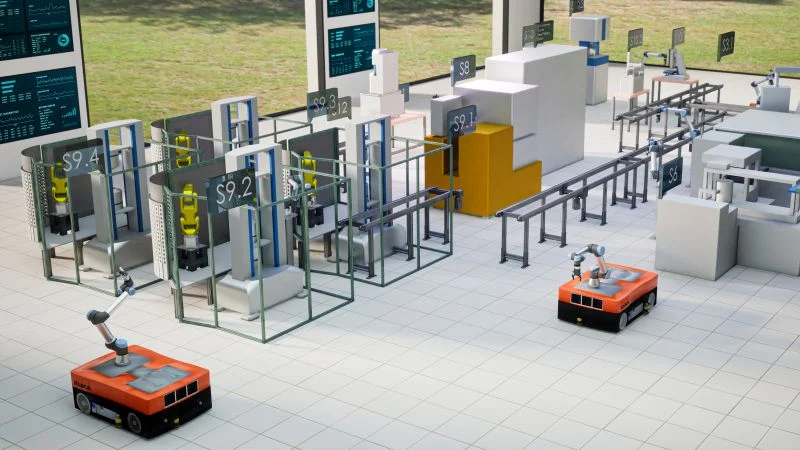
Over six years, NSF will allocate $25 million to each facility, enabling the construction and equipping of specialized research platforms. The Texas-based NSF Autonomous Robotic Metallurgist Materials Innovation Platform (NSF ARM-MIP) will integrate robotics and AI to accelerate alloy creation, reducing processes that traditionally take over a decade to mere months or years. In Wisconsin, the NSF Materials AI and Transformation through Research Infrastructure for eXtreme environments Materials Innovation Platform (NSF MATRIX-MIP) will explore how chemical and structural complexities impact materials’ resilience in environments characterized by high heat and radiation.
Both platforms will provide access to scientists from academia and industry across the United States, selected through competitive review. Approximately 10 to 20 percent of users will come from universities and colleges with limited research resources, ensuring broad participation.
Key Facts
The NSF announced the funding in 2024 to enhance national capacity in materials science research. Texas A&M University hosts NSF ARM-MIP, focusing on alloys for applications including jet turbines, military armor, nuclear reactors, corrosion-resistant infrastructure, and biomedical implants. The University of Wisconsin–Madison’s NSF MATRIX-MIP will apply AI and high-throughput synthesis methods to rapidly predict and test new materials designed for harsh environments. Both platforms emphasize autonomous AI-guided experimentation to optimize research efficiency.
Additionally, NSF supports the ongoing NSF 2D Crystal Consortium at Pennsylvania State University with $4.6 million over four years to transition it into a self-sustaining operation, emphasizing two-dimensional materials critical for next-generation semiconductors and quantum technologies.
What This Means
The establishment of these platforms marks a significant shift in materials research, leveraging AI and robotics to dramatically shorten the time required to develop new materials. This acceleration could have profound impacts across multiple industries, from aerospace and defense to energy and healthcare, by enabling faster deployment of superior materials with enhanced properties such as strength, corrosion resistance, and radiation tolerance.
By democratizing access to high-end equipment through a competitive, nationwide user system, NSF is fostering innovation beyond well-funded institutions, encouraging diverse participation that could lead to unexpected breakthroughs. This approach could transform how materials science advances, reducing bottlenecks in experimentation and allowing researchers to test far broader combinations of elements and structures than previously feasible.
The use of AI for autonomous experimentation not only exemplifies modern scientific trends but also points toward a future where material discovery is increasingly data-driven and automated, promising more rapid responses to emerging technological challenges.
Background
Prior to this investment, materials innovation often relied on lengthy trial-and-error processes, with complex alloys taking over a decade from conception to use. The NSF 2D Crystal Consortium platform at Penn State, funded for a decade, was among the first to demonstrate how sustained infrastructure investment can build world-class facilities enabling forefront research in materials only a few atoms thick.
What Remains Unclear
Details on the specific timelines for rolling out various experimental capabilities within each platform remain to be confirmed. The exact range of materials and complexity levels that MATRIX-MIP will successfully manage in extreme environments is also under active investigation. Furthermore, the proportion of industry versus academic users and potential commercial outcomes from alloy developments have yet to be detailed.
What Comes Next
The platforms will begin operations by acquiring and integrating equipment before opening to external researchers. The NSF plans to host dozens of scientists annually at each site. Continued monitoring will evaluate the platforms’ success in accelerating materials development and their integration of AI systems. Meanwhile, the NSF 2D Crystal Consortium will shift to primarily user-funded operations while maintaining its national research mission.
Sources
This article is based on reporting and publicly available information from the following sources:
Read more Science & Technology stories on Goka World News.