
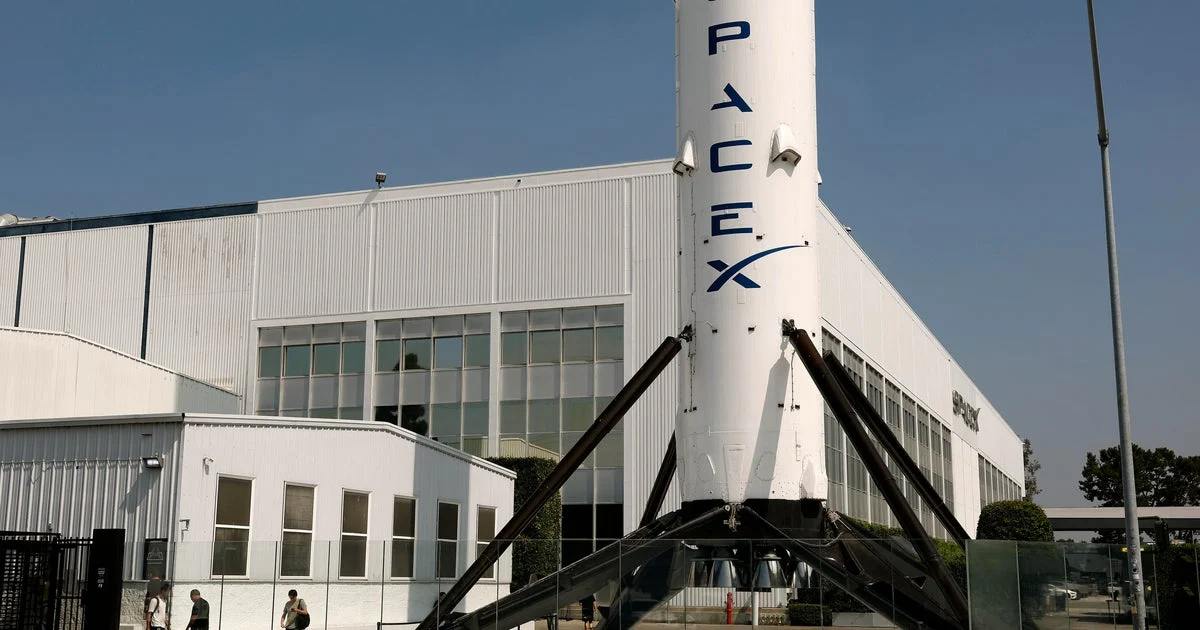
SpaceX unveiled robust financial results in its first quarterly earnings report since going public, showcasing strong revenue growth and a significant reduction in net losses. The space and satellite company posted $7.8 billion in revenue for the second quarter of 2026, propelled by rapid expansion in its Starlink satellite internet service and other business segments, according to its public filings and statements during the earnings call.
What Happened
On August 4, 2026, SpaceX disclosed its second-quarter financial results, which marked its first earnings release as a publicly traded company following the largest ever initial public offering (IPO) in June. The company reported revenues of $7.8 billion with a net loss of $541 million, improving significantly from a $1 billion net loss in the same period last year. This performance exceeded Wall Street analysts’ expectations, which had forecasted $6.8 billion in revenue for the quarter.
The company’s main revenue drivers—its Space, Connectivity (Starlink), and Artificial Intelligence divisions—all surpassed consensus estimates. Starlink, its satellite internet unit, more than doubled its subscriber base over the past year from 6 million to 12 million users, pushing connectivity revenues to $4.3 billion, up from analysts’ estimated $3.8 billion. SpaceX’s Starship division generated $962 million, while the AI unit contributed $2.6 billion in revenue for the quarter.
Key Facts
Revenue totaled $7.8 billion in Q2 2026, with net losses cut to $541 million from $1 billion the previous year. Starlink subscribers doubled to 12 million. The connectivity segment led with $4.3 billion in revenue, followed by $2.6 billion from AI and $962 million from Starship. Analysts had predicted $6.8 billion total revenue and $3.8 billion for the connectivity segment. SpaceX’s IPO in June made CEO Elon Musk the world’s first paper trillionaire. SpaceX’s shares have declined nearly 50% from their IPO peak, closing at $116.40 in after-hours trading down from IPO price of $135.
What This Means
SpaceX’s strong revenue growth signals increasing market validation for its strategic focus on satellite internet and emerging AI technologies, moving the company closer to sustainable profitability. The doubling of Starlink users highlights the rapid adoption of satellite broadband as a viable global internet solution, particularly important for underserved areas. Meanwhile, the AI division’s substantial revenue suggests SpaceX is diversifying beyond aerospace into lucrative tech sectors.
Despite the positive financial trends, the market’s muted reaction reflects investor caution over SpaceX’s longer-term profitability and ambitious future plans, including lunar missions and Mars exploration. The company’s ability to convert these promising revenue streams into lasting profits will likely determine whether investor confidence rebounds. For the broader industry, SpaceX’s performance underscores a growing appetite for space-related services and technologies as commercially viable sectors.
The Bigger Picture
SpaceX’s earnings report arrives amid a burgeoning space economy where satellite internet and reusable rockets are reshaping telecommunications and transportation. The company’s stated goal of delivering over one million tons to orbit annually—far outstripping global current capabilities—illustrates its aim to dominate space logistics and infrastructure. Concurrently, its AI revenue surge reflects the increasing integration of artificial intelligence across traditionally hardware-focused aerospace operations.
However, SpaceX’s share price volatility and after-hours stock drop reveal market skepticism about high capital expenditures and execution risks tied to its ambitious projects. Investors appear to prefer near-term financial assurances over longer-term visions, such as space-based solar power or manned Mars missions.
What Remains Unclear
The full path to sustained profitability remains uncertain, as does the pace at which Starlink’s subscriber growth can continue. Market response indicates lingering doubts about execution timelines for SpaceX’s lunar landing in 2028 and the commercial viability of its AI ventures. The company’s longer-term capital requirements and competitive dynamics were not detailed in the report.
Sources
This article is based on reporting and publicly available information from the following source:
Read more Major Tech Companies stories on Goka World News.