
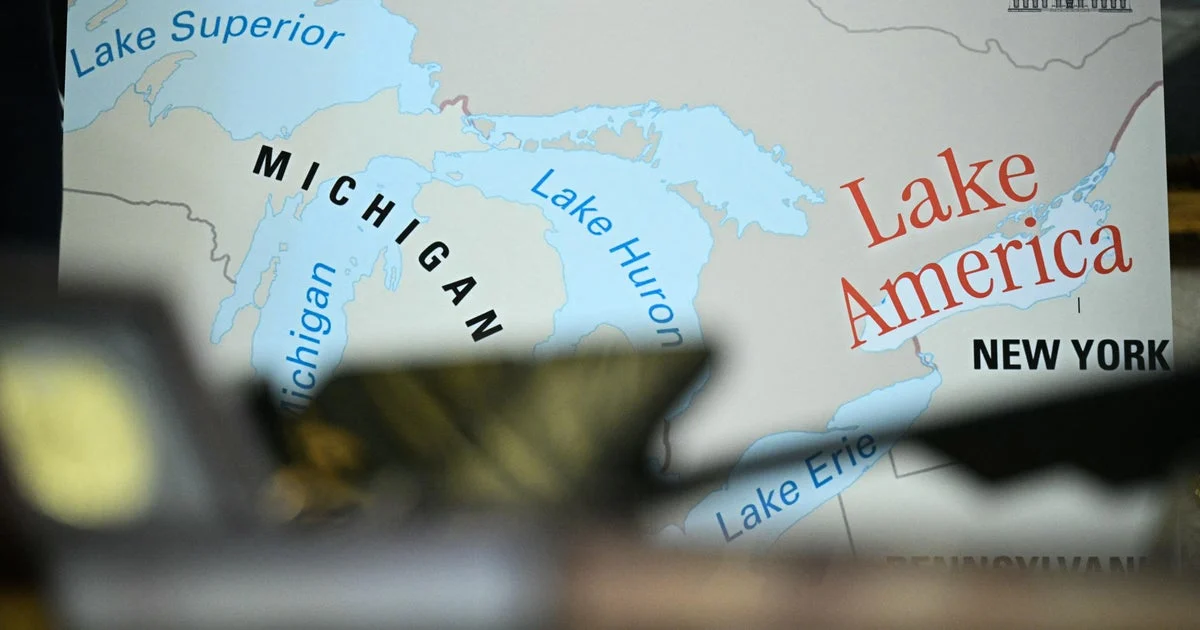
MapQuest has risen to the top of the Apple App Store’s free apps ranking after declining to follow an executive order by President Trump that renamed Lake Ontario as “Lake America.” The company’s decision to maintain the traditional name sparked a surge in app downloads and user engagement.
What Happened
On August 27, 2026, the same day President Trump signed an executive directive to rename Lake Ontario, MapQuest publicly announced via social media and official channels that it would not alter the lake’s name on its digital maps. Instead, the company upheld the historical designation while launching a tool allowing users to create their own custom names for the lake.
Following this stance, MapQuest experienced a dramatic increase in usage, with hundreds of thousands of new downloads and user activity approximately 50 times higher than usual as of September 1, 2026. This placed MapQuest as the top free app on Apple’s App Store, surpassing other major apps such as ChatGPT.
Key Facts
MapQuest’s general manager, Doug Berger, highlighted the company’s approach to retain familiar geographical names, referencing a similar decision regarding the Gulf of Mexico. The executive order to rename Lake Ontario was issued amid rising trade tensions between the United States and Canada, which included reciprocal tariffs on imports.
The White House emphasized the renaming initiative as part of broader efforts to defend American industries, framing it as a symbolic assertion in ongoing trade disputes. However, the White House did not clarify whether MapQuest’s refusal to comply violates the executive order.
In contrast, competitors like Google Maps have already updated their platforms to reflect the new designation “Lake America.” Apple’s web version of its map also adopted the new name by early September, although some mobile devices still displayed Lake Ontario.
MapQuest, established in 1996 and once a pioneer in digital mapping with step-by-step navigation, continues to maintain relevance through this high-profile user engagement boost.
What This Means
MapQuest’s decision to defy a presidential executive order by retaining the historical name “Lake Ontario” highlights how corporate actions can resonate deeply with users, potentially driving significant increases in digital engagement and brand loyalty. For consumers, it underscores the importance of familiar geographic references in navigation and mapping tools, demonstrating that abrupt changes to such names can prompt pushback from users who value consistency and tradition.
The surge in downloads reflects a broader consumer sensitivity to changes perceived as politically motivated or arbitrary, demonstrating that companies’ editorial decisions on content can have direct commercial impacts. This event also illustrates the growing intersection between government policy, trade disputes, and digital platform management, where corporate autonomy in content decisions becomes a focal point.
Finally, MapQuest’s approach of allowing users to personalize map names through a dedicated tool shows an innovative way to engage an audience amid contentious policy moves, effectively balancing compliance concerns with user empowerment and market relevance.
Background
MapQuest was among the earliest digital navigation companies, launched in 1996 during the dot-com boom. Its services originally focused on providing printable step-by-step driving directions before the widespread adoption of GPS devices. Over the years, the platform has adapted to maintain its user base alongside more dominant mapping providers.
The executive order to rename Lake Ontario to “Lake America” came as part of escalating trade tensions with Canada, with tariffs imposed mutually after failed negotiations. This geopolitical friction prompted symbolic actions, including the alteration of geographic names, to assert U.S. national interests.
What Comes Next
With MapQuest’s refusal to comply, questions remain about the enforceability of the executive order in the digital mapping sphere and whether further government actions will be pursued. Meanwhile, competitors have adopted the renamed designation, setting a precedent in the industry.
How Apple’s mobile map app will handle the naming in the future remains uncertain, as its web interface has already updated but mobile devices show mixed results. Monitoring ongoing user responses and regulatory clarifications in the coming weeks will be a key indicator of the broader impact.
Sources
This article is based on reporting and publicly available information from the following source:
Read more Major Tech Companies stories on Goka World News.