
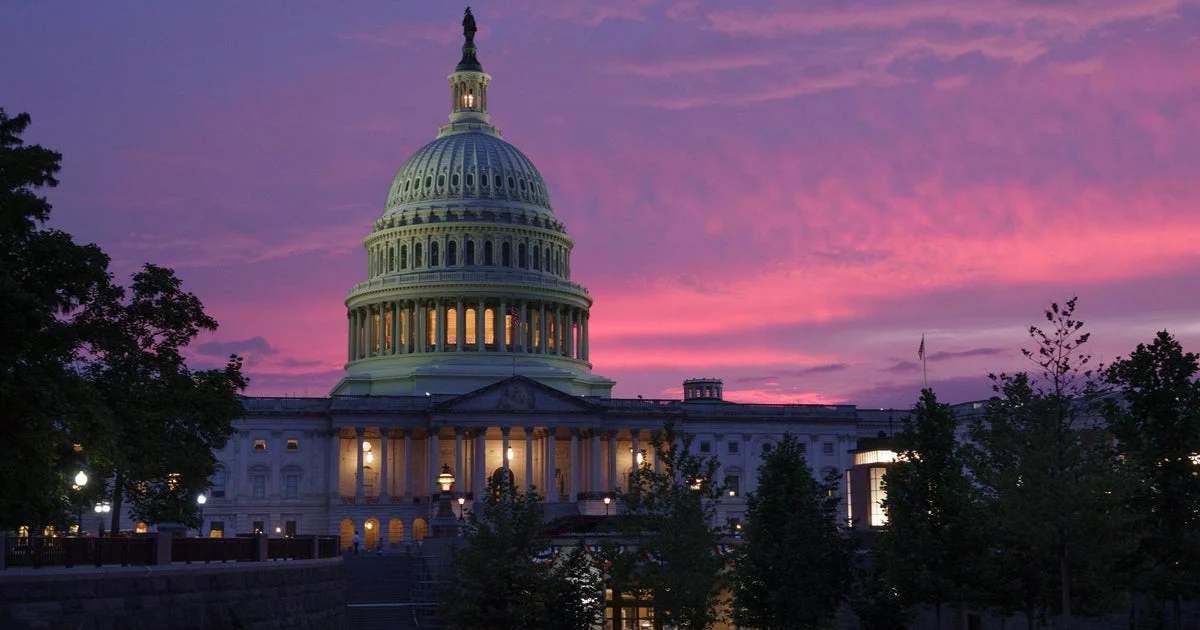
The U.S. Senate approved a continuing resolution on August 8 to fund the government through December 11, extending operations beyond the September 30 end of the fiscal year. The bill, passed with a 90 to 6 vote, moves next to the House of Representatives, where its fate remains uncertain amid partisan disagreements.
What Happened
The Senate passed the continuing resolution with bipartisan support, keeping government funding at current levels for approximately six weeks beyond the fiscal year’s close. The measure avoids controversial policy changes that threatened its approval earlier, and was championed by Republican Sen. Susan Collins of Maine, chair of the Senate Appropriations Committee, who praised the bill for excluding “poison pill” provisions. Key Senate appropriators from both parties negotiated the stopgap funding bill to avert a government shutdown ahead of the fall midterm elections.
Before the Senate vote, the GOP-led House had already passed a separate continuing resolution for funding through December, but that bill faced significant opposition from Democrats. Unlike the Senate measure, the House bill pursued a less bipartisan approach and included provisions that caused intra-party disputes.
The Senate bill contains language temporarily blocking political appointees in the administration from enacting a proposed federal grants rule, which Democrats argue would allow the cancellation of grants and effectively withhold federal funding. Democrats have pushed for permanently banning this rule, while Republicans are divided on even the temporary prohibition, posing potential challenges for House passage.
House Speaker Mike Johnson has yet to decide whether to advance the Senate’s bipartisan measure or pursue an alternate plan. His choice will be critical in determining whether the bill receives enough support to pass in the House when it reconvenes on August 31.
Key Facts
The Senate vote was 90-6 in favor of the continuing resolution extending government funding through December 11. The House bill, passed earlier, also aimed for December funding but drew strong Democratic opposition. The Senate measure maintains funding at current levels, incorporates a temporary ban on implementing a disputed federal grants rule, and restores funding flexibility for immigration enforcement agencies, specifically closing a funding transfer loophole for Border Patrol.
The Senate has a 60-vote threshold to advance legislation, making the bipartisan approach essential. The bill’s passage came just before a five-week August recess, with the House scheduled to return on August 31 and face pressure to finalize a funding agreement to avoid shutdown risks.
What This Means
The Senate’s approval of a bipartisan continuing resolution signals broad congressional recognition of the high political cost and practical challenges of a government shutdown less than three months before the midterm elections. Extending funding into December provides temporary certainty for federal agencies and employees, preventing immediate disruption of government services.
However, the House’s uncertain support illustrates ongoing partisan tension, especially around the federal grants rule included in the Senate bill. If the House rejects the Senate measure, lawmakers could return to contentious negotiations risking a shutdown before the elections. The temporary extension is a short-term fix that delays but does not resolve fundamental budgetary and policy disagreements.
For ordinary Americans, this stopgap measure means uninterrupted access to essential government functions such as social services, national security operations, and public health programs for the coming months. It also buys lawmakers time to formulate a comprehensive funding plan outside the immediate pressures of a shutdown crisis.
Background
This continuing resolution follows two record-breaking government shutdowns within the past year, episodes that have heightened lawmakers’ sensitivity to the political fallout associated with funding lapses. Previous budget fights have often fallen along deep partisan lines, with disputes over border security, social spending, and federal agency priorities hampering agreements. Efforts to maintain bipartisan consensus have been seen as crucial to avoiding further disruptions ahead of upcoming elections.
What Comes Next
The House will return from its August recess on August 31 and face mounting pressure to approve a funding bill before the current fiscal year ends on September 30. Speaker Mike Johnson’s decision on whether to adopt the Senate measure or pursue an alternative will shape the legislative agenda in the coming weeks. Failure to reach agreement by the deadline could lead to a government shutdown.
Sources
This article is based on reporting and publicly available information from the following source:
Read more Politics stories on Goka World News.