
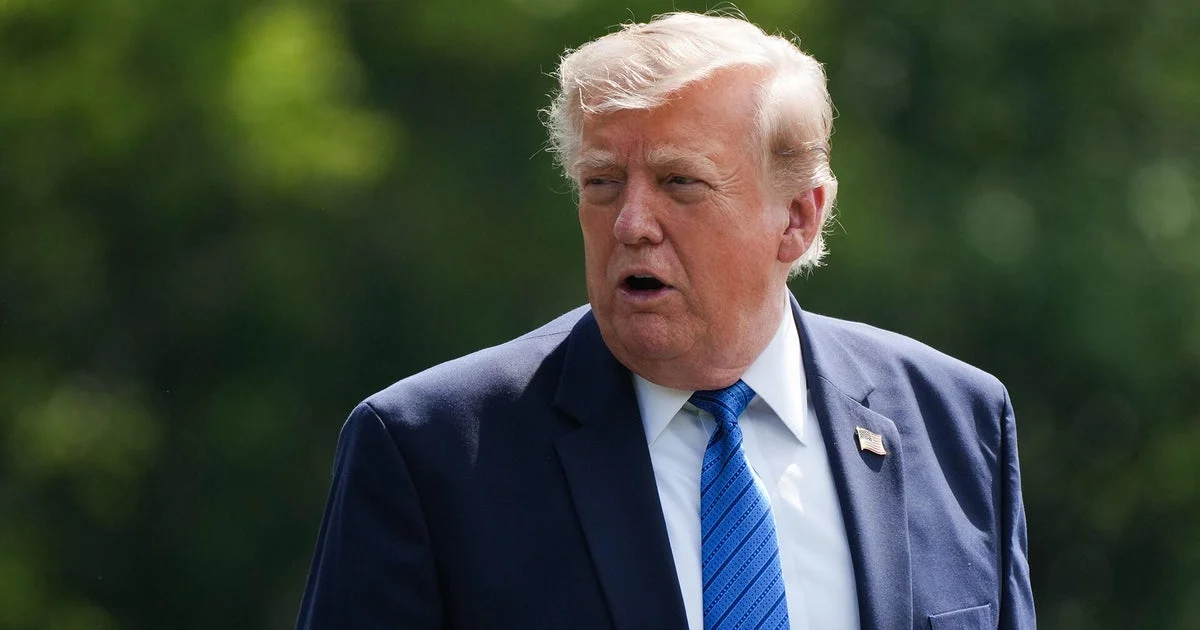
President Donald Trump announced a $180 million funding boost on August 7, 2026, to support educational and trade programs in the U.S. mining sector. The initiative aims to reverse the decline in mining students and expand the critical minerals workforce, vital for advancing domestic supply chains and manufacturing.
What Happened
At a State Department roundtable with educational leaders and cabinet members, President Trump revealed more than $180 million in grants targeted at mining education. The Department of Energy is launching a $100 million grant program to increase the number of graduates in mining and critical minerals-related fields within two years. These funds will back scholarships and educational programs, open to universities, community colleges, trade schools, and industry groups.
Separately, the U.S. military announced over $80 million in funding directed to three universities: the Colorado School of Mines will receive $32.7 million to establish a technology development hub; the South Dakota School of Mines will get $25 million for workforce development programs; and Johns Hopkins University will be granted $23.6 million for a recycling-focused initiative geared toward critical minerals.
The new technology hub at Colorado School of Mines will focus on scaling mineral processing, refining, recycling, and advanced materials technologies to feed into domestic supply chains. The roundtable featured Secretary of State Marco Rubio, Secretary of the Interior Doug Burgum, and Secretary of Commerce Howard Lutnick, who joined the announcement.
Key Facts
According to data from the Society for Mining, Metallurgy & Exploration and the Society of Mining Professors, mining engineering enrollment fell sharply from roughly 1,500 students eight years ago to fewer than 600 in 2023 nationwide. The $180 million initiative comprises:
- $100 million Department of Energy grant program for expanding mining and critical mineral workforce education.
- $80 million in military funding allocated to the three universities for technology development, workforce training, and recycling projects.
- $32.7 million to Colorado School of Mines for tech hub development.
- $25 million to South Dakota School of Mines for workforce programs.
- $23.6 million to Johns Hopkins University focused on recycling research.
In addition to education, the administration is investing in mining companies and battery manufacturers to reduce reliance on foreign sources of critical minerals like lithium, silicon, graphite, and rare-earth elements.
What This Means
This substantial funding reflects a strategic effort by the Trump administration to fortify the United States’ position in critical mineral production, a key sector underpinning national security and technological competitiveness. The grants address a pressing workforce shortage by encouraging more students to pursue mining and engineering disciplines, a vital step given the steep decline in mining program enrollments in recent years.
By supporting education and research in mining technology and recycling, the initiative aims to boost domestic supply chains, greatly reducing dependence on foreign suppliers, especially China, which currently dominates global critical mineral extraction and refining. This shift could strengthen America’s manufacturing base for electronics, aerospace, and defense industries.
For local economies near mining schools and projects, the funding promises new opportunities in education and employment. It may also indirectly sustain related industries such as construction, engineering services, and technology development, essential for maintaining U.S. competitiveness in high-tech and strategic commodities.
Background
The mining sector has been under pressure due to a dwindling pipeline of skilled graduates and increased global competition. Critical minerals are essential for products ranging from semiconductors to advanced weaponry and electric vehicles. The Trump administration has concurrently promoted the coal industry through $700 million in grants and regulatory rollbacks, and is now pivoting to broader critical mineral initiatives to secure raw material supply chains.
What Comes Next
Universities, colleges, trade schools, and industry organizations are invited to apply for the Department of Energy’s $100 million grant program. The military’s funded projects at the three universities are expected to commence shortly, with technology scaling and workforce development goals set for the next two years.
Sources
This article is based on reporting and publicly available information from the following sources:
Read more Politics stories on Goka World News.