
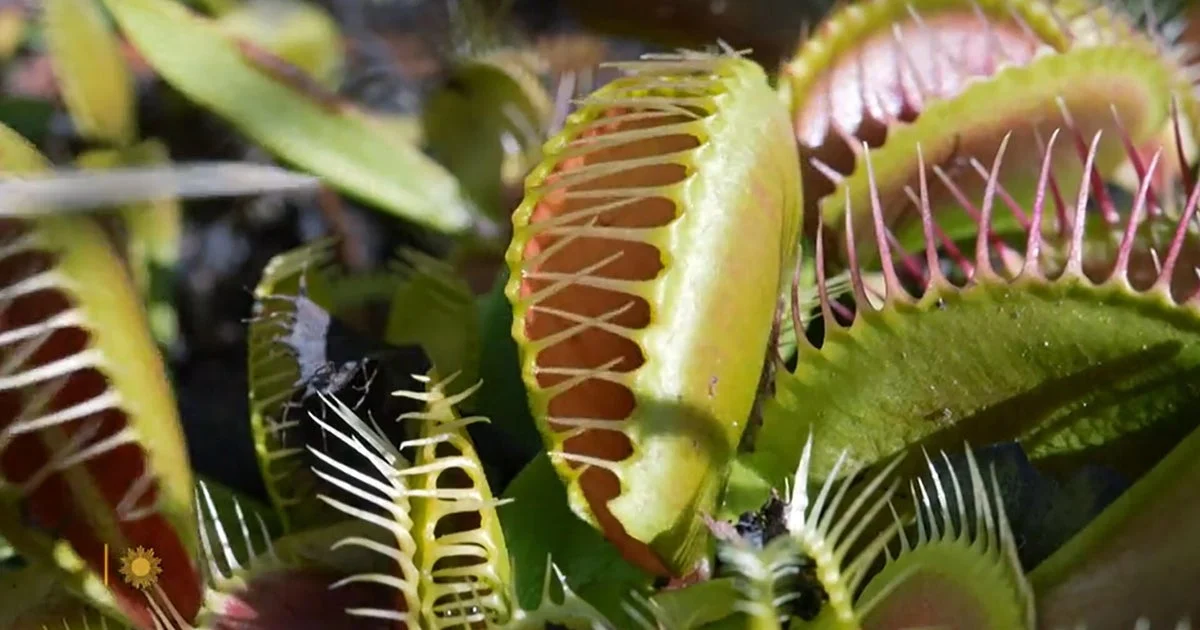
The Venus flytrap, a carnivorous plant endemic to the Carolinas, is experiencing a significant population decline as its natural habitat continues to disappear. Botanists and conservationists have sounded alarms and are intensifying efforts to safeguard this unique species, which has long fascinated scientists, including Charles Darwin.
What Happened
The Venus flytrap’s population is shrinking primarily due to ongoing habitat loss in its native range in North and South Carolina. This trend was highlighted during a recent interview between correspondent Seth Doane and Julie Moore, a botanist who has dedicated much of her career to protecting the species. Damon Waitt, director of the North Carolina Botanical Garden, also discussed the plant’s distinctive carnivorous traits and ecological importance. The interviews emphasize that despite its notoriety, the Venus flytrap faces mounting threats that could jeopardize its survival in the wild.
Key Facts
The Venus flytrap is uniquely adapted to nutrient-poor wetlands of the Carolinas. According to botanical experts interviewed, habitat destruction from development, agriculture, and land-use changes has accelerated over recent decades. The species is restricted to a relatively small geographic range, which increases its vulnerability. Charles Darwin famously described it as “the most interesting plant in the world” due to its carnivorous mechanism. Conservationists note that preserving intact wetland ecosystems is critical to maintaining existing populations.
What This Means
The decline of the Venus flytrap underscores broader environmental challenges surrounding habitat loss and ecosystem degradation in the southeastern United States. For local communities and ecosystems, the disappearance of such a specialized plant indicates disturbances in wetland health, which also support diverse species of animals and plants. Conservation efforts strive not only to protect this botanical curiosity but also to preserve the integrity of the wetland environment on which so many dependent forms of life rely. As a charismatic species, the Venus flytrap serves as a flagship for raising public awareness about the importance of protecting endangered habitats.
Moreover, the loss of the Venus flytrap would represent the disappearance of an evolutionary marvel. Its unique carnivory, evolved to survive nutrient-poor soils, provides valuable insights into plant adaptation and survival strategies. Protecting the species therefore also preserves opportunities for scientific study and education about biodiversity and evolution.
Background
Historically, the Venus flytrap was localized in a few counties within North and South Carolina, thriving in wetlands such as peat bogs and savannahs. Over time, urban expansion, drainage of wetlands, and other anthropogenic pressures have led to a significant contraction of its habitat. Botanical gardens and conservation groups have stepped in to cultivate the plant in protected environments while advocating for land conservation policies. Research institutions continue to monitor the wild populations and investigate restoration techniques to prevent the species’ extinction.
What Comes Next
Looking ahead, conservationists aim to secure legal protections for remaining habitats and expand restoration projects in areas where the Venus flytrap once thrived. Botanical gardens, including the North Carolina Botanical Garden, plan public education campaigns to encourage support for ongoing efforts. Monitoring programs will continue to assess population trends and habitat conditions to guide adaptive management strategies. These coordinated actions are essential as the species faces an uncertain future amid ongoing environmental pressures.
Sources
This article is based on reporting and publicly available information from the following source:
Read more Science Discoveries stories on Goka World News.