
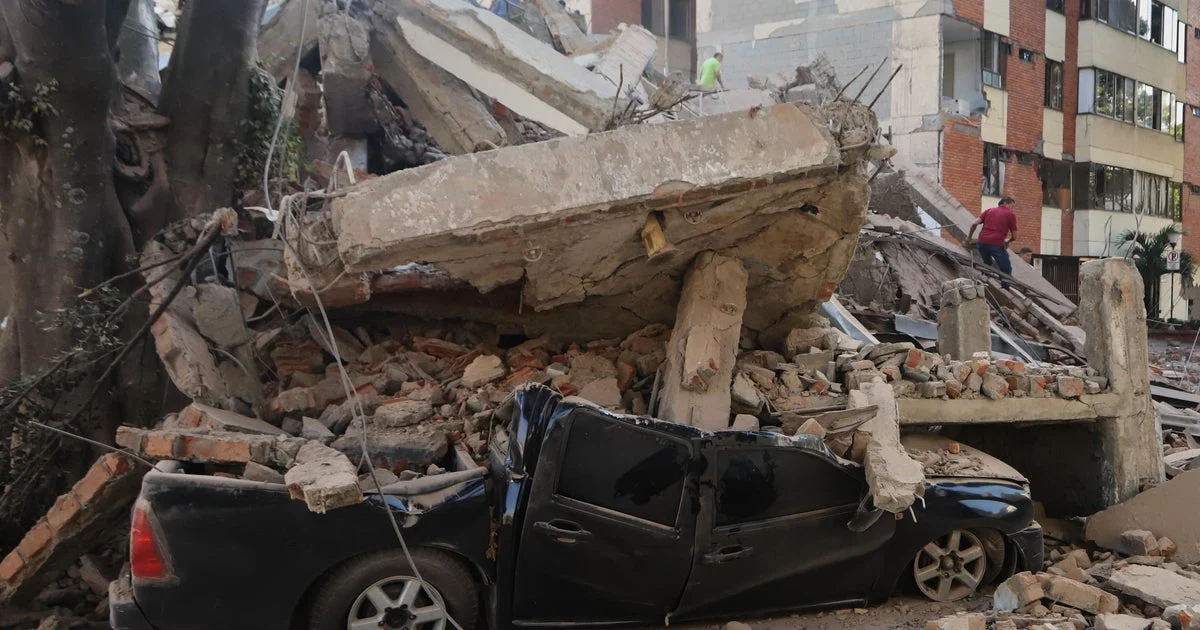
A 7.4-magnitude earthquake struck western Colombia on August 10, 2026, resulting in at least 111 deaths, dozens more injured, and extensive destruction across multiple provinces. As one of the strongest tremors ever recorded in Colombia, the disaster has caused widespread alarm and activated emergency measures nationwide.
What Happened
The earthquake’s epicenter was located near San José del Palmar, a rural community in the Chocó province, approximately 250 miles west of Bogotá, Colombia’s capital. The United States Geological Survey (USGS) reported the main quake struck around 8:34 a.m. Eastern Time. A 5.0-magnitude aftershock followed less than an hour later.
The tremor affected several regions including Chocó, Risaralda, Valle del Cauca, Caldas, and Antioquia. The cities of Pereira, Cali, Manizales, and Quibdó experienced severe impacts, with dozens of buildings collapsing and thousands of residents evacuated. Colombian President Abelardo de la Espriella declared a national emergency to accelerate recovery efforts.
Key Facts
At least 111 fatalities were confirmed, with the Risaralda province reporting 40 deaths, Valle del Cauca 27, Chocó 12, Caldas 4 (all in Manizales), and one in Antioquia, according to statements from Colombian officials and provincial governors. Additionally, 87 individuals sustained injuries.
Cali, Colombia’s third-largest city with a population of 2 million, suffered roughly 30 collapsed buildings, with widespread structural damage reported across over 20 municipalities. Manizales saw its neo-Gothic cathedral’s tower collapse, and Pereira’s mayor described people trapped beneath large quantities of rubble. Airports in multiple cities were shut down temporarily due to safety concerns.
The quake’s reach extended beyond Colombia, with shaking felt in the capital Bogotá, the northern coastal city of Barranquilla, and as far south as Ecuador. USGS estimates nearly 10.5 million people experienced strong to very strong tremors.
What This Means
This earthquake highlights Colombia’s vulnerability due to its geographic position along the Pacific “Ring of Fire,” a region prone to frequent seismic activity. The devastation in the coffee-growing western region recalls the deadly 1999 earthquake that also caused significant loss of life and property. It underscores the ongoing challenge of disaster preparedness and resilience in an area with complex tectonic dynamics.
The widespread damage to infrastructure and displacement of residents will require substantial humanitarian aid, reconstruction, and long-term recovery planning. The emergency declaration aims to expedite resource allocation, but the scale of destruction demands coordinated responses from national authorities and international aid groups.
Moreover, given recent deadly earthquakes in neighboring Venezuela, this event may intensify regional concerns about seismic hazards and cross-border disaster management cooperation in northern South America. The need for robust early warning systems and community readiness programs is likely to gain renewed attention.
Background
Colombia lies at the convergence of several tectonic plates, making it prone to frequent earthquakes. The western coffee region was severely affected by a magnitude 6.2 earthquake in 1999 that killed over 1,200 people. The country’s seismic activity occurs along faults within the Pacific Ring of Fire, where tectonic activity is heightened.
Recent months have seen intense seismic events in nearby Venezuela, with two devastating quakes in late June causing over 5,000 deaths and widespread destruction, raising regional alarms about seismic vulnerability.
What Comes Next
The Colombian government has prioritized rescue and recovery operations and has called for calm and vigilance among residents. Authorities are conducting building inspections to assess structural damage and risks. Air travel disruptions are expected to continue as safety assessments proceed.
International humanitarian groups, including organizations based in the United States, are mobilizing aid to support rescue efforts and relief for displaced populations, though exact assistance needs remain under evaluation.
Sources
This article is based on reporting and publicly available information from the following source:
Read more World News stories on Goka World News.