
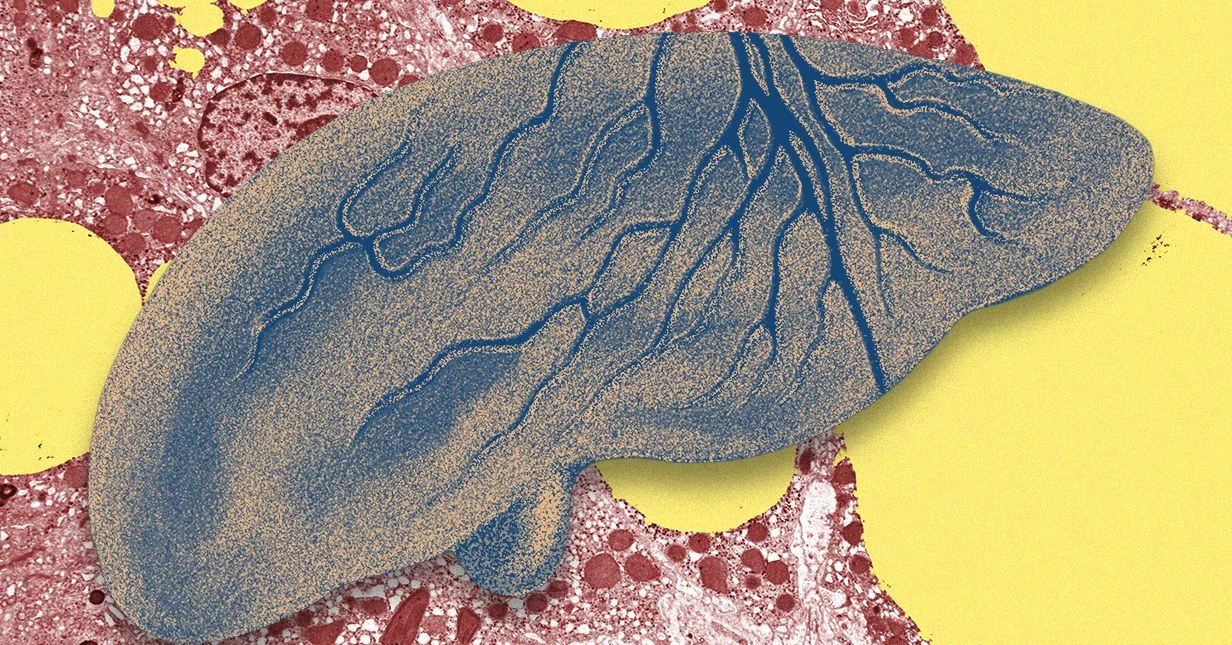
In response to the widespread fatty liver epidemic affecting over one billion people globally, health technology companies are harnessing artificial intelligence (AI) to enhance early detection and treatment. Danish startup Evido, collaborating with pharmaceutical giant Roche, has commercialized an AI-based diagnostic algorithm called LiverPRO, designed to assess the risk of liver fibrosis more accurately than traditional methods.
What Happened
Researchers and medical professionals have increasingly turned to AI tools to detect fatty liver disease at earlier and more treatable stages. The LiverPRO algorithm utilizes nine routine blood biomarkers alongside patient age to generate a risk score for liver fibrosis. This technology has been tested on a cohort of over 470,000 middle-aged individuals, demonstrating superior predictive performance compared to the commonly used Fib-4 index. Additionally, AI models are being developed to analyze imaging data, such as chest x-rays, to identify signs of excess liver fat incidentally. For example, a Japanese study showed that an AI system analyzing routine x-rays could detect fatty liver disease with about 82% accuracy.
Key Facts
Evido’s LiverPRO algorithm, developed in partnership with Roche, represents a notable advancement in the field by improving detection accuracy and enabling timely clinical intervention. Traditional tools like the Fib-4 index rely on limited markers and can result in false positives or missed cases, particularly among certain age groups. AI-based approaches have also been explored by international hepatology groups, such as the ALADDIN model, which showed increased efficacy in identifying patients likely to benefit from treatments like resmetirom without invasive biopsies. Leading experts, including Jeffrey Lazarus from CUNY and Jonathan Dranoff from Yale, emphasize the need for automated scoring systems integrated into routine care to alleviate physician workload.
What This Means
The application of AI in fatty liver disease diagnosis carries significant implications for public health and clinical practice. Early detection allows patients to reverse liver damage through lifestyle changes, reducing the risk of progression to costly and life-threatening conditions such as cirrhosis and liver failure. Automated AI screening embedded within existing healthcare workflows can help doctors prioritize at-risk patients without adding burden, potentially improving patient outcomes and lowering healthcare expenses. Given that advanced liver disease treatments and transplants are highly expensive, systematic early identification through AI could transform management strategies for a condition currently impacting nearly a third of the adult population worldwide.
Moreover, AI-powered diagnostics may help bridge gaps in current clinical protocols, where many high-risk individuals remain undiagnosed until advanced stages. The potential for AI tools to analyze routine blood tests and imaging studies without additional invasive procedures introduces a scalable, cost-effective approach to tackling the growing epidemic.
Background
Fatty liver disease arises when excess fat accumulates in the liver, leading to inflammation, fibrosis, and ultimately liver failure if untreated. The prevalence of fatty liver is increasing globally, partly linked to rising obesity and type 2 diabetes rates. Traditional diagnostic methods such as blood-based Fib-4 scoring and enhanced liver fibrosis tests exist but are underutilized in primary care. This gap in early detection has prompted interest in leveraging machine learning models trained on large medical datasets to identify early warning signs more efficiently.
What Remains Unclear
While AI tools like LiverPRO demonstrate promising accuracy, full integration into routine clinical practice is still pending. Specific details regarding regulatory approvals, coverage of diverse populations, and real-world application logistics are yet to be confirmed. The long-term impact of these AI-driven diagnostic pathways on patient adherence, clinical outcomes, and healthcare costs remains to be evaluated through ongoing studies.
What Comes Next
Health technology developers, researchers, and pharmaceutical partners are moving towards broader implementation of AI diagnostics for fatty liver disease. Continued validation studies and regulatory reviews will shape the timeline for mainstream adoption. Meanwhile, clinical experts advocate for incorporating AI risk scoring into electronic health record systems to streamline early case identification and patient referral.
Sources
This article is based on reporting and publicly available information from the following sources:
Read more Health & Public Health stories on Goka World News.