
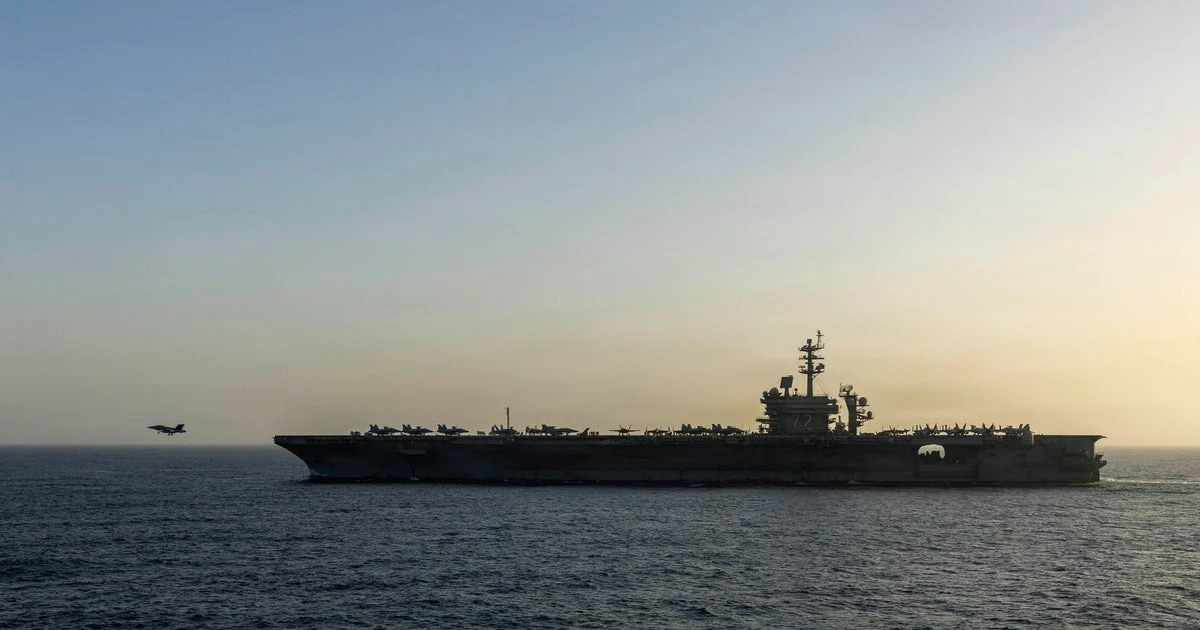
The U.S. Navy is deploying the USS George Washington aircraft carrier to the Middle East to replace the USS Abraham Lincoln, which has been deployed for nearly nine months amid reported challenges involving supply issues and crew mental health concerns.
What Happened
The USS Abraham Lincoln, deployed in November 2025 initially to the Pacific, was redirected to the Middle East ahead of escalating tensions involving Iran. Stationed there for almost nine months, the ship’s prolonged deployment has prompted worry among families of crew members over supply shortages and mental health strains. During a recent town hall meeting with acting Navy Secretary Hung Cao, family members voiced their frustration with the lack of updates on the carrier’s return timeline. Cao confirmed in a social media post that the Lincoln’s return is planned as part of a scheduled rotation.
The USS George Washington, based in Yokosuka, Japan, departed in May for a Pacific patrol and is currently moving west through the Strait of Malacca towards the Middle East. This replacement will join the USS George H.W. Bush carrier already in the region, temporarily leaving the U.S. without a carrier in the Pacific.
Key Facts
- The USS Abraham Lincoln has been deployed for nearly nine months, since November 2025.
- Family members reported concerns about supply shortages, including early food delays and mental health issues among sailors.
- The Navy has denied a rise in suicidal ideation or attempts aboard the Lincoln, though they are investigating an incident earlier this month where a sailor went overboard but was safely recovered.
- Additional social workers and counselors have been sent to the Lincoln to support crew mental health needs.
- Supply delays have been acknowledged due to the disrupted supply hubs in the region; critical supplies like food, hygiene items, and mail are prioritized.
- Defense and Navy officials, including Secretary Cao and Defense Secretary Pete Hegseth, emphasized no lapses in critical support and disputed some media reports portraying the conditions as dire.
What This Means
This carrier replacement highlights the operational strain on U.S. naval assets amid prolonged deployments in geopolitically sensitive regions like the Middle East. For military families and service members, extended tours aboard ships can exacerbate stress, impacting morale and wellbeing despite official reassurances. The Navy’s effort to rotate carriers ensures continuity of mission readiness while attempting to address these human factors.
The transition also underscores the strategic balancing act of maintaining naval presence in multiple theaters simultaneously. The departure of the George Washington from the Pacific creates a temporary gap there, illustrating the Navy’s challenge in allocating limited assets amid rising global tensions. For policymakers and military planners, this rotation is a reminder of the logistical and personnel hurdles in sustaining long-term deployments without undermining combat readiness or sailor welfare.
What Comes Next
The USS George Washington’s arrival in the Middle East will mark the official relief of the USS Abraham Lincoln, allowing the latter to return home as scheduled. The Navy’s ongoing investigations into overboard incidents and mental health cases will continue, alongside measures to enhance support resources for deployed sailors. Further updates on deployment rotations and ship conditions are expected to be closely monitored by Congress and military family groups.
Sources
This article is based on reporting and publicly available information from the following sources:
Read more US News stories on Goka World News.