
China’s leadership under President Xi Jinping has articulated a dual approach to artificial intelligence regulation that promotes openness and cooperation while simultaneously emphasizing security and control. This nuanced stance reveals an ongoing debate within China regarding the future of open-weight AI models—those whose full trained parameters are publicly available for download and use—and the national interest in balancing innovation with risk mitigation.
What Happened
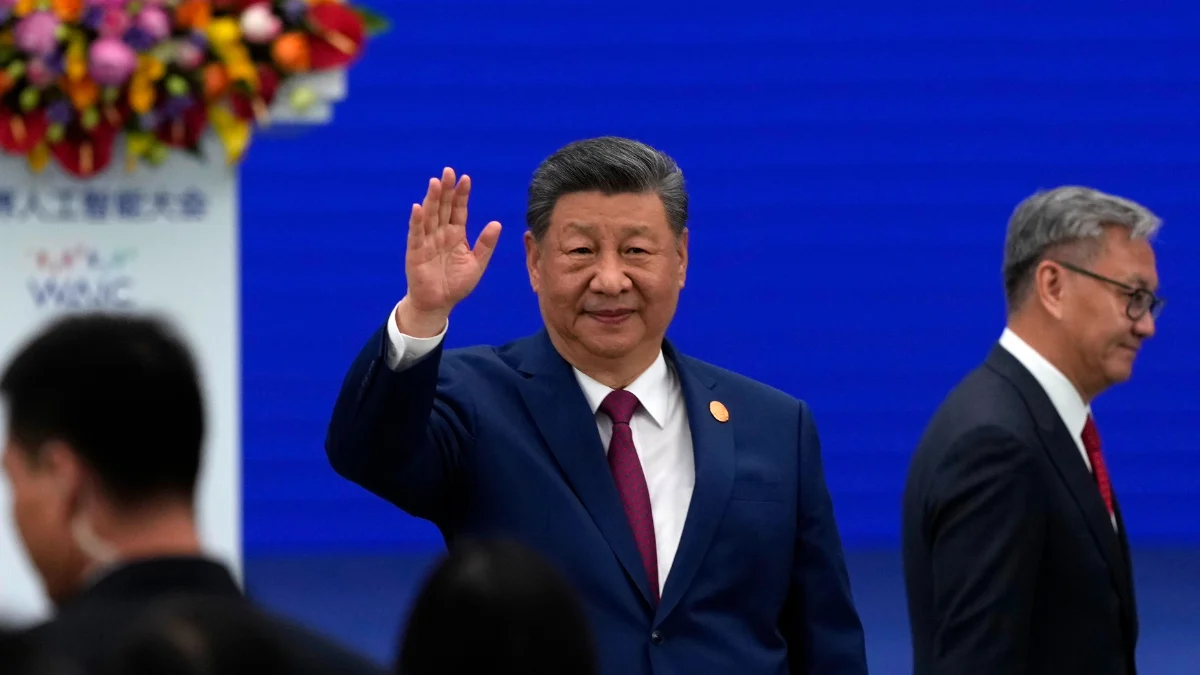
In July 2026, during the World AI Conference in Shanghai, President Xi Jinping reaffirmed China’s commitment to fostering open source development and international cooperation in AI. Specifically, Xi stated the need to “encourage open source and openness, cooperation and sharing” but also underscored “strengthen risk awareness, and ensure security and controllability.” These remarks reflect the principles embedded in China’s existing generative AI regulation, which officially mandates that “the state is to maintain equal emphasis on development and security.” Observers note this reflects a deliberate, unresolved tension in China’s AI policy balancing open availability of models against concerns about security risks.
Key Facts
This policy direction pertains to China’s national AI regulatory framework established since the 2017 New Generation AI Development Plan. Key developments include:
- Release of open-weight models like DeepSeek V4, GLM 5.2, and Kimi K3 by Chinese firms, which remain available despite potential misuse risks.
- Chinese generative AI regulation explicitly enshrining a dual focus on promoting AI advancement and maintaining security and control.
- Xi Jinping’s July 2026 speech reiterating openness but paired with caution about “loss of control” risks.
- Ongoing government discretion to impose restrictions on future AI model releases if perceived risks surpass acceptable thresholds.
- Reference by international experts to China’s strong domestic cyber controls and censorship regime that ostensibly mitigate political destabilization via AI.
What This Means
The Chinese government’s AI stance signals a careful weighing of benefits and risks that will shape future regulatory choices. Open-weight AI models support innovation, accessibility, and global influence for Chinese technology, especially as competition with U.S. firms intensifies amid geopolitical technology rivalry. By making capable AI models openly accessible, China can foster an ecosystem attractive to investors, researchers, and startups, thereby sustaining growth despite semiconductor supply constraints.
However, the simultaneous emphasis on security suggests Beijing is prepared to intervene if AI capabilities materially threaten national stability, cybersecurity, or international standing—especially if models facilitate cyberattacks or biological risk development. The state’s existing regulatory framework and cybersecurity apparatus place it in a strong position to monitor and curb AI risks before they escalate.
This balancing act is significant for global AI development, as China remains a major player. How it manages open AI models could influence norms on openness, security, and risk governance elsewhere, particularly in the face of emerging novel threats such as AI-enabled cyber weaponry or biosecurity risks. For stakeholders globally, Beijing’s approach underscores that AI openness is not absolute but conditional on security calculations, reflecting a pragmatism that might evolve with future challenges.
Background
China’s AI policy roots trace to the 2017 New Generation AI Development Plan, which advocated openness in AI research and development well before the LLM era. Since then, China has developed detailed generative AI regulations emphasizing equal importance of AI development and security concerns. The open release of models such as DeepSeek and the Qwen series by Alibaba illustrates government tolerance for broad model dissemination so long as risks remain manageable.
What Remains Unclear
Despite official statements, it remains unresolved how China plans to calibrate restrictions on open-weight models if future AI systems surpass current capabilities or introduce significant risks. Questions persist over the thresholds that would prompt Beijing to restrict open releases, the exact forms of control it would impose, and how compliance would be enforced. The international community also awaits clarity on how China will balance openness with securing advanced AI from malign uses and geopolitical exploitation.
What Comes Next
China’s AI regulatory regime is under continuous development, with compliance monitoring and potential adjustments tied to assessments of technological risk and benefit. Future AI policy announcements and regulatory updates are expected, reflecting technological advances and corresponding risk landscapes. Stakeholders should watch for any shifts in policy that either tighten or relax AI openness, particularly following domestic or international incidents linked to AI misuse or breakthroughs.
Sources
This article is based on reporting and publicly available information from the following sources:
Read more AI Regulation stories on Goka World News.