
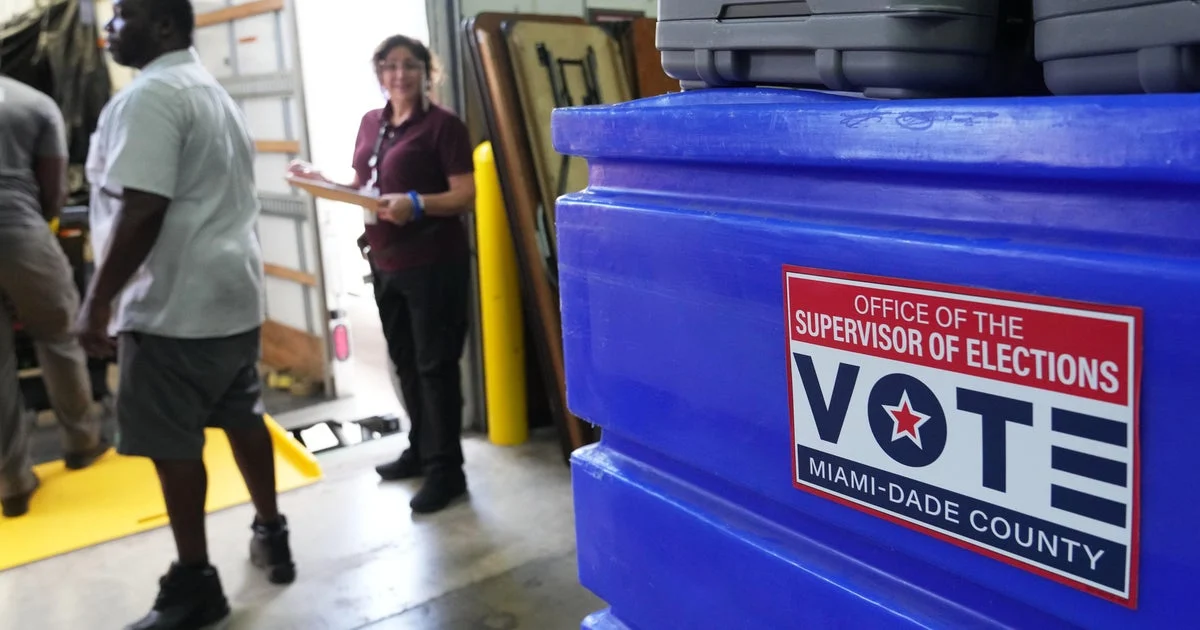
Florida voters cast ballots on August 18, 2026, in pivotal primaries to determine nominees for governor and the U.S. Senate, while other key races unfold in Alaska, Wyoming, and California. The outcomes will influence the November general elections and represent significant shifts in political power and party strategies.
What Happened
In Florida, the Republican primary for governor has drawn wide attention as the incumbent GOP Governor Ron DeSantis is term-limited and cannot run again. The leading Republican candidate is Rep. Byron Donalds, a prominent supporter of former President Donald Trump with a substantial campaign fund of about $90 million. Donalds faces competition from ten other Republicans, notably Lt. Gov. Jay Collins and far-right activist James Fishback, both striving to challenge Donalds’ lead.
On the Democratic side, six candidates seek their party’s nomination, with former Republican Rep. David Jolly seen as the frontrunner. Jolly previously represented St. Petersburg and switched to the Democratic Party, mirroring a growing trend of party realignment in Florida politics.
The GOP Senate primary features Ashley Moody, Florida’s Attorney General and appointee to the Senate seat after Marco Rubio’s appointment as Secretary of State. Moody faces three Republican challengers but is favored to secure the nomination. In the Democratic Senate primary, retired Lt. Col. Alex Vindman—a former National Security Council expert on Ukraine—and state representative Angie Nixon are competing for their party’s nomination.
Other races include Florida’s redrawn congressional districts following legislative efforts by Governor DeSantis intended to bolster Republican advantages. Several incumbents and challengers, both Democratic and Republican, are engaged in competitive primaries in these modified districts. For example, Democratic Rep. Darren Soto faces seven GOP challengers in a newly redrawn district designed to favor Republicans.
Outside Florida, Alaska is holding a nonpartisan top-four primary for its Senate seat, with incumbent Republican Sen. Dan Sullivan and former Rep. Mary Peltola, a Democrat. The race includes another candidate named Daniel J. Sullivan, whom the Alaska Supreme Court ruled can remain on the ballot. Meanwhile, Wyoming’s open GOP Senate seat has drawn multiple candidates, including Trump-endorsed Harriet Hageman, facing a crowded field.
In California, a special election is underway for the 14th District following the resignation of Rep. Eric Swalwell amid allegations of misconduct. Two Democrats, state Senator Aisha Wahab and Bay Area Rapid Transit Director Melissa Hernandez, advanced to the general election in November.
Key Facts
Florida’s governor primary features Rep. Byron Donalds, who has raised approximately $90 million and is backed by former President Trump. The race includes 10 other Republicans, with Jay Collins branding himself as “DeSantis-appointed.” James Fishback, associated with the alt-right groyper movement, has drawn attention for inflammatory rhetoric but has minimal campaign funding.
Democrat David Jolly, a former Republican congressman, leads six Democratic contenders for governor. Ashley Moody, Florida’s attorney general, is the leading GOP Senate candidate after her appointment to fill Rubio’s former seat.
Democrat Alex Vindman, notable for his testimony during former President Trump’s first impeachment, and Angie Nixon, a progressive state lawmaker, are the major contenders for the Democratic Senate nomination.
Governor DeSantis’s redistricting favors Republicans in 24 of 28 congressional districts. For example, Rep. Darren Soto’s district was redrawn to increase GOP advantages, although Soto runs unopposed for the Democratic nomination.
In Alaska, Sen. Dan Sullivan has raised over $11 million, while incumbent challenger Mary Peltola’s campaign has brought in over $18 million. The Alaska Supreme Court allowed a candidate named Daniel J. Sullivan to remain on the ballot despite a legal challenge.
Wyoming’s Republican primary to replace Sen. Cynthia Lummis is notable for Trump’s endorsement of Harriet Hageman, with nine Republicans and two Democrats competing.
The California 14th District special election saw Democratic candidates Aisha Wahab and Melissa Hernandez advance after the June primary, with external groups like AIPAC investing millions in the race.
What This Means
Florida’s primaries solidify the state’s evolving political landscape where Republican dominance, reinforced by Governor DeSantis’s redistricting, poses substantial challenges to Democratic competitiveness. The extensive fundraising and strong backing by former President Trump indicate high stakes for the GOP governor and Senate nominations, which will set the tone for Florida’s role in national politics.
Donald’s commanding lead in the governor’s race suggests continuity of conservative policies, but activists pushing on the far right, like Fishback, reveal internal fractures within the party, potentially shaping the GOP’s ideological direction in Florida.
The Senate race, with Ashley Moody’s appointment and competitive Democratic challengers, reflects shifting priorities as candidates emphasize national security, labor, and grassroots support, underscoring the national significance of state-level contests.
Alaska’s top-four nonpartisan primary system and the presence of two candidates named Daniel J. Sullivan add complexity to an already competitive and critical Senate race that could influence control of the U.S. Senate.
Meanwhile, Wyoming’s open GOP seat highlights Trump’s continuing influence in shaping Republican candidacies. The California special election, meanwhile, exposes factional tensions within the Democratic Party and the impact of significant outside spending on local races.
Background
Florida has not elected a Democratic governor since 1994, with DeSantis’s 2022 landslide victory marking the state’s shift from swing to solid Republican. His recent redistricting efforts are designed to expand GOP advantages in congressional races after the Supreme Court altered protections under the Voting Rights Act.
Alex Vindman, a key witness in Trump’s first impeachment, has drawn public attention due to his testimony about Trump’s Ukraine phone call. Angie Nixon gained prominence by leading Democratic opposition to DeSantis’ congressional map.
Eric Swalwell resigned from Congress earlier this year amid multiple allegations of misconduct, prompting the California 14th District special election.
What Comes Next
Winners from Tuesday’s primaries will move on to the November general elections, which will decide Florida’s governor and Senate seats, congressional representation, and other key offices. In Alaska, the top four candidates from the nonpartisan primary advance to the general election ballot.
Campaigns will intensify in the coming months, with high-profile endorsements, additional fundraising, and strategic party efforts influencing voter turnout and race outcomes.
Sources
This article is based on reporting and publicly available information from the following source:
Read more Politics stories on Goka World News.