
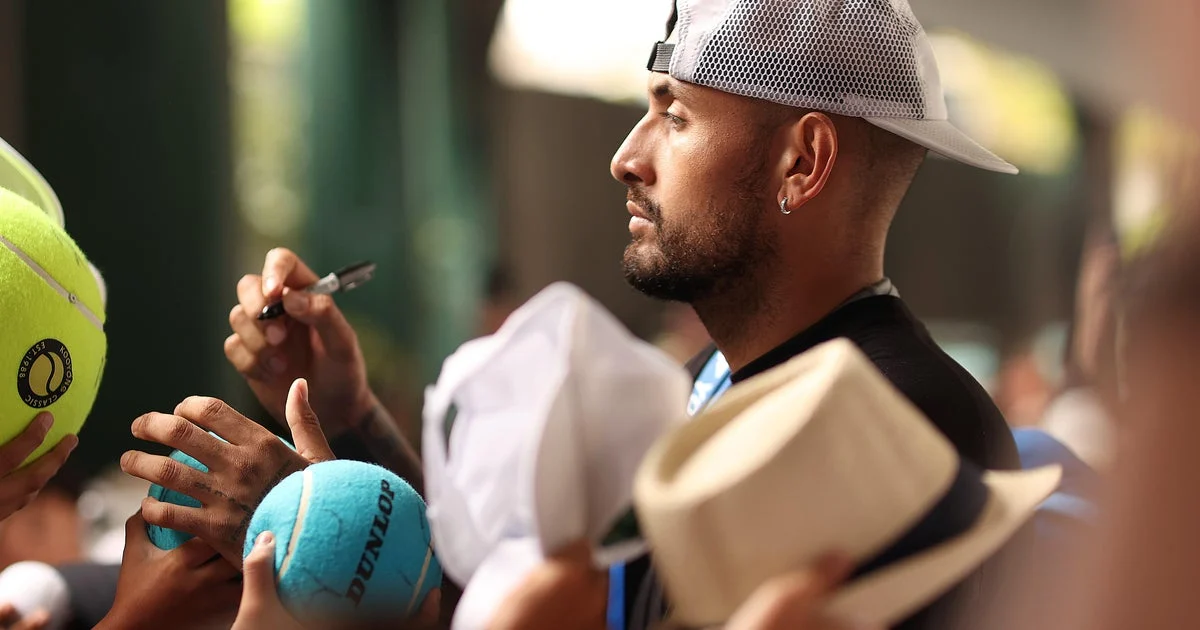
Australian tennis player Nick Kyrgios has been provisionally suspended from all professional tennis following a positive test for cocaine. The suspension, announced by the International Tennis Integrity Agency (ITIA), underscores the ongoing issue of doping in global sports and affects Kyrgios’s participation in tournaments worldwide.
What Happened
Nick Kyrgios, once ranked world number 13 and a former Wimbledon finalist, has been provisionally suspended since August 4, 2026. The athlete provided the sample during a June tournament held in Mallorca, Spain. The test detected benzoylecgonine, a metabolite indicating cocaine use, according to the ITIA.
The suspension blocks Kyrgios from competing in, or coaching at, any events sanctioned by international or national tennis bodies until the suspension is lifted. Kyrgios has yet to appeal the suspension.
Key Facts
Kyrgios’s positive test followed a sample collected at a professional event in Mallorca in June 2026. The ITIA confirmed that the detected substance was benzoylecgonine, directly linked to cocaine consumption. Since being provisionally suspended, Kyrgios has dropped significantly in rankings, falling to 919th as of mid-2026 after battling injuries and limited play.
In July 2026, Kyrgios competed in the Wimbledon doubles event with partner Alexander Bublik but was ousted in the first round. His social media statements acknowledged the mistake, taking full responsibility and apologizing to fans, family, sponsors, and younger followers.
What This Means
This suspension is significant not only for Kyrgios’s career but also for tennis’s efforts to maintain a clean and credible sport worldwide. Doping allegations threaten the perception of fairness, especially for high-profile athletes with broad fanbases. Kyrgios’s admission of personal and mental struggles amid declining physical capacity highlights the immense pressures athletes face nearing the end of their careers. His case may prompt closer scrutiny and support mechanisms for players coping with physical and psychological challenges.
For the tennis community and sponsors, Kyrgios’s suspension can affect tournament lineups, viewership, and endorsement deals. More broadly, it illustrates the continuing challenge sports organizations face in enforcing anti-doping regulations consistently and transparently across jurisdictions.
Background
Kyrgios, 31, has long been a controversial figure in tennis. Known for his on-court outbursts and candid personality, he has publicly acknowledged past personal difficulties, including a 2023 admission of assault on his ex-partner and previous controversies over his conduct and social media endorsements.
Despite these issues, Kyrgios had maintained a reputation for rejecting doping, once criticizing high-profile doping cases in tennis. His suspension contrasts sharply with his earlier statements and brings complex attention to his legacy within the sport.
What Comes Next
The ITIA has outlined that Kyrgios retains the right to appeal the provisional suspension but has not done so as of mid-August 2026. Kyrgios announced a voluntary hiatus from social media and public appearances for a month to focus on personal recovery. The timeline and outcome of his suspension remain to be determined, pending possible appeals and further investigation.
Sources
This article is based on reporting and publicly available information from the following sources:
Read more World News stories on Goka World News.