
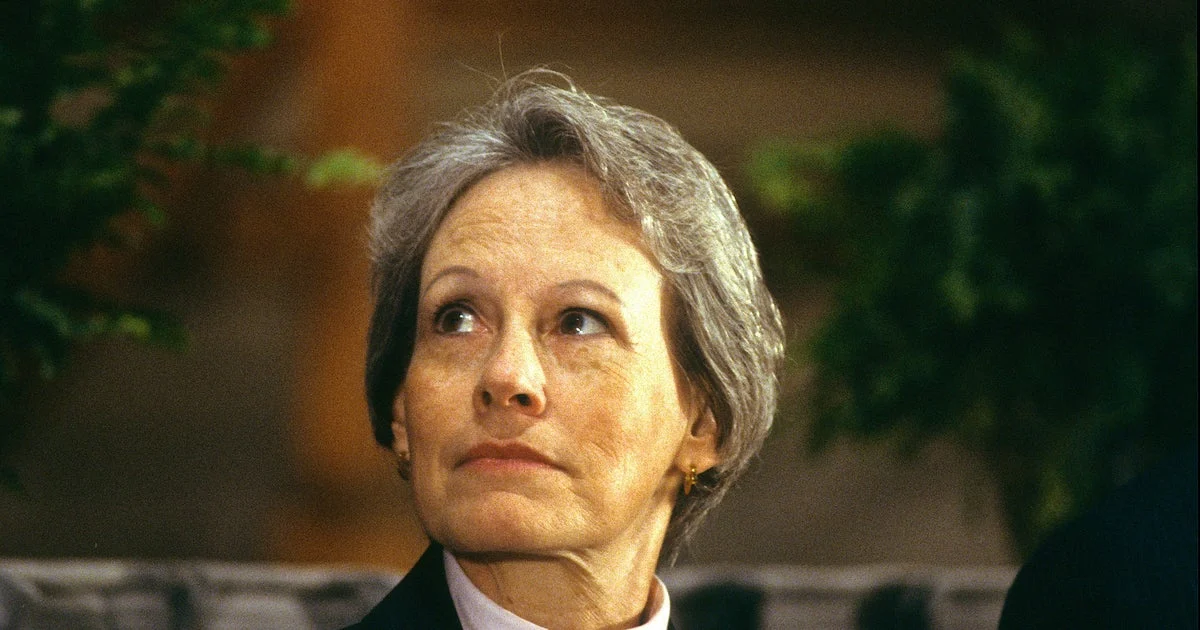
Nancy Kassebaum Baker, the first woman elected to the U.S. Senate without following a spouse into office and a longtime moderate Republican representing Kansas, died on Friday at the age of 94, her son, Bill Kassebaum, confirmed. Known for an independent approach to governance and bridging political divides, Kassebaum Baker left a lasting mark on Kansas politics and national legislation during her nearly two decades in the Senate.
What Happened
Kassebaum Baker was elected to the U.S. Senate in 1978 as a Republican and served three full terms until her retirement in 1997. She was recognized as an independent-minded lawmaker willing to prioritize Kansas and national interests over party orthodoxy. Early in her tenure, she notably declined to endorse a balanced budget amendment, signaling a pragmatic stance on fiscal policy. She chaired the Senate Labor and Human Resources Committee and successfully sponsored bipartisan legislation, including a 1996 health insurance reform law co-named with Senator Ted Kennedy. Her service extended beyond the Senate, participating in bipartisan commissions and international diplomatic efforts. Kassebaum Baker married former Senator Howard Baker in 1996, marking the first Senate marriage between two former senators.
Key Facts
Nancy Kassebaum Baker was born on July 29, 1932, the daughter of Kansas Governor Alf Landon. She held a political science degree from the University of Kansas and a master’s in diplomatic history from the University of Michigan. Elected in 1978 with 54% of the vote, she was re-elected in 1984 and 1990 with over 70% each time. She served as the Senate committee chair and was the only woman to hold such a position at the time of her retirement. After leaving office, she continued in public service through roles such as membership on bipartisan commissions. She was married twice and had four children. Her moderate Republican stance included support for an assault weapons ban championed by President Bill Clinton, a position that generated intense opposition among conservative constituents.
What This Means
Nancy Kassebaum Baker’s legacy represents a significant chapter in the evolution of women’s political leadership and moderate Republican governance during a period of increasing political polarization. Her ability to work across party lines and maintain the trust of a broad constituency highlights the practical impact of pragmatic politics, especially in a state like Kansas known for its conservative roots. For voters and lawmakers today, her career underscores the potential for bipartisan cooperation on complex issues like healthcare and gun control. Her willingness to diverge from party lines, especially on controversial matters, offers a model for elected officials navigating the tension between ideological loyalty and constituent needs.
Background
Kassebaum Baker’s political career followed her family’s deep public service tradition, notably her father Alf Landon’s tenure as governor and 1936 GOP presidential nominee. Before her Senate career, she worked in local governance, including a school board position and as a staffer for Kansas Senator James Pearson. Her election campaign in 1978 was notable for its modest spending and competitive primary field, underscoring her appeal as a fresh voice. Throughout her Senate years, she was part of a shrinking group of moderate-to-liberal Republicans, resisting the party’s conservative shift in the 1990s and beyond. After retirement, she remained politically active, endorsing candidates across party lines when she felt it was appropriate and advocating for adherence to democratic norms.
Sources
This article is based on reporting and publicly available information from the following source:
Read more US News stories on Goka World News.