
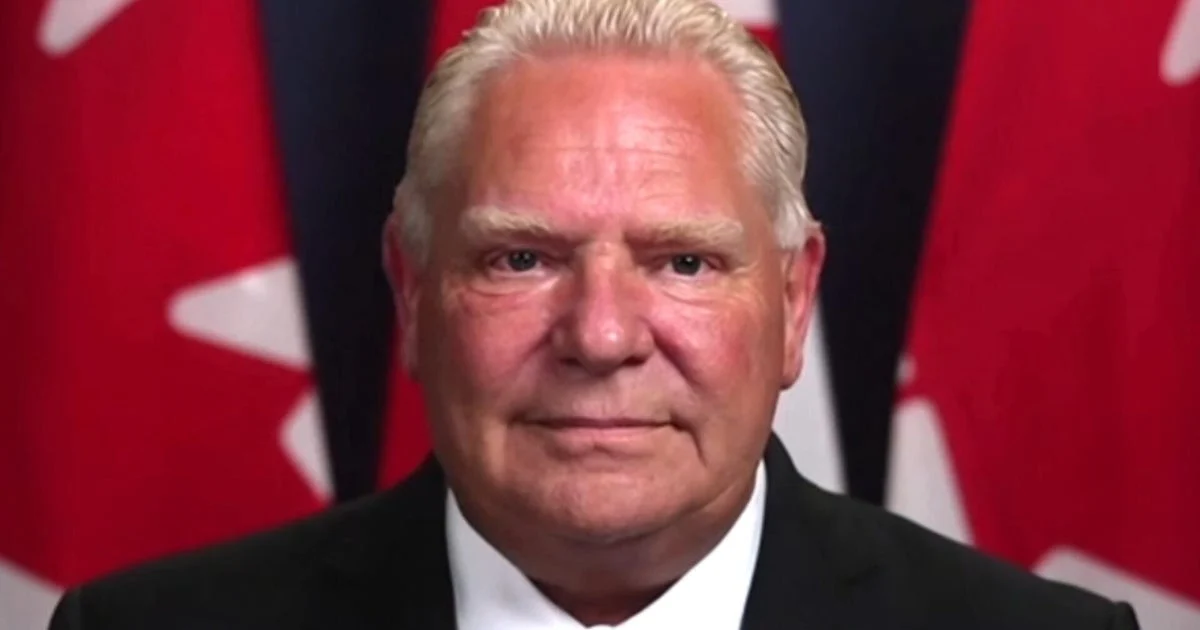
Ontario Premier Doug Ford sharply criticized U.S. President Donald Trump, accusing him of treating Canada like “Communist China” amid a growing trade conflict. The dispute escalated after failed trade negotiations, with both countries imposing retaliatory tariffs on billions of dollars worth of goods. Ford expressed hope for a fair resolution but warned that a poor deal would be worse than no deal at all.
What Happened
Tensions between the United States and Canada intensified last week when trade talks ended without reaching a new agreement. Following the breakdown, the Trump administration imposed 50% tariffs on roughly $20 billion in Canadian goods. In response, Canadian Prime Minister Mark Carney announced matching 50% tariffs on select U.S. imports, set to begin on September 8.
The dispute has triggered a war of words between Ford and Trump. Trump called Ford “unimpressive” and a “flunky” of Carney, while Ford labeled Trump a “dictator” and dismissed his threats to rename Lake Ontario as “Lake America.” Furthermore, Trump signaled consideration of further tariffs on Canadian automotive and steel imports starting next year.
Key Facts
The ongoing tariffs affect approximately $20 billion worth of goods on each side. Canadian retaliatory tariffs are scheduled to take effect September 8. The Trump administration has also threatened additional tariffs targeting the automotive and steel sectors starting next year. Ford criticized these moves as “unprovoked attacks” that will hurt businesses deeply integrated across the border.
Ford highlighted Canada’s financial resilience amid the dispute, contrasting it with the United States’ $40 trillion national debt. He also noted Canada’s efforts to aid companies and workers affected by the tariffs and referenced Canada’s strategy to diversify its trade partnerships globally.
What This Means
This escalating trade dispute underscores the fragile nature of the economic relationship between Canada and its largest trading partner, the United States. With tariffs targeting key industries like automotive manufacturing, cross-border supply chains could face significant disruptions. This could result in higher costs for manufacturers, potential job losses, and increased prices for consumers on both sides.
Ford’s criticism reflects broader frustrations in Canada over what is perceived as unfair treatment despite the countries’ close alliance. His emphasis on Canada’s financial stability and diversification strategy indicates a measured confidence in weathering the storm but also a warning that prolonged tensions could have lasting negative impacts.
For ordinary Canadians and Americans, the dispute may mean increased prices for certain goods and uncertainty in labor markets tied to cross-border trade. The standoff also highlights the risks when long-standing trade relationships are politically weaponized, opening the door for economic volatility.
Background
The U.S. and Canada have one of the largest bilateral trade relationships worldwide, with billions of dollars in goods and services crossing the border daily. Recent negotiations aimed to update trade arrangements following the U.S.-Mexico-Canada Agreement (USMCA) but stalled amid demands on tariff reliefs and other trade conditions.
Prior to these talks, tensions were already palpable as tariffs on steel and aluminum imports from Canada had been a flashpoint for several months. The expanded tariffs and retaliatory measures mark a significant escalation affecting many sectors intertwined across the border economy.
What Remains Unclear
The future trajectory of negotiations remains uncertain, with conflicting accounts on which side shifted demands at the last minute. Ford accused U.S. officials of “changing the goalposts” throughout talks, while U.S. officials blamed Canadian negotiators for additional last-minute conditions. The timing and scale of any further tariffs, especially in the automotive sector, have not yet been finalized.
What Comes Next
Canadian tariffs will take effect starting September 8, as planned. The United States has signaled possible new tariffs from next year, primarily on automotive and steel imports, pending further actions and negotiations. Both countries face ongoing pressure to resolve disputes to avoid sustained economic damage.
Sources
This article is based on reporting and publicly available information from the following sources:
Read more Politics stories on Goka World News.