
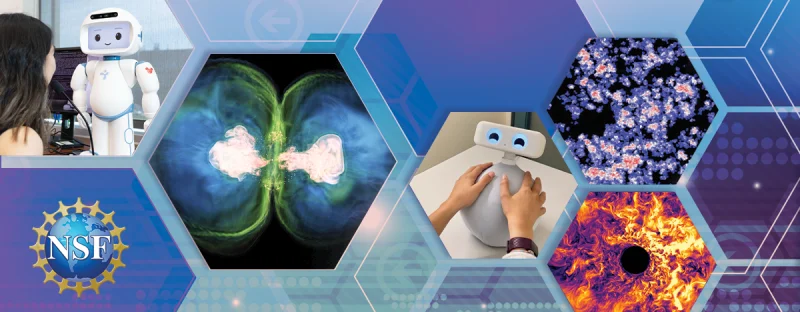
The U.S. National Science Foundation (NSF) has announced a $90 million investment to establish three new Science and Technology Centers (STCs) aimed at advancing transformative research in physics, biotechnology, and robotics. These centers, led by Michigan State University, Northwestern University, and The University of Texas at Austin, will receive funding over five years to tackle complex foundational challenges and accelerate innovation, as detailed in an NSF release accompanying the launch.
What Happened
Over the next five years, NSF’s support will enable the three new STCs to pursue collaborative, cross-institutional research in cutting-edge fields that include fluid turbulence, 3D genome organization, and human-robot interaction. Each center will receive approximately $6 million annually, with potential for an extension up to an additional five years depending on progress and impact.
The Center for Transformative Explorations in Multi-Physics and Engineering of Scientific Turbulence (TEMPEST), led by Michigan State, focuses on understanding and controlling turbulence—highly complex fluid and plasma motions critical to applications such as fusion energy and national security. Employing a combination of experimental techniques, mathematical modeling, high-performance computing, and artificial intelligence, TEMPEST aims to develop physics-grounded models to better predict turbulent behavior across multiple scales.
At Northwestern University, the Center for Genome Intelligence Engineering (GENIE) will explore the 3D organization of DNA within cells, a key factor determining cellular identity and function. GENIE seeks to develop technologies to engineer this 3D DNA structure, with the goal of preventing or reversing cellular decline linked to diseases such as Alzheimer’s and cancer, thereby advancing biotechnology and biomedicine.
The Center for Human and Robot Co-Adaptation, based at The University of Texas at Austin, investigates the dynamic interaction between people and robots. This center intends to integrate robotics, AI, and human factors research to enable service and assistive robots to adapt physically and cognitively to diverse users and environments, aiming to improve healthcare support, independent living, and other human-centered applications.
Key Facts
The NSF STC program was established in 1987 to foster interdisciplinary, high-risk research that can redefine fields and spur new technologies. The 2026 cohort of STCs exemplifies this mission with a $90 million initial investment for five years total, about $6 million allocated per center annually. The institutions leading these centers are Michigan State University, Northwestern University, and The University of Texas at Austin.
Research methodologies include combined experimental and computational approaches, AI-enhanced modeling, genome 3D structural analysis, robotics integrating AI and human factors, and multi-scale physics investigations. Projects span foundational physics, biotechnology, and engineering disciplines with applications in energy, national security, health, and assistive robotics.
What This Means
These new NSF centers represent strategic investments not only in fundamental scientific questions but also in technologies poised to impact everyday life. Understanding turbulence more precisely could accelerate fusion energy development, potentially revolutionizing energy supply with a cleaner and more sustainable source. Advances in genome 3D engineering open promising avenues for treating age-related and degenerative diseases, offering hope for improved human health outcomes.
Meanwhile, the human-robot co-adaptation center addresses growing societal needs as robots increasingly complement healthcare, home assistance, and workplace functions. By developing robots that learn and adapt alongside humans, the center could help integrate these technologies smoothly into daily environments, enhancing accessibility, independence, and quality of life.
Collectively, the STCs exemplify how targeted, interdisciplinary research investments can drive innovation ecosystems, support emerging scientific fields, and ultimately yield technological solutions with broad societal benefits. This aligns with national priorities outlined by the White House’s Office of Science and Technology Policy, reinforcing America’s competitive edge in science and engineering.
Background
The NSF STC program has a track record of creating new research frontiers since 1987, fostering partnerships across academia, industry, and government. It has been instrumental in initiating disciplines and technologies ranging from nanotechnology to computational biology, training generations of STEM researchers and innovators along the way.
What Comes Next
The three newly funded centers will begin their research activities immediately, with ongoing project evaluation determining potential additional funding for up to five more years. Progress from these centers is expected to generate new scientific knowledge, innovative technologies, and trained researchers who will contribute to the U.S. STEM workforce and broader innovation landscape.
Sources
This article is based on reporting and publicly available information from the following sources:
Read more Science & Technology stories on Goka World News.