
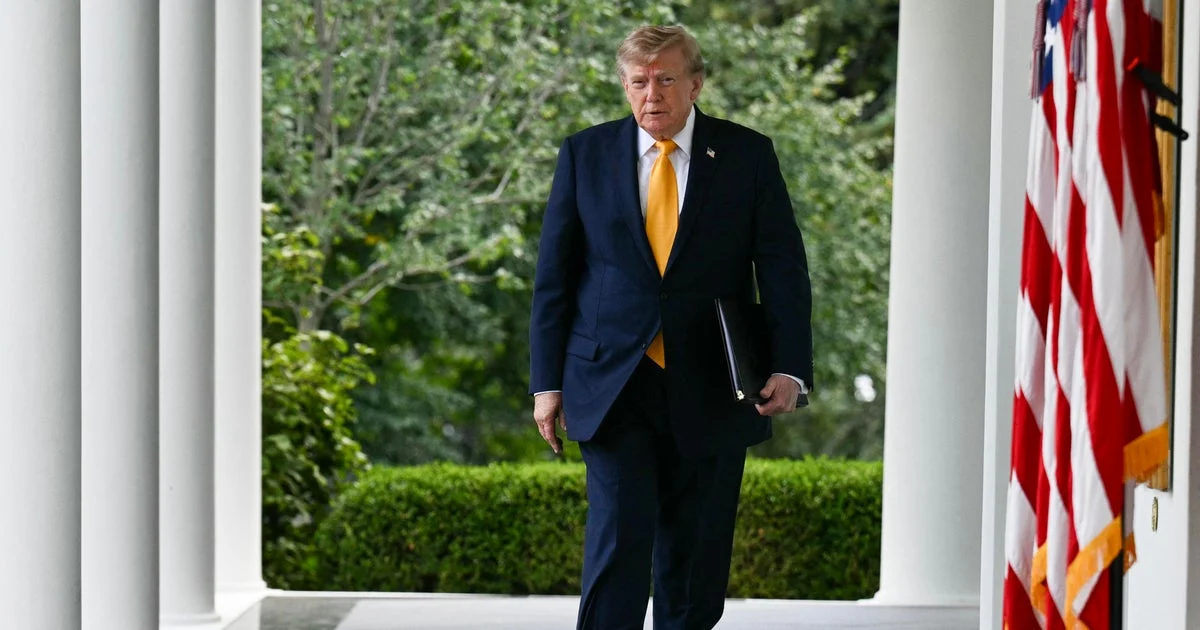
President Donald Trump’s investment accounts maintained active trading in oil and natural gas stocks throughout the U.S. conflict with Iran, according to financial disclosure filings released through the second quarter of 2026. Despite overseeing foreign policy during the war, Trump’s portfolios exhibited significant buying and selling in energy shares, coinciding with shifts in the conflict’s status.
What Happened
Financial disclosure reports filed with the Office of Government Ethics (OGE) reveal that Trump’s investment accounts executed numerous oil and gas stock transactions during the ongoing war with Iran. Notably, on April 7—the day Trump announced a ceasefire in the conflict—his accounts sold between $500,000 and $1 million of ExxonMobil stock. The company’s share price closed at $163.91 that day but dropped 6.5% the following day.
In the first half of 2026, President Trump’s accounts traded hundreds of thousands of dollars worth of shares in major energy companies such as Chevron and ConocoPhillips. The disclosures cover periods when the war continued, paused briefly for the ceasefire, and then restarted. While exact trade values are reported in ranges, estimates from the House Joint Economic Committee indicate Trump’s oil and gas holdings have grown from $13 million–$46 million at the start of the year to $17 million–$61 million by mid-August.
The White House asserts that Trump is not involved in managing these trades personally. According to spokesman Davis Ingle, third-party financial institutions independently manage Trump’s stock portfolio through automated model portfolios tracking recognized indexes like the Schwab 1000. Trump reportedly declined to place his assets in a blind trust, retaining visible individual stock holdings.
Key Facts
- Trump’s portfolio spans all 11 investment sectors, with about 3,600 securities trades occurring in the first quarter of 2026, cumulatively worth between $212 million and $695 million.
- Oil and gas stock values surged amid heightened global tensions, including the Iran war starting in late February and a U.S. operation in Venezuela in early January 2026.
- In April, Trump’s accounts sold ExxonMobil shares worth between $500,000 and $1 million on the day of the declared ceasefire.
- White House spokesperson Davis Ingle stated all trades are conducted in discretionary accounts with no influence from Trump or his family.
- The president’s total net worth, as estimated by Forbes on August 26, 2026, exceeds $6 billion.
- OGE requires reports of stock trades exceeding $1,000 to be filed within 45 days, though some of Trump’s 2026 filings were submitted late.
What This Means
Trump’s ongoing investment activity in oil and gas companies during a conflict he oversees raises concerns over potential conflicts of interest, even as the White House maintains that portfolio management is independent and automated. The rise in energy stock values during the Iran war has corresponded with increasing valuations in Trump’s holdings, fueling scrutiny over whether the president indirectly benefits from geopolitical instability.
Keeping individual stocks publicly rather than in a blind trust means Trump’s financial interests remain visibly connected to sectors directly affected by his administration’s foreign policy. This transparency—or perceived lack of separation—fuels debates about ethical boundaries for public officials with substantial financial portfolios. Legal experts and ethics watchdogs frequently cite the importance of minimizing conflicts to maintain public trust.
For ordinary Americans, this situation underscores the broader issue of how government leaders’ private investments can interact with their policymaking responsibilities. Given energy markets’ sensitivity to international events, financial decisions by public officials can invite questions about whether public duties and private benefits are adequately separated.
Background
Federal law allows presidents and other officials to trade individual stocks, although some lawmakers from both parties have proposed legislation to prohibit such practices. Trump is among the most financially active presidents in recent history, unlike predecessors who used blind trusts or limited holdings to index funds. For instance, George W. Bush used a blind trust, Barack Obama preferred index or mutual funds, and Joe Biden did not hold individual stocks.
Experts analyzing Trump’s trading patterns suggested his investment managers may employ strategies like tax-loss harvesting, which involves selling some securities at a loss to offset gains on others, a practice that can be automated through sophisticated financial tools.
Sources
This article is based on reporting and publicly available information from the following sources:
Read more Politics stories on Goka World News.