
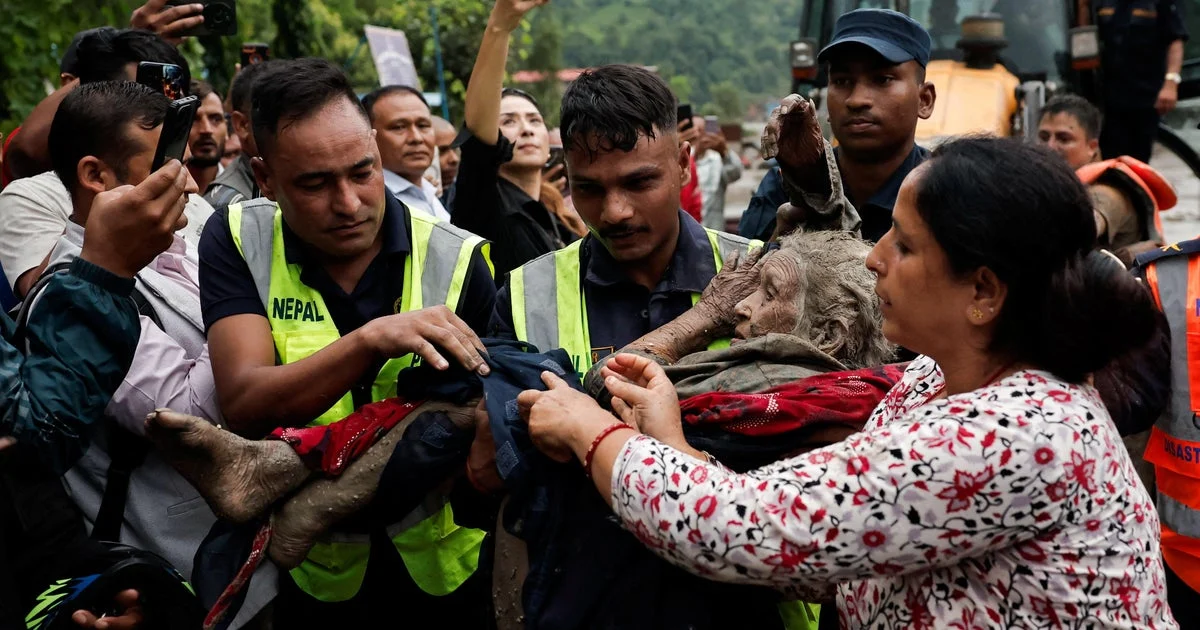
A catastrophic glacial collapse in Nepal has unleashed deadly floods and mudslides across Nepal and Tibet, resulting in at least 360 confirmed deaths and leaving more than 1,400 people missing. Among those unaccounted for are at least 65 Americans, highlighting the international humanitarian impact of the disaster.
What Happened
On August 26, 2026, a sudden collapse of a glacier near the Nepal-China border triggered violent flash floods and mudslides that swept through several Himalayan communities, including Nepal’s Nuwakot and Rasuwa districts, as well as Tibet’s autonomous region in China. Rescue operations intensified in the following days, with Nepalese authorities, including the army and police, leading search efforts for missing persons.
Chinese state media reported severe flooding and mudslides around the Gyirong Port border crossing, complicating rescue and relief efforts. Communications and access routes in the affected regions remain disrupted.
Key Facts
The Nepal Police confirmed at least 360 deaths and more than 1,400 individuals missing across Nepal and Tibet as of August 27. Among the missing are 113 Nepali tourists, 85 security personnel, and 161 local residents, according to Nepal’s National Emergency Operation Center. In Tibet alone, 558 individuals are missing, including 260 foreigners, with three confirmed deaths reported by Chinese authorities.
The Nepal Tourism Board identified 65 Americans as among the missing foreigners, nearly doubling the count from the previous day. The U.S. State Department is monitoring about 90 Americans who may be affected and confirmed the safe rescue of three U.S. citizens. Two U.S. nationals were among 27 foreign survivors rescued in Nepal’s Rasuwa district.
Helicopter evacuations have rescued over 100 people from flood zones, including eight foreign nationals airlifted to Kathmandu. The floods destroyed roads, bridges, and power plants, severely impacting infrastructure in the region.
What This Means
The scale of this disaster reverberates far beyond Nepal’s borders. The missing Americans and international pilgrims underscore the risks facing tourists in the Himalayan region, a popular destination for trekking and religious pilgrimages. The floods have devastated vital economic corridors and fractured infrastructure, posing long-term challenges for Nepal’s recovery and regional connectivity.
The incident highlights the growing vulnerability of mountain communities to climate-related disasters, as warming temperatures accelerate glacier melt and increase the frequency of such catastrophic events. Given the transnational nature of the flooding, coordination between Nepalese and Chinese authorities is critical to managing humanitarian aid and infrastructure restoration.
Background
The flash floods followed an unusual glacial collapse — initially misinterpreted as an earthquake by seismologists — confirmed by the U.S. Geological Survey and regional experts as a massive ice-rock avalanche. This sudden release of water overwhelmed local rivers, with water levels in the Trishuli River rising by approximately 27 feet in 30 minutes.
Climatologists from Nepal’s International Centre for Integrated Mountain Development have noted an increasing trend of glacier-triggered flooding in the region, with recent years seeing repeated floods affecting the same river systems. This pattern is linked to accelerating ice melt attributed to human-caused climate change.
Reactions
The U.S. government has pledged humanitarian support, with Secretary of State Marco Rubio offering solidarity and readiness to assist Nepal. The U.S. Embassy in Kathmandu expressed condolences and urged Americans in the region to reach out to family and officials. A $500,000 emergency grant has been provided to Catholic Relief Services to support relief operations.
Buddhist spiritual leader the Dalai Lama conveyed prayers and condolences for those affected in both Nepal and Tibet.
What Remains Unclear
The exact number of casualties remains disputed, with thousands missing under precarious conditions and ongoing search and rescue efforts hampered by damaged infrastructure. Communication blackouts continue to delay comprehensive accounting, especially among foreign nationals and pilgrims from various countries. The final toll and detailed impact assessments are yet to be confirmed.
What Comes Next
Rescue teams, including Nepalese army helicopters and Chinese military support, continue to operate in the affected areas. The U.S. State Department has dispatched an adviser to assist coordination and is closely monitoring the situation. Authorities warn of ongoing risks, including potential secondary landslides and flooding as rains persist.
Sources
This article is based on reporting and publicly available information from the following source:
Read more World News stories on Goka World News.