
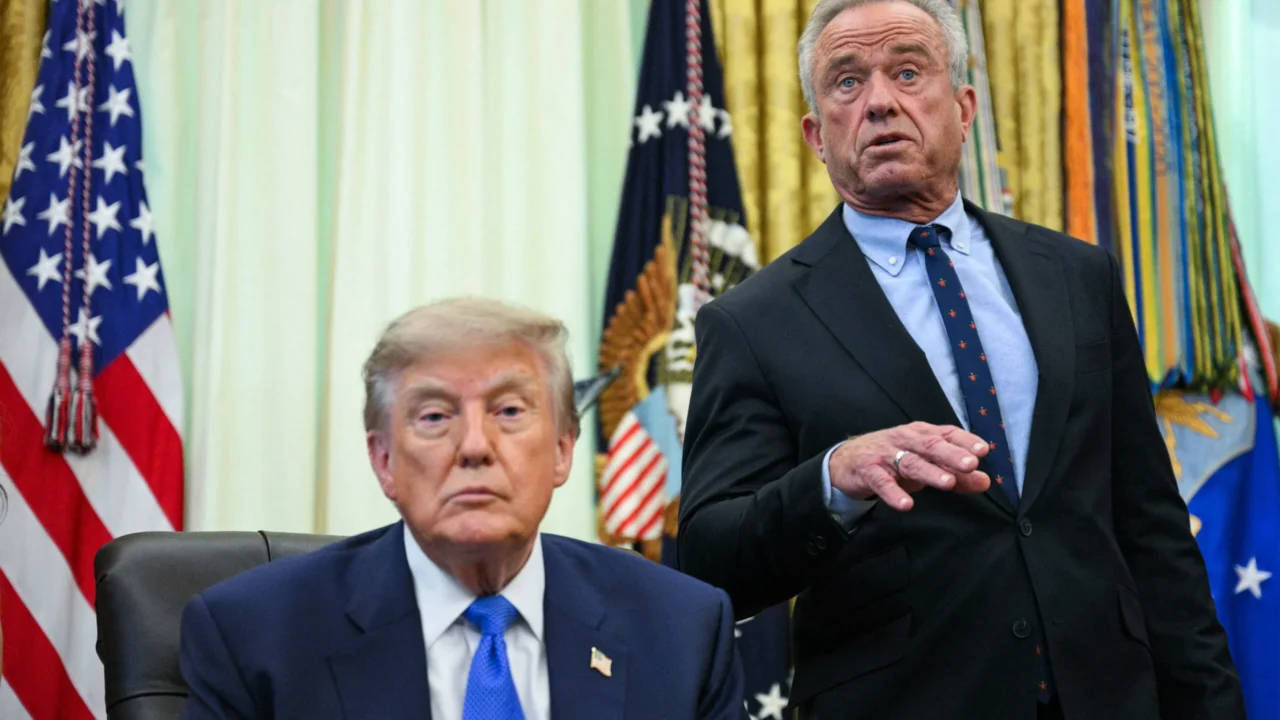
The voluntary health industry agreements promoted during the Trump administration under Health and Human Services Secretary Robert F. Kennedy Jr. have generated public attention but reveal significant shortcomings in enforcement and measurable outcomes, according to recent reporting and expert analysis. These deals, ranging from artificial dye removal in foods to insurer prior authorization reforms, have yet to deliver on many of their promised goals, raising concerns about their effectiveness as policy tools.
What Happened
In 2025, Secretary Kennedy and former President Donald Trump announced a series of voluntary agreements with food manufacturers, drugmakers, and health insurers aimed at improving American health outcomes without imposing federal regulations. High-profile efforts included a pledge by some companies to phase out nine synthetic petroleum-based dyes from foods and medications and commitments from major insurers to reduce prior authorization requirements, a practice many view as a barrier to timely care.
Nearly two years after these announcements, progress remains uneven. While federal officials claim some companies have voluntarily removed synthetic dyes from products served in schools, most dyes targeted remain in use, and broader industry adoption lags. Similarly, insurers have only achieved an approximately 11% reduction in prior authorization usage—far short of the pledged 80% target by January 2026. Furthermore, promised public dashboards to monitor insurer progress have not materialized.
Key Facts
The initial agreement to remove synthetic dyes involved 27 companies as of December 2025. However, less than 30% of those companies had met their voluntary targets by mid-2026. Major food and beverage producers like Coca-Cola and Unilever have made no public commitments to eliminate these dyes. No pharmaceutical companies have announced plans to remove dyes from medications.
Regarding insurer reforms, the trade group America’s Health Insurance Plans (AHIP) reported an 11% reduction in prior authorization volume as of July 2026, despite earlier promises that 80% of insurers would implement such changes for 80% of covered conditions by January 2026. A 2025 American Medical Association survey of 1,000 practicing doctors found only one-third believed these voluntary pledges would yield meaningful results.
Additionally, the administration attempted to introduce nutrition content into medical licensing exams, although this was later clarified to be a misstatement, with no immediate changes implemented.
What This Means
These voluntary agreements illustrate the Trump administration’s strategy of favoring industry cooperation over formal federal regulation in health policy. While such deals can bypass lengthy regulatory processes and allow for speedier announcements of progress, the lack of enforcement mechanisms and transparency constrains their real-world impact. Consumers and patients may remain unaware that many of the announced commitments have not gone beyond preliminary promises, potentially fostering misplaced confidence in public health improvements.
The absence of clear, publicly accessible benchmarks or tracking tools impedes public accountability and oversight. This lack of transparency makes it difficult for policymakers and voters to assess whether the administration’s health initiatives are genuinely effective or primarily serve political messaging. The experience also highlights broader challenges of relying on voluntary industry actions in sectors where economic incentives may not align with public health goals.
For elected officials like Rep. Tom Barrett, the visibility of these agreements offers a political narrative to promote during election campaigns. However, the substantive gap between promotional claims and verifiable progress could become a point of scrutiny in assessing the administration’s legacy on health policy.
Background
Before these voluntary deals, federal efforts to regulate health-related industry practices—such as FDA interventions concerning food additives and government management of prior authorization protocols—have often encountered opposition from industry groups wary of regulatory burdens. The Trump administration’s approach fits within a broader Republican preference for deregulation and market-driven solutions over mandates. However, past voluntary initiatives, such as those during the Carter administration aimed at controlling hospital costs, have similarly faltered once political attention diminished.
What Remains Unclear
It is uncertain whether future regulatory steps will be taken to enforce these voluntary agreements or if formal rules will replace the current voluntary framework. The long-term impact of partial dye removal on public health, given the substitution with natural dyes that may carry their own risks, remains to be fully assessed. The ability of artificial intelligence pilots in prior authorization to improve patient care efficiency has yet to be demonstrated on a large scale.
What Comes Next
The Department of Health and Human Services and FDA have indicated timelines extending through the end of 2027 for full dye phaseout in products, particularly in foods served in schools. The administration also continues to pilot AI-based prior authorization programs for select Medicare procedures in six states, which will be evaluated for broader implementation. Meanwhile, public health advocates and watchdog groups continue to call for greater transparency and more enforceable measures.
Sources
This article is based on reporting and publicly available information from the following sources:
Read more Health & Public Health stories on Goka World News.