
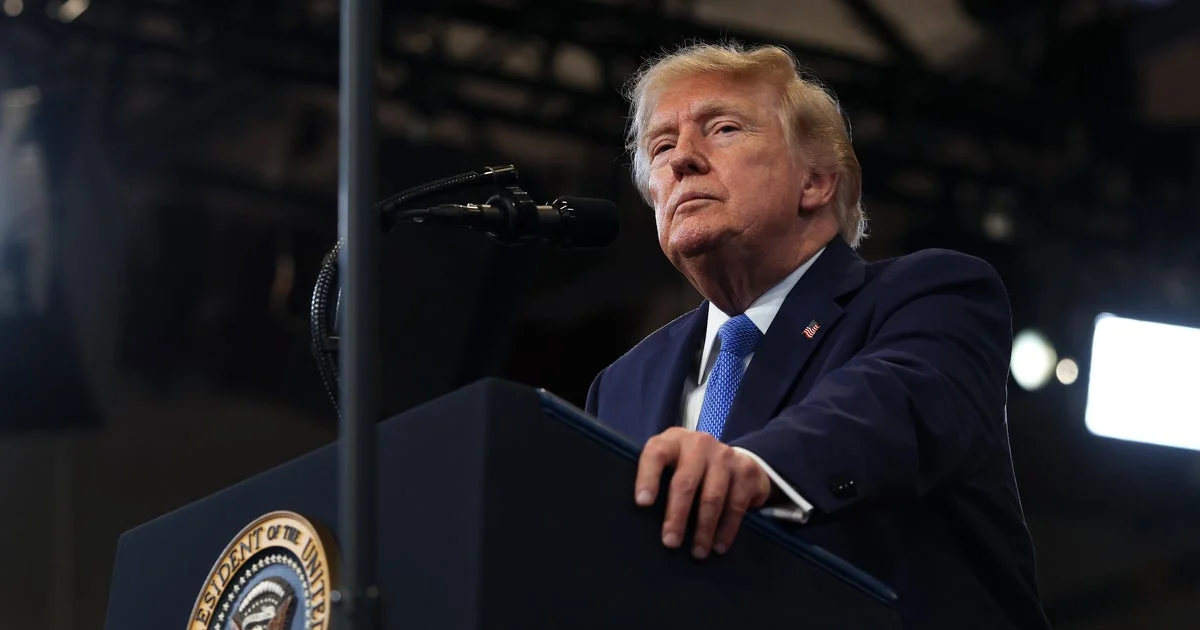
Former President Donald Trump announced on August 28, 2026, that the United States has secured majority control over more than 60 billion barrels of Venezuelan oil reserves. The deal, structured as a public-private partnership with a 100-year concession, represents one of the largest expansions of American oil holdings and aims to revitalize Venezuela’s oil sector following recent political changes.
What Happened
On Friday, Trump announced via social media that the U.S. government has entered into an agreement granting it majority control—55% ownership—of a joint venture operating fields containing approximately 65 billion barrels of proven crude oil reserves in Venezuela. The concession was approved by Venezuela’s interim President Delcy Rodriguez, who assumed office after U.S. military forces captured Nicolás Maduro earlier in 2026.
The joint venture combines U.S. government interests with an experienced private operator active in Venezuela’s oil industry. While the exact private partners remain unidentified, companies like Chevron, Repsol, and Eni have maintained a presence in the country.
U.S. Secretary of State Marco Rubio highlighted on social media that this historic deal is expected to attract nearly $100 billion in private investment, stimulate thousands of jobs, and support Venezuela’s economic reconstruction. Rodriguez echoed its significance, projecting tax revenues exceeding $209 billion for the Venezuelan government.
Key Facts
- Venezuela holds the world’s largest proven oil reserves at over 300 billion barrels; the U.S. has fewer than 50 billion barrels.
- The joint venture controls 55% of the oil operation via equity and cost-based oil entitlement.
- Venezuela’s interim President Delcy Rodriguez granted a 100-year concession for the oil fields.
- The deal follows a U.S. military operation earlier in 2026 that resulted in the capture of Nicolás Maduro and the installation of Rodriguez.
- Some private oil companies like Hunt Oil have expressed renewed interest, signing deals this year with Venezuela’s state-run Petróleos de Venezuela, S.A.
- Major challenges endure, including previous nationalizations, legal uncertainties, and infrastructure deficits within Venezuela’s oil industry.
What This Means
This agreement marks a significant geopolitical and energy shift, substantially increasing U.S. access to the world’s largest conventional oil reserves. For the American energy market, this expansion could enhance oil supply stability and potentially lower gasoline prices over the long term, responding to concerns over supply constraints and energy security.
For Venezuela, the deal signals a move toward economic recovery by inviting international capital and expertise following years of underinvestment and political turmoil. The joint venture’s success depends on rebuilding trust with foreign investors and effectively managing the oil operations after decades of decline under previous regimes.
However, the long-term implications hinge on sustained political stability and legal reforms within Venezuela. The willingness of major oil firms to commit seriously will be key, given their past experiences with nationalization and asset seizures. The U.S. government’s active role also represents a notable form of direct involvement in a foreign oil sector, which is relatively unprecedented in recent decades.
Background
Venezuela’s oil industry has historically been one of the largest globally but has been severely weakened by political unrest, economic mismanagement, and U.S. sanctions. Since Hugo Chávez’s presidency began nationalizing assets in the early 2000s, major international oil companies have largely exited the country, with Chevron being a rare exception.
The Trump administration has sought to increase U.S. influence in Venezuela after a 2026 military operation that ousted Nicolás Maduro. Since then, diplomatic and economic cooperation has intensified notably with interim President Delcy Rodriguez. New legislation allowing private management of oil extraction reflects this policy shift.
What Remains Unclear
The official release does not specify which private companies are part of the joint venture, and some firms like ExxonMobil have expressed reservations over Venezuela’s investment climate. The speed and scale of boosting Venezuelan oil production remain uncertain, given the extensive infrastructure challenges and potential political instability.
It also remains to be seen how this deal will interact with existing U.S. sanctions or international diplomatic responses, as Venezuela continues to face complex legal and political hurdles.
What Comes Next
The Trump administration and Venezuelan government officials plan to encourage additional private investment in the country’s oil sector. Public announcements indicate ongoing dialogue with major energy firms and implementation of reforms aimed at improving legal and economic conditions for oil production.
Monitoring how quickly oil production ramps up and how revenues are distributed will be critical indicators of the deal’s effectiveness in both U.S. energy strategy and Venezuelan economic revival.
Sources
This article is based on reporting and publicly available information from the following sources:
Read more Politics stories on Goka World News.