
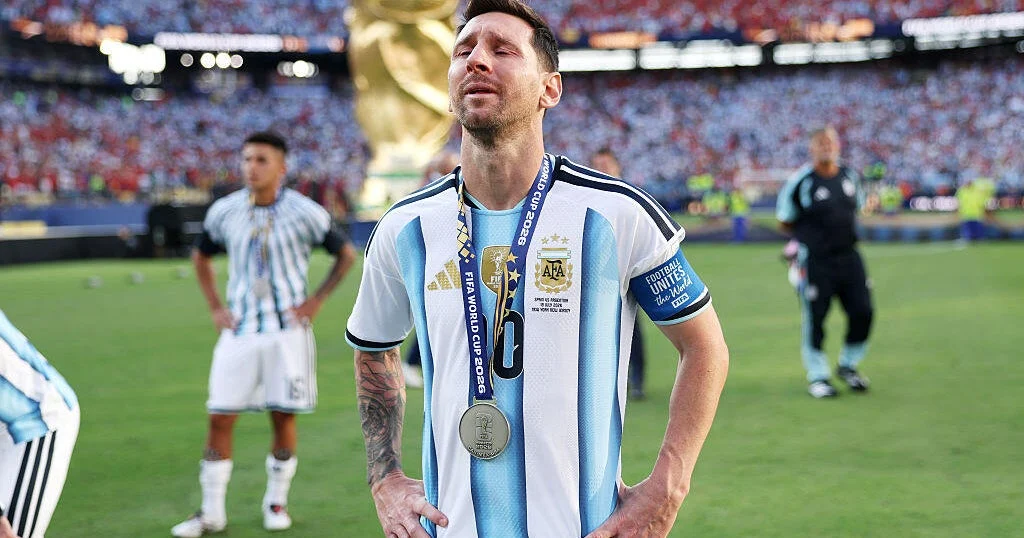
Lionel Messi, widely regarded as one of the greatest soccer players in history, has announced his retirement from the Argentina national team, ending an illustrious near two-decade run representing his country. The Argentine icon made the decision after the heartbreak of losing the 2026 FIFA World Cup final to Spain and the recent passing of his father.
What Happened
On August 31, 2026, Messi posted on Instagram that he is stepping down from Argentina’s national soccer team. The announcement came weeks after the death of his father, Jorge Messi, on August 8, and following Argentina’s World Cup final defeat to Spain on July 19 at MetLife Stadium in New Jersey, USA. Messi revealed he wrote his retirement letter shortly after the loss on June 21 but delayed the public announcement.
Messi debuted for Argentina’s senior team in 2006 and over his career played in six World Cups, highlighted by leading Argentina to the 2022 World Cup championship in Qatar. He continues his professional club career playing for Inter Miami in the United States, after notable tenures with Barcelona FC and Paris Saint-Germain.
Key Facts
Messi began his international career in 2006 and played in six World Cups. He captained Argentina to victory in the 2022 FIFA World Cup in Qatar. The team reached the final again in 2026 but lost to Spain at MetLife Stadium in New Jersey.
His father, Jorge Messi, passed away on August 8, 2026, at the age of 68, an event that deeply influenced Messi’s decision to retire from international play.
Messi has spent 17 seasons with Barcelona before moving to Paris Saint-Germain and subsequently Inter Miami, where he currently plays at the club level.
What This Means
Messi’s retirement marks the end of an era for Argentine soccer and global football, as he has been a central figure for the national team for nearly 20 years. His departure leaves a significant gap in Argentina’s lineup and heralds a period of transition as new players emerge to fill the void. For international football fans, Messi’s exit from the national stage signals the closing chapter of one of the sport’s most celebrated careers.
Beyond sports, Messi’s choice reflects the profound human elements behind athletic careers—personal loss and the emotional toll of high-level competition. His words convey a deep connection with fans and the nation, promising continued support from the sidelines, which highlights the cultural importance of soccer in Argentina and beyond.
Moreover, Messi’s ongoing club career with Inter Miami ensures his influence on the global game continues, albeit outside international competition. His retirement underscores how even legendary athletes face moments where personal and professional crossroads overlap.
Background
Messi’s career with Argentina has spanned six World Cups starting in 2006. After years of near misses, he led Argentina to its coveted World Cup win in 2022 in Qatar, solidifying his legacy. The 2026 tournament saw Argentina reach the final once more, only to be edged out by Spain. His announcement comes shortly after a highly emotional season marked by personal grief following the death of his father.
What Comes Next
While Messi’s retirement announcement covers only his international play, he has not disclosed plans regarding the continuation of his professional club career with Inter Miami. The Argentine national team now faces the task of rebuilding its squad without its longstanding leader ahead of upcoming international competitions.
Sources
This article is based on reporting and publicly available information from the following source:
Read more World News stories on Goka World News.