
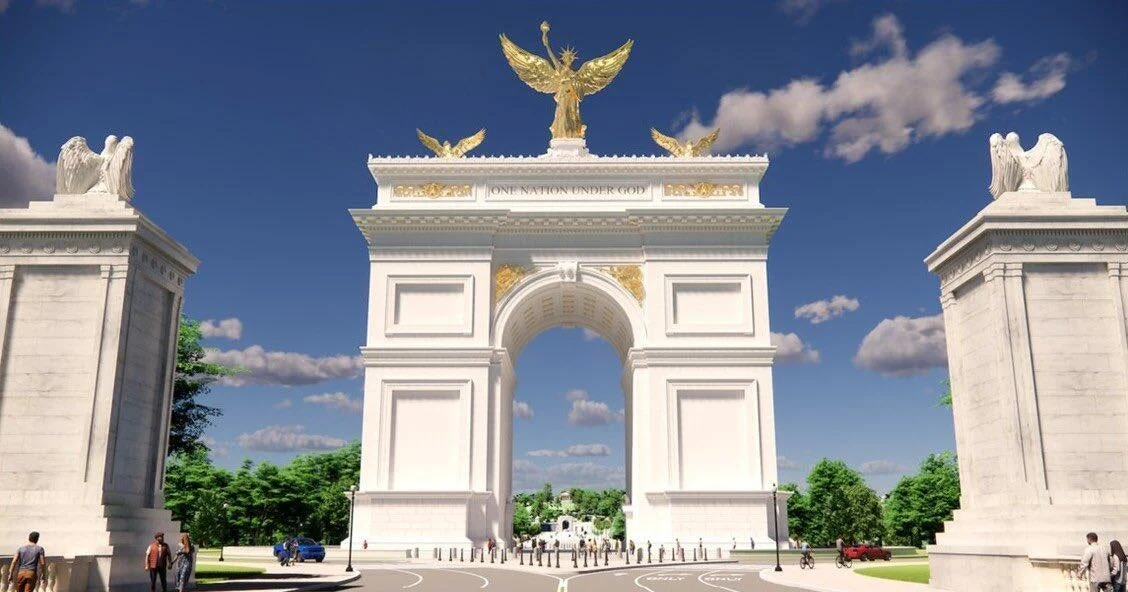
The Department of the Interior announced that excavation is set to begin within weeks on a massive triumphal arch along the Potomac River near Arlington Memorial Cemetery, a highly contested construction project endorsed by former President Donald Trump. The effort has sparked opposition from local officials, preservationists, and veterans concerned about its scale and location.
What Happened
On September 3, 2026, Secretary of the Interior Doug Burgum confirmed the federal government plans to start digging soon at the site chosen for the arch, located at a traffic circle near Arlington National Cemetery, just across the river from the Lincoln Memorial in Washington, D.C. The National Park Service detailed that construction would proceed on a demanding schedule—up to 20 hours a day, year-round—anticipating completion within two to three years, possibly coinciding with the late stages of President Trump’s potential second term.
The structure is designed to stand approximately 250 feet tall, more than double the height of the Lincoln Memorial, clad in granite and topped with three golden statues and an observation deck. Officials say it intends to commemorate the 250th anniversary of the Declaration of Independence. Trump’s administration has promoted the project as a significant architectural addition symbolic of America’s history and power.
Key Facts
The project is backed politically and personally by Donald Trump, who showcased 3D renderings and indicated a preference for a large-scale design. It fits within a broader agenda to remodel key Washington, D.C., landmarks, including White House grounds and the Kennedy Center. Approval has come from two panels influenced by Trump appointees—the U.S. Commission of Fine Arts (final approval in May) and the National Capital Planning Commission (preliminary approval in July with requested modifications).
Despite approvals, there has been vocal opposition. Democratic Representative Don Beyer of Virginia criticized the initiative, warning it is prematurely pushed forward for political gains ahead of elections. Veterans’ groups filed a lawsuit claiming the project lacks required congressional authorization; this suit is pending after the Justice Department moved to dismiss it.
The Federal Aviation Administration is actively reviewing how the arch might affect traffic near Ronald Reagan Washington National Airport, with prior FAA studies calling for obstruction lights and ongoing public comment collection.
What This Means
This project represents more than a new monument; it reflects ongoing tensions between federal authority, local concerns, and political symbolism in the nation’s capital. The arch’s imposing height and prominent location raise practical concerns about preserving historic sightlines and the solemnity of Arlington National Cemetery. For local communities and visitors, the construction period may bring significant disturbances due to the intense work schedule.
Moreover, the controversy illustrates how federal projects tied to political figures can ignite debates over public space use, heritage preservation, and regulatory oversight. The pending lawsuit and FAA scrutiny highlight that legal and safety challenges may delay or reshape the project’s outcome. For residents and commuters near the airport, concerns about airspace safety remain especially pertinent.
The arch’s completion could redefine the Washington landmark landscape, but whether it will gain lasting acceptance or remain a symbol of partisan divide remains uncertain. Citizens and policymakers will likely watch closely how federal agencies balance historical preservation, public opinion, and political motivations in this high-profile undertaking.
What Remains Unclear
Key uncertainties persist, including the final outcome of the veterans’ lawsuit challenging the project’s legality and the FAA’s ongoing assessment of safety impacts on airport airspace. The specific timeline adjustments due to potential legal or regulatory hurdles have not been confirmed.
What Comes Next
Federal agencies will continue construction preparation and coordination with regulatory bodies. The FAA plans further review and public consultation on airspace concerns. Meanwhile, the Justice Department and courts will address the pending lawsuit. The National Park Service must oversee construction to balance preservation and project demands throughout the multi-year build.
Sources
This article is based on reporting and publicly available information from the following sources:
Read more Politics stories on Goka World News.