
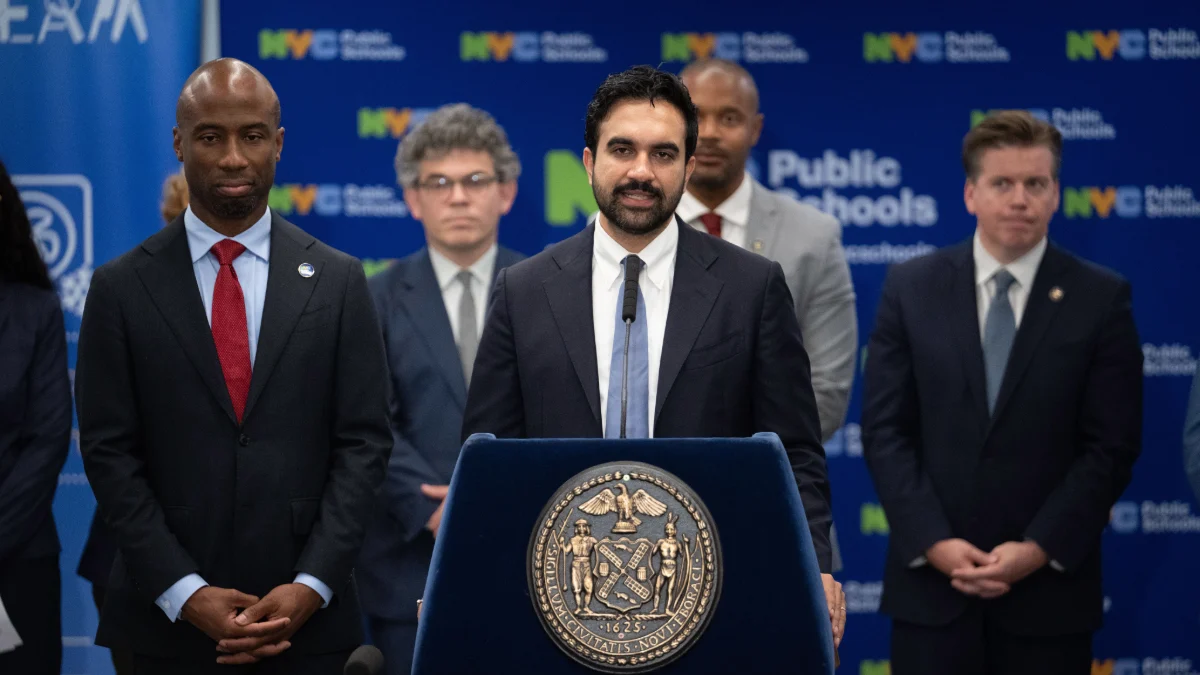
New York City and Los Angeles, the United States’ two largest public school districts, have reinstated strict restrictions on artificial intelligence technologies in classrooms ahead of the 2026-27 academic year. These latest measures introduce moratoriums and tight limitations on student-facing AI use, reversing prior more permissive policies and reflecting growing concerns among educators, parents, and students about the impact of AI tools on learning environments.
What Happened
On September 2, 2026, New York City’s Department of Education implemented a ban on AI usage for students in kindergarten through eighth grade and allowed only a limited set of district-approved AI tools for high school students. This marked a significant tightening of policy compared to the draft March 2026 guidelines, which employed a stoplight system that placed most AI use in a “yellow light” cautionary category, leaving decisions to individual teachers. The initial proposal was paused after extensive backlash and acknowledgment by Chancellor Kamar Samuels that the draft “missed the mark.”
On the same day, the Los Angeles Unified School District (LAUSD) announced a full one-year moratorium on generative AI use on district devices for all students, estimated at 378,000. This decision surprised many within the district itself, as LAUSD had not issued specific AI regulations before but had recently imposed new student screen time limits.
Key Facts
Both districts made these regulatory moves amid a resurgence of grassroots pressure from parents, educators, and students advocating for stricter AI controls in schools. New York City’s revised AI policy applies a categorical ban for younger students and restricted use for older students, while LAUSD’s moratorium halts generative AI use entirely on district-managed devices for at least one year starting with the 2026-27 school year. These policies follow earlier, temporary ChatGPT bans enacted by both districts in 2022 and 2023 that were subsequently softened or reversed.
The New York City policy also involved a pause on new AI-related software purchases over the summer preceding the school year. Coalition groups such as the AI Moratorium (AIM) Coalition in NYC and parent advocacy groups in Los Angeles have publicly praised the decisions as steps toward responsible AI governance in education.
What This Means
The reinstated AI restrictions represent a significant shift toward cautious oversight in educational settings, underscoring concerns about the developmental, ethical, and instructional implications of generative AI tools in classrooms. For students and teachers, this means navigating an environment where AI use is closely monitored or prohibited, especially for younger learners, limiting AI-assisted assignments, and potentially requiring educators to redesign teaching methods that previously contemplated AI integration.
Moreover, these moratoriums reflect a broader pushback against rapid AI adoption without comprehensive policy frameworks, signaling to other school districts and educational policymakers the need for systematic evaluation and community engagement before integrating AI tools wide-scale. At stake are implications for student mental health, academic integrity, and equitable access to resources amid a rapidly evolving technology landscape.
From an administrative perspective, these policies may also delay the adoption of potentially beneficial AI instructional tools, compelling districts to develop more nuanced guidelines that balance innovation with safety and oversight. The decisions confirm the influential role of local activism in shaping AI regulatory responses in education, illustrating the growing complexity schools face with emerging technologies.
Background
The New York City Department of Education and LAUSD were among the first districts to restrict access to OpenAI’s ChatGPT shortly after its release in late 2022. These initial bans were part of a nationwide wave of school district responses concerned by the rapid availability of AI capable of completing assignments with minimal student input. Both districts later eased restrictions mid-2023, tentatively embracing AI’s potential in education before moving back to more restrictive policies this year.
Who Is Affected
These moratoriums impact over a million students combined across New York City and Los Angeles, as well as thousands of teachers and school staff responsible for implementing and complying with the new rules. Families and student organizations, many of whom have been vocal advocates for strict AI limits, are also key stakeholders. Furthermore, educational technology vendors pitching AI-based products to these districts must now contend with tighter standards and potential delays in adoption.
What Comes Next
Both school districts have announced that they will use the forthcoming year to develop longer-term, sustainable AI policies informed by stakeholder input, democratic engagements, and ongoing technological assessments. This period of review suggests future regulatory frameworks may evolve, possibly balancing controlled AI use with safeguards addressing mental health, ethics, and academic fairness. The outcomes of these policy developments will likely influence AI regulation trends in other U.S. school systems.
Sources
This article is based on reporting and publicly available information from the following sources:
Read more AI Regulation stories on Goka World News.