
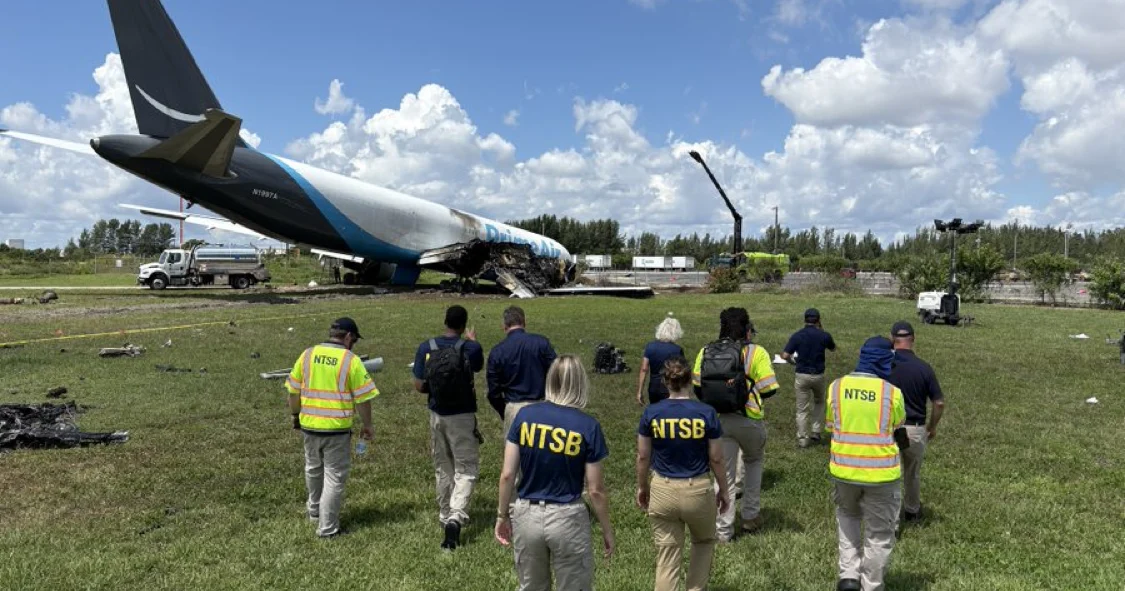
Five people lost their lives after an Amazon Air cargo plane overshot the runway at Miami International Airport and crashed into two vehicles, the National Transportation Safety Board (NTSB) confirmed. The incident occurred Sunday, leaving at least five others injured and prompting an ongoing investigation into the cause of the crash.
What Happened
The cargo plane, identified as Amazon Air Flight 7598, a Boeing 767-33 Alpha operated by 21 Air LLC, arrived from San Juan, Puerto Rico, and was on its third flight of the day. Upon landing at Miami International Airport on Sunday, the plane overran runway 30, struck airport navigational aids, and collided with a white 2012 Ford Econoline van inside airport grounds. The van belonged to Professional Ocean Service Corporation, a contract cleaning company servicing airlines.
The plane then breached a perimeter fence and struck a Toyota Corolla Cross LE traveling on Northwest 67 Avenue just outside the airport before continuing into a grassy area where Tesla robotaxis were parked. The aircraft came to rest after traveling approximately 1,300 feet beyond the paved runway, after which it burst into flames.
Key Facts
NTSB Chair Jennifer Homendy reported that all five fatalities occurred inside the two vehicles struck by the plane—the van inside the airport perimeter and the Toyota on the public road. Seven individuals were in the van at the time.
At least five others suffered injuries; two were transported to Jackson Memorial Hospital, with their condition unconfirmed. Three others remain in critical condition at Jackson’s Ryder Trauma Center, according to the Miami-Dade Sheriff’s Office. Cellphone footage showed first responders assisting survivors from the crushed Toyota shortly after the crash.
The NTSB has recovered the plane’s flight data recorder and cockpit voice recorder, both now being analyzed at the agency’s headquarters. The investigative team includes 32 personnel on-site, examining multiple factors including human performance, mechanical systems, air traffic control, and airport infrastructure.
What This Means
This tragic event highlights significant risks associated with cargo plane operations at busy commercial airports and raises questions regarding runway safety measures. The investigation into whether Engineered Materials Arresting Systems (EMAS)—designed to stop aircraft overruns—should have been installed at the runway’s end could influence future safety regulations.
Moreover, the incident spotlights the complexities of contracted flight operations, since 21 Air LLC was operating the flight for Amazon Air. Determining the safety responsibilities between Amazon and its contractor could prompt changes in oversight and contractual standards for cargo transportation.
For Miami-area residents and travelers, the crash underlines the potential dangers close to airport boundaries, especially on public roads near runways. It also serves as a reminder to emergency response systems’ critical role, with local authorities lauded for their rapid and coordinated reaction reducing further harm.
Background
NTSB Chair Homendy noted that runway excursions have been a recurring issue nationally, with over 3,000 incidents investigated since 2008. The agency stresses that implementing safety recommendations is essential to prevent repeat tragedies.
The Boeing 767 involved was manufactured in 1994. Investigators are exploring the aircraft’s maintenance and ownership history as part of the inquiry.
What Comes Next
The NTSB plans to continue on-site work for at least a week, further documenting the scene and collecting evidence. Specialized investigative groups will analyze data across technical and human factors. A follow-up briefing has been scheduled, and the agency has requested any relevant photos or videos from witnesses to be submitted for review.
Sources
This article is based on reporting and publicly available information from the following source:
Read more US News stories on Goka World News.