
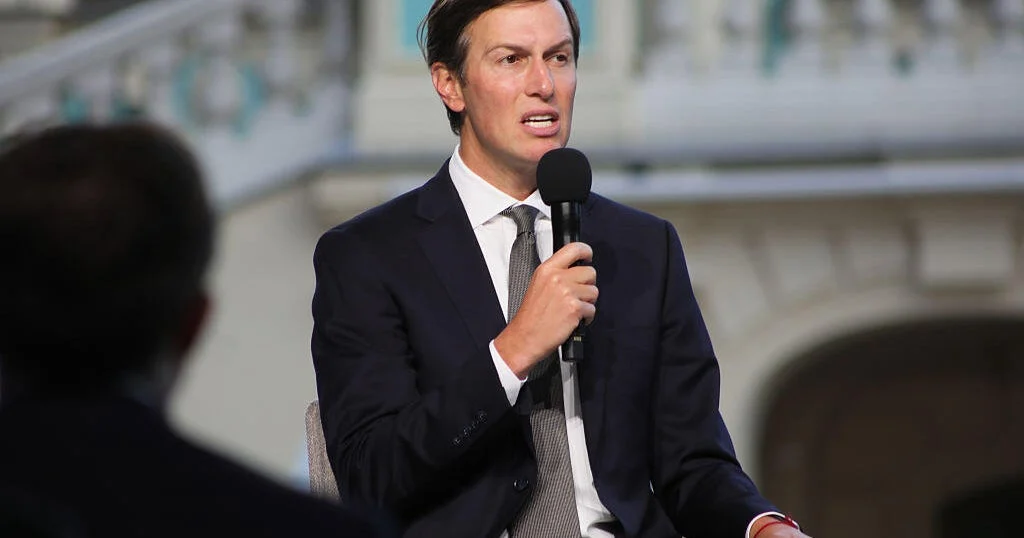
Jared Kushner, former U.S. special envoy, attributed the ongoing lack of progress in the Gaza Strip’s rehabilitation efforts to the political environment surrounding Israel’s elections scheduled for late October 2026. Speaking at a conference in Kyiv on September 7, Kushner suggested that the election dynamics were causing instability and impeding consensus on peace and reconstruction plans.
What Happened
During a conference in Kyiv on September 7, Jared Kushner candidly linked the stalled advancements in Gaza’s post-war rehabilitation to Israel’s tightly contested upcoming elections. Israel’s electoral contest pits Prime Minister Benjamin Netanyahu against his challengers in what polls indicate is a close race. Kushner remarked on the “crazy election” climate making Israeli policymakers “a little irrational” on Gaza-related decisions.
The U.S.-brokered Gaza ceasefire, agreed upon nearly a year ago after devastating conflict triggered by Hamas’s 2023 attacks on Israel, included a roadmap for disarmament and reconstructing the enclave. Despite this, progress has stalled amid disagreements between Israel, Hamas, and U.S. officials. Key issues include Israel withholding guarantees for establishing a new Gaza police force separate from Hamas and limiting the entry of materials necessary for reconstruction projects.
Senior diplomat Nickolay Mladenov at the United Nations criticized Israel’s ongoing airstrikes in Gaza, warning these actions impede the demilitarization process promised in the ceasefire and obstruct the critical civilian transition aimed at preventing remilitarization. Israel, however, maintains these airstrikes target imminent threats and those responsible for the 2023 Hamas attacks, continuing a military presence in over half of Gaza post-ceasefire.
In August, the Board of Peace outlined a plan for gradual Hamas disarmament parallel to Israeli withdrawal from Gaza territory, a plan Netanyahu rejected last month, insisting no withdrawal would occur until Hamas was fully disarmed. Hamas supports the U.S.-backed plan but resists disarmament steps, citing Israel’s failure to uphold ceasefire commitments.
Key Facts
Israel is set to hold national elections in late October 2026 amid a neck-and-neck race involving Prime Minister Netanyahu. Jared Kushner, a senior official during the Trump administration and key envoy for Middle East peace efforts, spoke publicly on September 7 from Kyiv about Israeli political challenges affecting Gaza policy.
Nearly three years after the Hamas attack ignited conflict in October 2023, Gaza remains devastated with many Palestinians living in temporary tent encampments despite the year-old ceasefire.
U.S. officials indicate Israel has not provided the guarantees needed to establish a new Gaza police force independent of Hamas, essential for introducing a technocratic government backed by Washington. Additionally, Israel is restricting materials vital for reconstruction.
Israel retains control over roughly half of Gaza’s territory since the ceasefire began and continues near-daily airstrikes justified as defensive measures.
Nickolay Mladenov, a senior peace diplomat, remarked publicly in late August that Israeli airstrikes delay disarmament and post-war civilian transitions.
What This Means
Kushner’s blunt attribution of the Gaza impasse to Israel’s election cycle underscores how domestic political pressures can obstruct complex international peace efforts. The heightened political environment may push Israeli leaders to adopt risk-averse or hardline stances that hinder pragmatic cooperation on Gaza reconstruction and security reform.
For Palestinians in Gaza, continuing delays mean prolonged humanitarian hardship, instability, and uncertainty about future governance and security. Israel’s insistence on complete Hamas disarmament before withdrawal conflicts with Hamas’s reluctance to disarm absent reciprocal Israeli concessions, creating a stalemate intensified by electoral calculations.
The reported Israeli restrictions on reconstruction materials and lack of guarantees for a new policing force highlight the deep challenges for implementing a phased peace plan. The consequences extend beyond politics—they affect the daily lives and safety of Gaza’s two million residents and regional stability.
Background
The current Gaza ceasefire was brokered by the U.S. between Israel and Hamas following a 2023 war that caused widespread destruction. Plans negotiated by the Board of Peace in August 2026 envision a phased process where Hamas gradually disarms while Israel withdraws from Gaza territories it occupies.
Prime Minister Netanyahu previously rejected this approach, demanding full Hamas disarmament before any Israeli withdrawal, citing concerns about security and leverage over militant groups.
Hamas has signaled acceptance of the U.S.-backed plan but remains resistant to disarmament without Israel fulfilling its commitments under the ceasefire, including easing blockades and halting military strikes.
What Remains Unclear
It remains uncertain how Israeli election results will concretely influence Gaza policies, including whether a future government might change course. The extent to which Israel will allow the formation of new security institutions in Gaza and facilitate reconstruction also remains unresolved.
The timeline and conditions under which Hamas might agree to disarm, or whether the ceasefire can be fully implemented amid ongoing airstrikes, are also yet to be determined.
Sources
This article is based on reporting and publicly available information from the following source:
Read more Politics stories on Goka World News.