
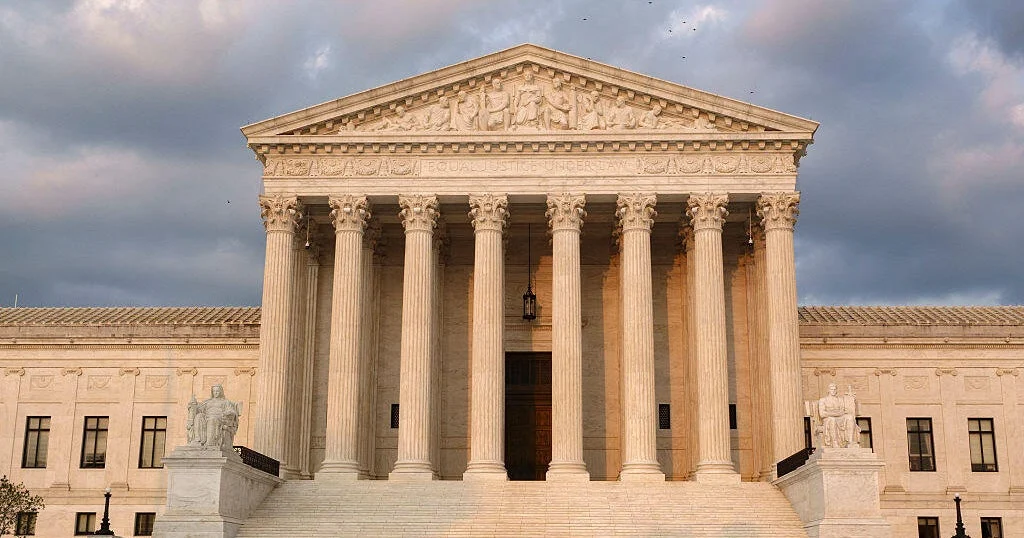
A federal judge in Missouri issued a temporary ruling Tuesday allowing the state to use a new congressional map favoring Republicans in the upcoming November elections, intensifying an ongoing legal dispute over which district boundaries will apply. The ruling came hours after the U.S. Supreme Court declined to hear an appeal that had sought to uphold the Missouri Supreme Court’s order to revert to an older congressional map.
What Happened
In Jefferson City, Missouri, U.S. District Judge Stephen Clark granted a temporary restraining order permitting the use of the newly drawn congressional districts for the November general election. His decision came shortly after the U.S. Supreme Court rejected Missouri officials’ appeal against the Missouri Supreme Court’s directive to employ the older districts for the election, citing a citizen petition that demanded a statewide referendum on the new map.
Judge Clark reasoned that plaintiffs would suffer “irreparable harm” if required to vote for candidates they had no role in nominating during the primaries, which had already used the new maps. However, this restraining order was challenged by People Not Politicians, a Missouri group opposing the new redistricting plan, who appealed the ruling.
On Wednesday, the U.S. Court of Appeals for the 8th Circuit denied the request for a temporary stay of Judge Clark’s order, citing jurisdictional or procedural issues. People Not Politicians subsequently sought intervention from the U.S. Supreme Court again, with Justice Brett Kavanaugh requesting a reply from proponents of the new map by Thursday morning.
The redistricting dispute centers on congressional district lines passed by Missouri’s Republican-led legislature last year and backed by former President Donald Trump. The new map notably redraws the 5th Congressional District, represented by Democrat Emanuel Cleaver from Kansas City, shifting parts to Republican-leaning districts and making Cleaver’s district more GOP-favored.
Key Facts
- The Missouri Supreme Court ruled last week that the state must revert to congressional districts used after the last census, invalidating the new map passed by the legislature.
- Republican Attorney General Catherine Hanaway argued the change would disrupt federal voting rights and cause confusion by switching districts between primaries and the general election.
- Governor Mike Kehoe, urged by Trump, called a special legislative session in 2025 to redraw the districts to gain advantage in the midterms.
- Missouri currently has six Republican and two Democratic House members elected under the 2022 districts.
- On the August primary day, Republican Secretary of State Denny Hoskins initially rejected a referendum petition on the new map but later assigned the redistricting referendum as Proposition A on the November ballot following the state Supreme Court decision.
- The U.S. Supreme Court’s refusal to intervene came despite warnings of election administration chaos from Missouri officials.
What This Means
The legal uncertainty over Missouri’s congressional map introduces a rare and potentially disruptive complication ahead of the November elections. For voters, this means confusion about which candidates represent their district and who they should support in the general election. Candidates and political parties face challenges planning campaigns amid shifting district boundaries, with implications for voter outreach and turnout.
More broadly, this case highlights the growing influence of partisan redistricting efforts, often dubbed “gerrymandering,” in shaping election outcomes. The Missouri dispute underscores how legal processes around ballot initiatives and court oversight can become battlegrounds that affect the democratic representation of communities. In this instance, the battle also signals how political strategy at the state level, influenced by former President Trump, aims to solidify Republican control in Congress by reshaping districts.
This uncertainty in one of the states where Republicans hoped to bolster their House majority could impact broader national electoral dynamics, especially given Missouri’s traditionally competitive districts. Voters and election officials alike can expect continued legal developments until the Supreme Court issues a final decision or the November election concludes.
What Comes Next
The U.S. Supreme Court is poised to make a decision soon after receiving responses related to the latest appeal filed by People Not Politicians. Missouri election officials will proceed with preparations under the federal judge’s temporary order unless overturned by higher courts. Meanwhile, the redistricting referendum, labeled Proposition A, will appear on the November ballot, giving Missouri voters a direct say on the issue.
Sources
This article is based on reporting and publicly available information from the following source:
Read more Politics stories on Goka World News.