
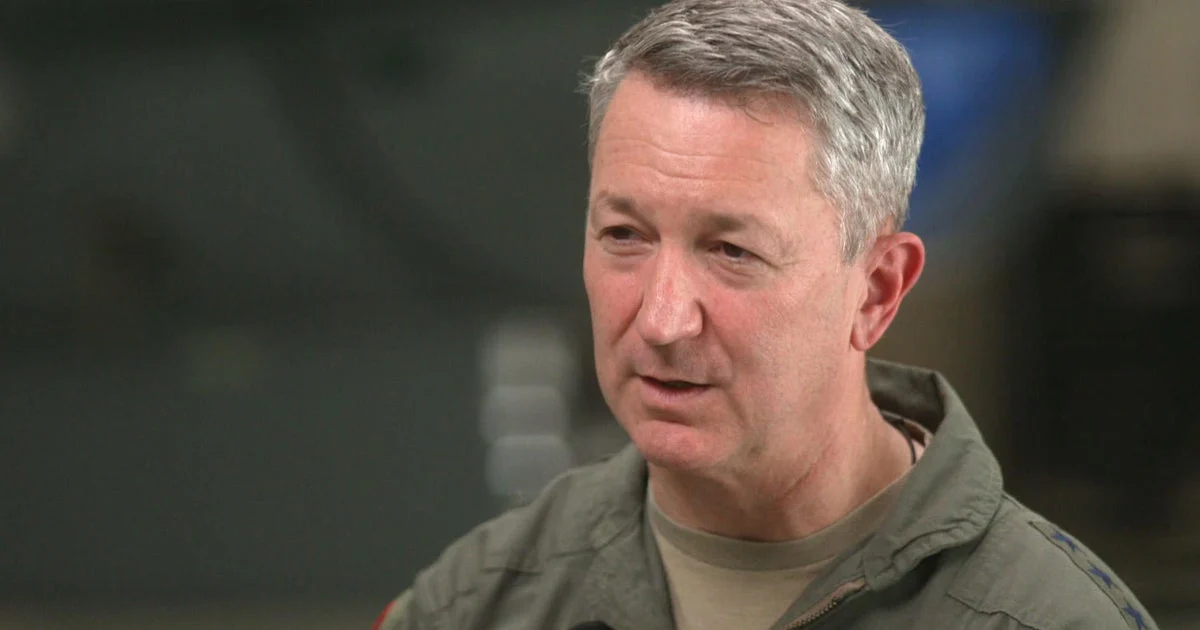
U.S. Army Gen. Dan Caine offered a detailed account of the military’s swift response to the September 11, 2001, terrorist attacks and the immediate recognition that the nation was at war. In a CBS News interview on September 12, 2026, Caine reflected on the tension and decisive actions taken as the attacks unfolded in real time.
What Happened
On the morning of September 11, 2001, Gen. Dan Caine was serving as the chief of Weapons and Tactics for the 121st Fighter Squadron at Andrews Air Force Base in Maryland. According to his CBS News interview with correspondent Norah O’Donnell, Caine entered a scheduling meeting when he was abruptly informed of the first plane striking the North Tower of the World Trade Center. Shortly after, in real time, he and his colleagues witnessed the second hijacked plane hit the South Tower at 9:03 a.m.
Recognizing immediately that the United States was under attack, Caine’s squadron began mobilizing. He ordered weapons, including air-to-air missiles, to be prepared for defense. The White House contacted his unit directly instructing them to scramble fighters to protect Washington, D.C. Under “very liberal” rules of engagement, the pilots were prepared to intercept hijacked flights, including United Flight 93, which was reported heading toward a federal building.
Though some aircraft had to launch without armed missiles, Caine’s jet was fully loaded. He flew with the knowledge that he might have to shoot down a commercial airliner if it posed a direct threat. Fortunately, United Flight 93 crashed in a Pennsylvania field after passengers fought back, averting a strike on Washington. Caine emphasized the trust words spoken by his wing commander, Brig. Gen. Dave Wherley, who expressed confidence that Caine would “do the right thing.”
Key Facts
Gen. Dan Caine served as chief of Weapons and Tactics for the 121st Fighter Squadron at Andrews Air Force Base during 9/11. The squadron was tasked with defending the capital airspace, receiving direct orders from the White House to scramble fighters. The rules of engagement were notably permissive due to the crisis.
Two other jets, piloted by Lt. Col. Mark Sasseville and Heather Penney, took off unarmed and prepared for a potential suicide ramming mission to stop hijacked planes. Caine’s interview referenced these preparations and the emotional weight carried by pilots having to consider lethal force against civilian aircraft.
The passengers on United Flight 93, who thwarted the hijackers’ plan by storming the cockpit, were credited by Caine as the nation’s first line of defense in those moments.
What This Means
Gen. Dan Caine’s reflections highlight the immediate shift in American military posture following the 9/11 attacks, underscoring a national mindset that transformed overnight from peacetime vigilance to wartime readiness. His firsthand account underscores the human dimension in military commands when pilots face impossible choices, including potentially shooting down civilian planes to protect the homeland.
This historical memory serves as a reminder of the seriousness with which the military approached potential threats in the hours following the attacks, illustrating the raw urgency and weight behind defense protocols that remain influential in American military doctrine today. For the public, these perspectives deepen understanding of the tactical and moral complexities in rapid response scenarios during moments of national crisis.
The courage of flight crews and passengers alike also embodies a defining feature of 9/11’s legacy—civic and military bravery under extraordinary threats—which continues to shape narratives of patriotism and sacrifice within U.S. political and military history.
Background
Following the attacks, the United States quickly enacted new security and military policies to prevent further domestic threats, including stricter airspace control and the broadening of military engagement rules. The 121st Fighter Squadron’s rapid deployment was part of a coordinated nationwide defense effort that day. This incident marked a pivotal moment, leading to subsequent military campaigns and homeland security reforms.
Sources
This article is based on reporting and publicly available information from the following source:
Read more US News stories on Goka World News.