
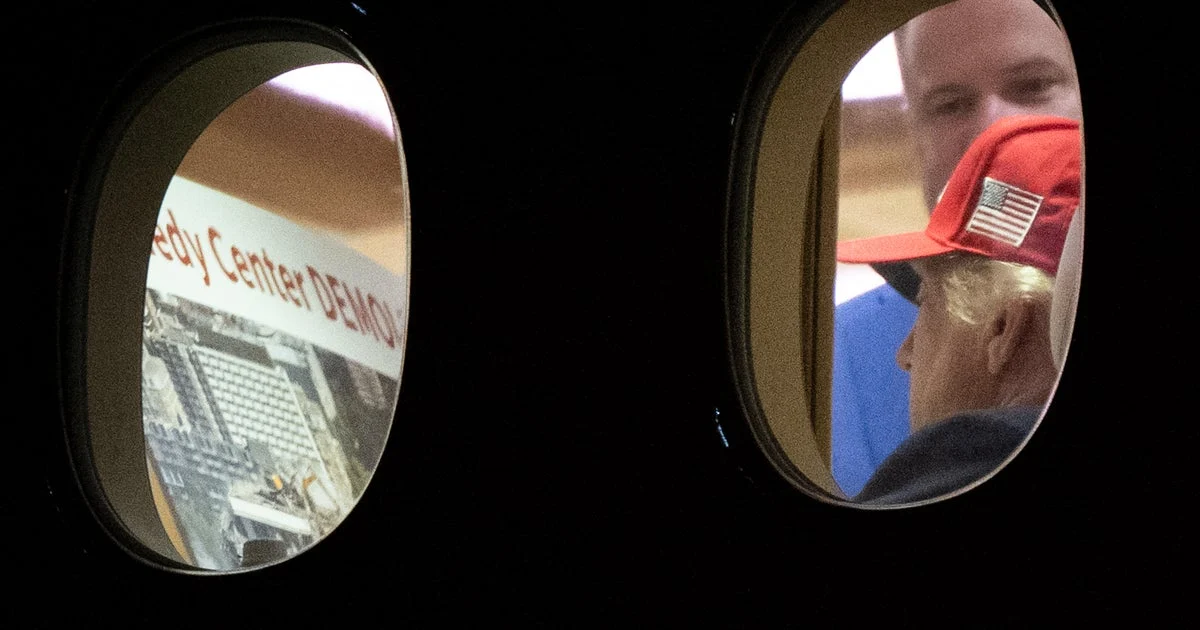
A federal judge has ordered the Trump administration to provide at least 30 days’ notice before initiating any demolition at the John F. Kennedy Center for the Performing Arts, a judicial decision prompted by President Donald Trump’s recent statement that the center could be “ripped down.” The ruling comes as tensions mount over the center’s future and ongoing legal battles surrounding its management and renovation plans.
What Happened
On September 17, 2026, U.S. District Judge Christopher Cooper issued an order requiring the Justice Department to notify the court 30 days in advance of any demolition activities affecting the Kennedy Center. This decision followed President Trump’s public remarks on September 16 suggesting the performing arts center might be demolished, accompanied by a photograph showing Trump reviewing a document titled “Kennedy Center Demolished” aboard Air Force One.
The Kennedy Center had already been closed temporarily due to safety hazards linked to structural deterioration. In court filings, the center’s executive director, Matt Floca, described the closure as necessary to mitigate “acute risks to public safety,” unrelated to the board’s previous vote to close the building for renovation. The Justice Department informed the court that the closure would last at least one week and could be extended as needed.
The ruling also denied an emergency hearing sought by Representative Joyce Beatty, an ex officio board member who had sued to block Trump’s alterations to the center. Beatty contended the closure was “unlawful” and warned demolition might be used to prevent public access, thereby circumventing the court’s prior orders. A witness reported seeing a forklift repeatedly striking the building’s pillars, and fencing was erected around the site, although the center’s vice president of public relations assured that no demolition had occurred.
Key Facts
Judge Cooper’s order demands a detailed status report from the Justice Department by September 23 regarding the center’s temporary closure and emergency repairs. The Kennedy Center, established in 1971 as a living memorial to President John F. Kennedy, has been at the center of legal and political disputes, including a recent court ruling barring the installation of President Trump’s name on the building. The board of the center, largely composed of Trump allies, voted to close the center for renovations following this ruling, with Congress having allocated over $250 million last year for restoration.
President Trump has asserted that if his administration supports the center’s restoration through fundraising, it should receive public recognition, warning that failure to do so could result in the center’s closure or demolition.
What This Means
This judicial order imposes a significant procedural safeguard on any physical changes at the Kennedy Center, especially demolition, reflecting the heightened scrutiny surrounding the center’s management under the Trump administration. For the public and patrons of the performing arts center, this ruling may delay drastic structural changes until full transparency and court oversight are guaranteed. It also underscores the heightened politicization of a cultural institution that traditionally serves as a national memorial and public venue.
Trump’s insistence on recognition linked to restoration funding introduces a political dimension to the center’s fate, potentially influencing how public and private resources are allocated. The legal restrictions and the judge’s oversight maintain a check on swift unilateral decisions by the board or administration, ensuring that the building’s future remains subject to judicial and legislative processes. For locals, performers, and visitors, the order may prevent abrupt disruption to access and activities at the center, at least in the near term.
Background
The Kennedy Center has been embroiled in controversy since the Trump administration’s involvement intensified. Earlier this week, Judge Cooper ruled that the board’s attempt to affix Trump’s name to the center violated both a federal court order and congressional statute. This judgment followed a lawsuit by Representative Joyce Beatty, who has actively opposed Trump’s influence over the center. The center’s closure for renovations stems from this contentious environment, with disputes over governance, funding, and public access continuing to play out in both legal and public spheres.
What Remains Unclear
It remains unresolved whether the board’s vote to close the center for renovations will gain judicial approval. The duration and scope of any future closures or potential demolition actions remain uncertain, pending safety assessments and further court rulings. Additionally, the political dynamics around funding and recognition tied to Trump’s involvement in restoration efforts continue to be disputed without a clear resolution.
What Comes Next
The Justice Department must submit a detailed report on the Kennedy Center’s closure and repairs by September 23. The court will continue to oversee the case, including any further decisions about the board’s renovation plans and compliance with federal statutes regarding memorials. The political and legal contest over the center’s name and management is expected to persist, with potential further filings and hearings anticipated.
Sources
This article is based on reporting and publicly available information from the following source:
Read more Politics stories on Goka World News.