
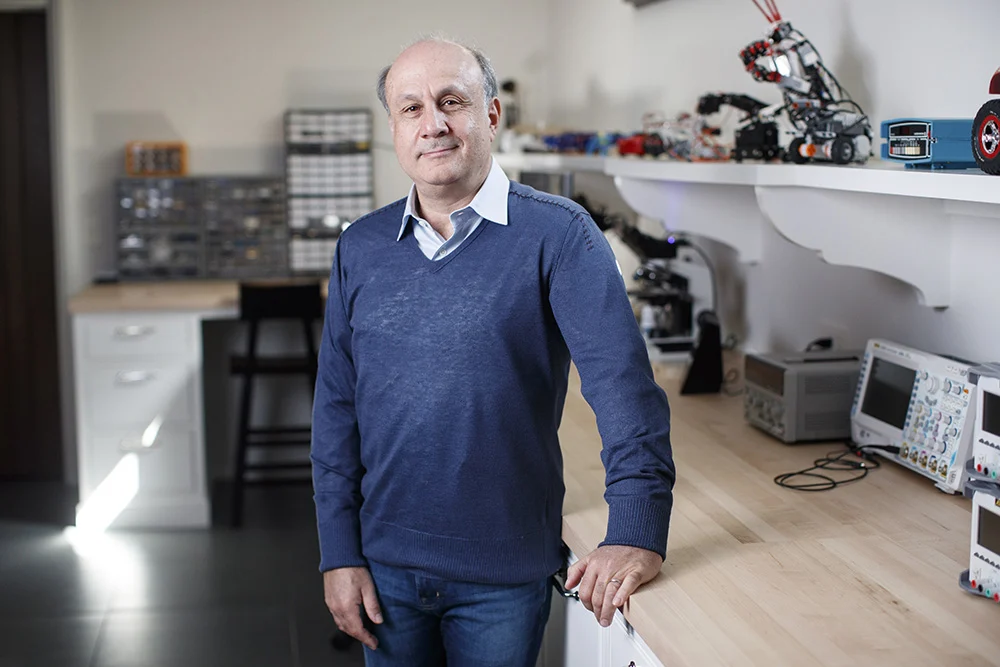
David Siegel, co-founder of investment firm Two Sigma and noted technology entrepreneur, has been named the next Innovation Fellow at the Massachusetts Institute of Technology (MIT) for the 2026-27 academic year. His fellowship will center on harnessing artificial intelligence (AI) to accelerate scientific discovery across MIT and beyond.
What Happened
MIT announced that David Siegel SM ’86, PhD ’91 will join the Institute as an Innovation Fellow during the 2026-27 academic year. Collaborating closely with the MIT Schwarzman College of Computing, Siegel’s role involves identifying new prospects for AI-driven scientific advancements. The announcement highlighted Siegel’s longstanding relationship with MIT, tracing back to his graduate studies and research at the MIT AI Lab.
Key Facts
David Siegel earned a Master of Science in 1986 and a PhD in 1991 at MIT, focusing on human-machine interaction in the Artificial Intelligence Lab. Post-graduation, he co-founded Two Sigma in 2001, a global investment firm known for its data science-driven approach leveraging AI and machine learning. Siegel retired from daily management in 2024 but remains co-chair of Two Sigma.
In addition to his entrepreneurial background, Siegel founded the nonprofit Open Athena in 2024 to support academia with frontier AI talent and resources, collaborating with institutions like MIT. This organization aims to maintain open and publicly accessible AI research, including developing Marin, a 535-billion-parameter foundation model built in public.
Siegel also serves on multiple governance boards, such as the Scratch Foundation, which he co-founded with an MIT professor, and was appointed in 2025 to the U.S. Department of Energy’s Office of Science Advisory Committee. His upcoming book, “When Machines Act,” is scheduled for publication by MIT Press in March 2026.
What This Means
Siegel’s appointment signals a strategic emphasis by MIT on AI’s transformative potential for scientific research. His experience bridging advanced AI applications and entrepreneurial investment brings a valuable perspective for driving interdisciplinary innovation at MIT. For researchers and students, his fellowship promises enhanced access to AI-driven methodologies and collaborations that could redefine discovery processes.
Moreover, Siegel’s leadership in initiatives like Open Athena underscores a commitment to democratizing frontier AI research, which may foster greater transparency and shared progress in AI science. His integration into MIT’s ecosystem could accelerate translation of emerging AI technologies into practical tools and frameworks benefitting both academia and industry.
Background
Siegel’s deep ties to MIT began with doctoral research at the AI Lab, where he contributed to pioneering robotics work. His enduring involvement includes membership in the MIT Corporation and co-chairing the External Advisory Committee for the Schwarzman College of Computing. He has played a key role in the MIT Quest for Intelligence initiative, which studies intelligence both biological and artificial.
Two Sigma, Siegel’s signature enterprise, exemplifies the convergence of AI, data science, and quantitative finance. The firm’s culture is rooted in applying scientific rigor and AI techniques to investment strategies, reflecting Siegel’s longstanding engagement with AI at MIT.
What Comes Next
Siegel’s fellowship begins in the 2026-27 academic year. During this period, he will engage extensively with MIT faculty and students, participate in events, and advise Institute leadership. The release of his book “When Machines Act” in March 2026 will coincide with the start of his residency, adding to the discourse on AI governance and application.
Sources
This article is based on reporting and publicly available information from the following sources:
Read more Artificial Intelligence stories on Goka World News.