
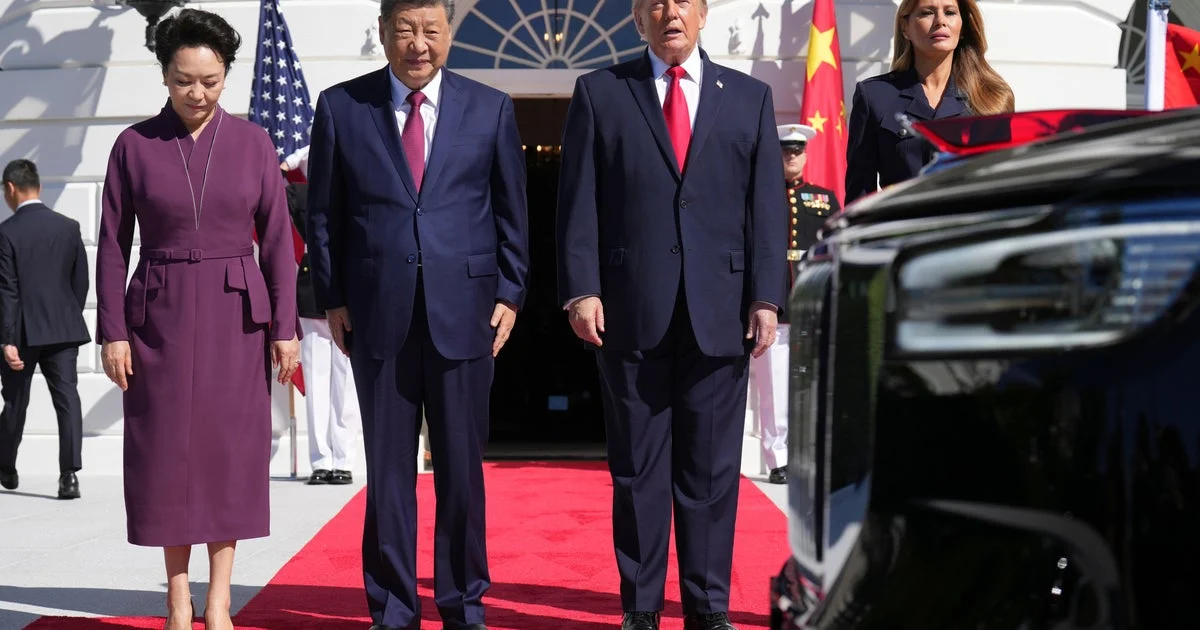
On September 26, 2026, U.S. President Donald Trump and Chinese President Xi Jinping agreed to establish a dedicated communication channel to manage artificial intelligence (AI) incidents as part of broader discussions including trade and military crisis cooperation. The announcement followed their three-day summit in Washington, reflecting steps toward improving bilateral dialogue amid ongoing tensions.
What Happened
During the summit, the United States and China committed to creating a communication mechanism specifically focused on AI-related incidents to address risks and benefits collaboratively. A formal AI-specific dialogue is scheduled for November. The two leaders also agreed to accelerate efforts on military crisis communication through a memorandum of understanding, aimed at reducing the chances of miscalculations between the two powers’ militaries.
The Washington talks produced no major breakthroughs but resulted in key cooperative frameworks. Both countries extended a trade truce by two months and established a Board of Trade to tackle selected bilateral economic issues. China agreed to import at least 10 million metric tons of U.S. coal in 2027 and 2028, while tariff reductions target roughly $30 billion worth of mostly non-sensitive goods, including agricultural products and holiday decorations.
The Board of Investment was also created to identify investment opportunities and resolve commercial obstacles. Additionally, the two sides continued negotiations regarding rare earth mineral exports, with the shared goal of restoring appropriate shipment levels to the United States after earlier Chinese export controls.
President Trump emphasized the U.S. intent to maintain leadership in AI development, referring to the technology as “super intelligence” rather than “artificial intelligence,” which he stated as more accurate. Trump indicated the U.S. would not share its AI advancements extensively with China, citing a lead of at least one year.
Key Facts
The official Chinese Foreign Ministry statement confirmed the signing of a memorandum on crisis communications between militaries, though details were limited. The White House described the newly formed Board of Trade as operational this week. Trade-related agreements included extending the tariff truce by an additional two months and arrangements to increase Chinese imports of U.S. coal for the years 2027 and 2028.
Trump’s preference to label AI as “super intelligence” was publicly stated outside the White House, where he highlighted the U.S. lead over China in AI advances by about one to two years. The White House also acknowledged China’s decision to impose new export controls on chemicals used to manufacture fentanyl, praising cooperation in addressing drug trafficking concerns.
Both leaders agreed on the principle that Iran should adhere to its commitment not to develop nuclear weapons, and condemned any toll collection on international waterways, an apparent reference to navigational tensions around the Strait of Hormuz.
What This Means
The establishment of an AI safety communication channel marks a significant step toward structured dialogue on emerging technologies between the world’s two largest economic and technological powers. By agreeing to use a dedicated mechanism to discuss AI incidents, the U.S. and China aim to mitigate risks of misunderstanding that could escalate into broader conflicts.
This agreement also underscores the recognition by both governments of artificial intelligence’s strategic importance, with Trump’s insistence on preserving U.S. leadership translating into limits on technology sharing. Such cautious coordination may prevent unintended confrontations but also suggests that competition in AI remains intense.
Moreover, the extension of trade discussions and the creation of trade and investment boards indicate a pragmatic approach to stabilizing economic relations despite unresolved tensions. The agreements on coal imports and tariff reductions could ease pressures on certain sectors, benefitting specific industries and workers on both sides.
Finally, military crisis communication commitments and coordination on international security issues, such as the Strait of Hormuz and Iran’s nuclear ambitions, reflect a broader intent to formalize channels to avoid crises. The summit’s incremental progress highlights the continued complexity of U.S.-China relations, balancing cooperation with strategic rivalry.
Background
This summit follows a period marked by a U.S.-China trade war initiated in 2025, with tariffs and export restrictions affecting global markets. Tensions had escalated around rare earth minerals crucial for technology manufacturing, and concerns about military incidents have increased amid strategic competition.
Previous attempts at dialogue had faltered, making this summit notable for its establishment of working groups focused on AI and military crisis communication. Trump’s prior criticism of China over trade and technology persisted, yet the personal diplomacy displayed sought to ease tensions.
What Comes Next
Both countries plan to continue dialogue at upcoming international gatherings, including the Asia-Pacific Economic Cooperation summit in Shenzhen in November and the G20 meeting at the Trump National Doral Miami golf club in Florida. The AI-specific dialogue will also take place in November as scheduled, offering a platform to further discuss technology risk management.
Sources
This article is based on reporting and publicly available information from the following sources:
Read more AI Regulation stories on Goka World News.