
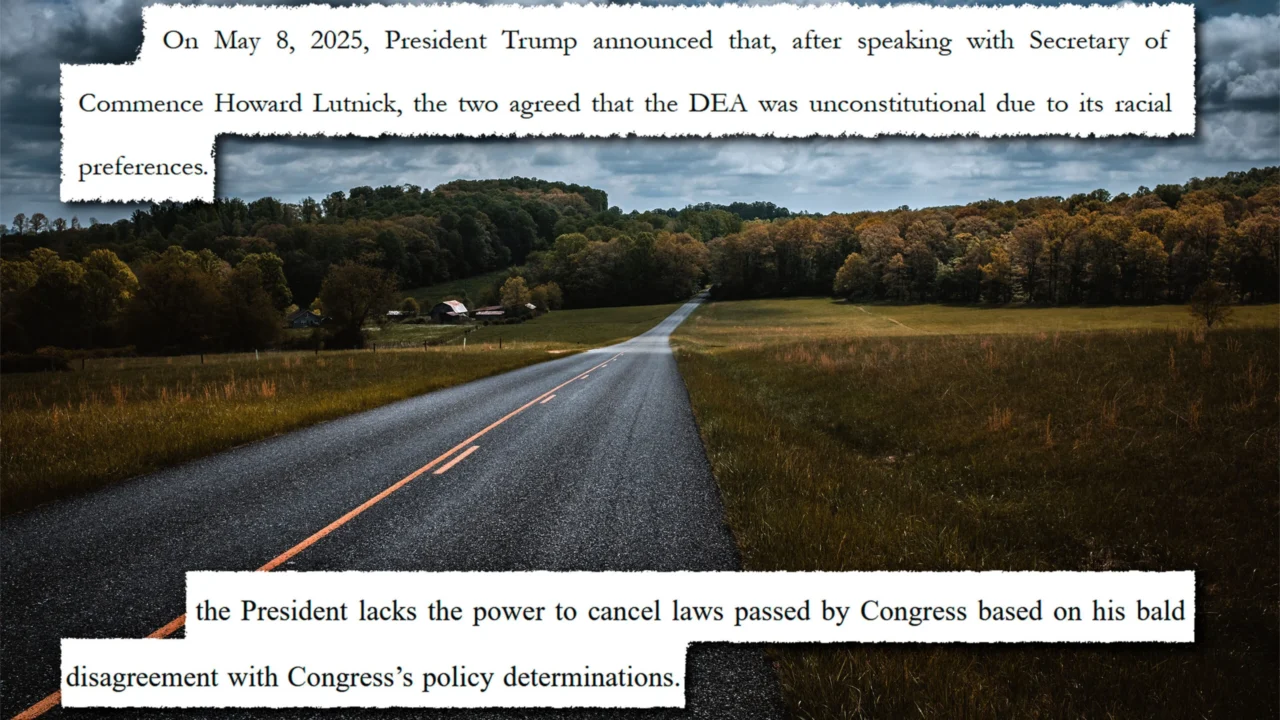
The federal Digital Equity Act, designed to enhance internet skills and access for vulnerable populations, faces setbacks after U.S. District Judge John D. Bates ruled that the government cannot award grants based on race or ethnicity. The decision disrupts distribution of multibillion-dollar funding intended to close the digital divide, leaving rural and disadvantaged communities in limbo.
What Happened
In July 2024, Judge Bates issued a 35-page ruling partly halting the Trump administration’s attempt to cancel Digital Equity Act grants authorized by Congress in 2021 as part of President Joe Biden’s infrastructure law. While the court stopped the administration from unilaterally ending the program, it struck down the use of racial or ethnic criteria to allocate the funds, deeming them unconstitutional. This ruling followed legal action filed by the National Digital Inclusion Alliance (NDIA), which challenged the halted distribution of nearly $26 million in grants meant to support digital navigation and internet skill-building programs.
The National Telecommunications and Information Administration (NTIA), responsible for implementing the Act, announced plans to reinstate the grant program without racial classifications, aiming to issue a new application by December 2024. Meanwhile, organizations that were set to receive awards, including tribal groups like the Cherokee Nation and community bodies such as Portland Community College and El Centro Hispano, must reapply under revised criteria.
Key Facts
The Digital Equity Act allocates $2.75 billion to expand digital skills across the U.S., focusing on low-income households, rural Americans, older adults, veterans, incarcerated individuals, and minority populations. The NDIA’s claim targeted the NTIA’s suspension of competitive grants following executive orders from the Trump administration opposing diversity and equity programs.
The court found the government lacked evidence of a compelling interest to justify racial classifications in awarding grants. NTIA Administrator Arielle Roth, appointed during the Trump era, has faced criticism for changes in internet deployment priorities and legal challenges over the race-based grant criteria. The ruling affects grant programs in states including Ohio, Arkansas, Oregon, and Alabama.
According to 2025 Pew Research Center polling cited in the case, internet subscription rates lag in rural communities and among Black and Hispanic adults compared to white and Asian adults, emphasizing persistent digital inequities.
What This Means
The judge’s decision fundamentally alters how digital equity grants will be distributed, removing race and ethnicity as factors despite Congress’ inclusion of these groups in the law’s targeted beneficiaries. This may slow efforts to address the digital access gaps faced by historically marginalized and rural Americans, many of whom rely heavily on digital navigators to gain internet literacy for jobs, healthcare, and social services.
For communities already struggling with connectivity and technology disparities, the removal of racial prioritization could widen existing inequities, as programs might no longer explicitly target those who experience compounded barriers. In rural areas where unemployment, homelessness, and limited broadband access intersect, organizations like Northwestern Ohio Community Action Commission face uncertainty about continuing critical navigator services without confirmed funding.
The ruling also underscores ongoing legal and political complexities surrounding affirmative action policies in federal programs, with parallels to the U.S. Supreme Court’s recent decisions limiting race-based considerations in education.
Background
The Digital Equity Act was enacted in 2021 as part of the Biden administration’s broader “Internet for All” initiative to bridge the digital divide through skill-building and infrastructure investments. However, the Trump administration opposed such programs, halting funding and labeling them “illegal” based on race-conscious elements.
Nonprofits like Computer Reach in Pennsylvania, which refurbishes and distributes thousands of free computers annually, highlight the demand for sustained digital inclusion efforts. The National Digital Inclusion Alliance’s lawsuit represents a legal challenge to ensure that federal funds reach the communities Congress aimed to help.
What Remains Unclear
The full impact of removing racial criteria from these grants remains uncertain. It is unclear how NTIA will redesign the grant application process to maintain equity goals without explicit emphasis on race or ethnicity. Additionally, the timeline and scope of restored funding programs under these new guidelines are pending further agency action and possible future litigation.
What Comes Next
The government has committed to reopening the grant application process in December 2024 without using racial or ethnic classifications. The NDIA and other organizations must reapply, and NTIA will provide periodic status updates during this transition. Congressional oversight and ongoing debates over race-conscious funding in federal programs are likely to continue shaping the future of digital equity policy.
Sources
This article is based on reporting and publicly available information from the following sources:
Read more Politics stories on Goka World News.