
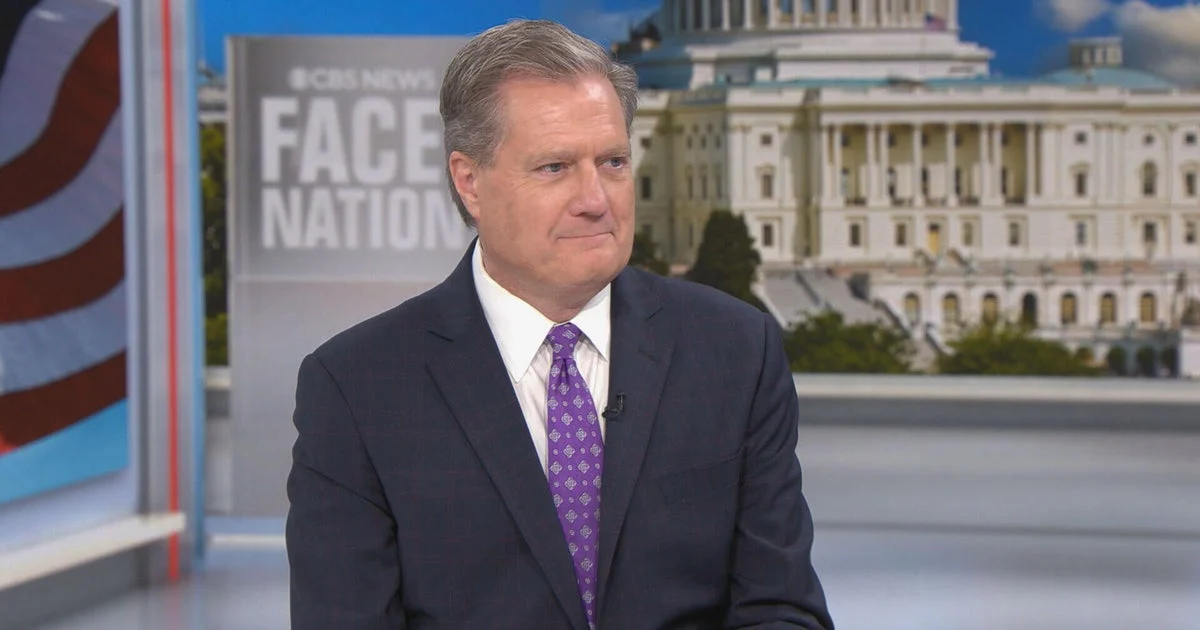
Republican Congressman Mike Turner of Ohio defended the ongoing U.S. conflict with Iran during an April 12 interview on CBS News’ “Face the Nation,” emphasizing the critical objective of preventing Iran from becoming a nuclear state amid widespread public disapproval of the war. Turner addressed concerns in his district about rising gas prices and questioned the clarity of the President’s strategy, arguing the stakes justify continued military involvement.
Turner on Public Sentiment and the Nuclear Threat
Turner acknowledged that public opinion polls show 64% of Americans disapprove of the war and 62% believe the President lacks a clear plan. However, he insisted that military conflicts rarely poll well during active engagements. He stressed that the administration’s primary goal is to stop Iran from acquiring nuclear weapons, which, he said, most Americans support despite economic concerns like increased gas prices in places such as Dayton, Ohio.
Discussing the breakdown of recent negotiations, Turner cited Vice President Vance’s remarks that Iran refused to declare it would not pursue nuclear weapons, describing this refusal as a global alarm. Turner referenced statements from International Atomic Energy Agency (IAEA) Director Rafael Grossi, who reported that Iran was weeks away from having enough enriched uranium for a nuclear bomb. Turner dismissed claims that the threat is merely aspirational and framed it as immediate and serious.
U.S. Strategy and Congressional Oversight
Turner defended the President’s evolving approach to securing the Strait of Hormuz, a key oil transit route where tensions have escalated. He explained the fluidity of conflict and noted that the stance toward escorting tankers, imposing blockades, and handling mine-clearance operations adapted to changing conditions. Turner stressed that control of the strait is a global concern involving NATO allies and Europe, not solely a U.S. responsibility.
Despite acknowledging critical questions about the administration’s communication and strategy, Turner highlighted that Congress has received multiple classified briefings on the conflict and Iran’s nuclear ambitions over decades. He characterized calls for more congressional information as justified but denied that oversight has been absent.
Turner declined to clarify unconfirmed reports and tweets from the President regarding whether Iran mined the Strait of Hormuz, emphasizing that such details fall under the President’s direct messaging.
Why it matters
The conflict with Iran centers on preventing the emergence of a nuclear-armed regime widely viewed as destabilizing to regional and global security. With American public opinion largely skeptical and the administration’s strategy criticized for inconsistency, congressional leaders like Turner face the challenge of reconciling national security objectives with calls for transparency and a coherent plan. The evolving situation in the Strait of Hormuz also carries significant implications for global energy markets and international alliances.
Read more Politics stories on Goka World News.