
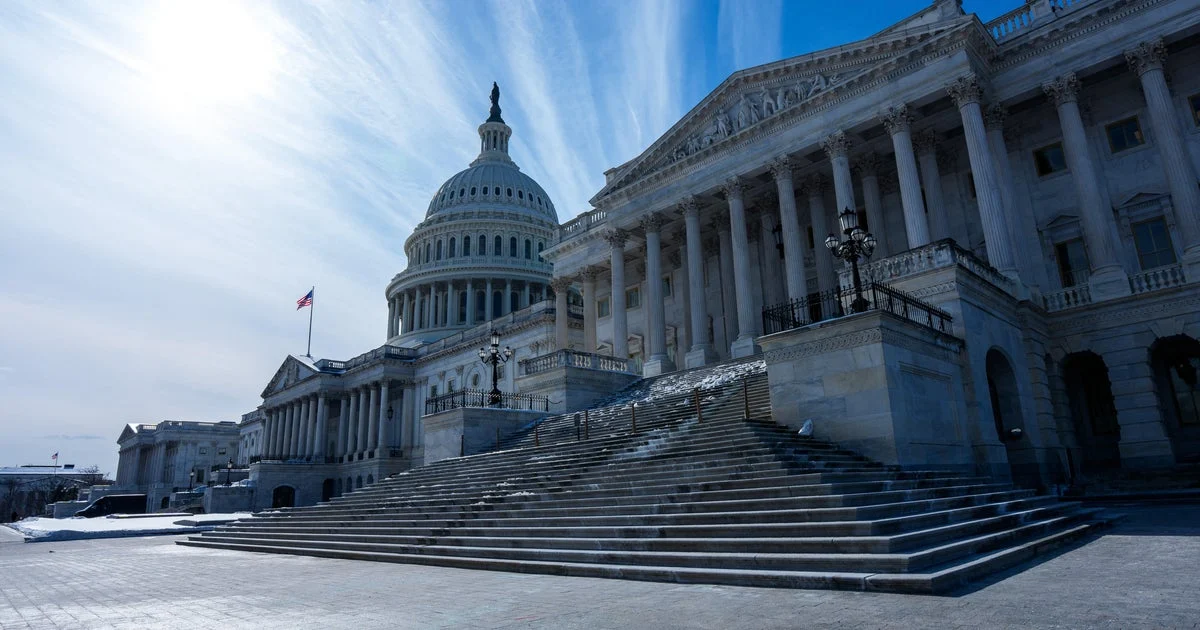
The U.S. House of Representatives narrowly voted down a war powers resolution on Thursday aimed at restricting President Trump from continuing military action against Iran without explicit congressional approval. The measure, introduced by Democratic Rep. Gregory Meeks of New York, failed by a 213 to 214 vote with one member voting present.
The resolution sought to compel the president to withdraw U.S. armed forces from hostilities against Iran unless Congress authorized further action. It came as the conflict approaches its third month, with peace talks having broken down amid ongoing tensions, a fragile two-week ceasefire, and a U.S.-imposed blockade on Iranian ports.
Trump’s recent threat to destroy “a whole civilization” if Iran did not reopen the Strait of Hormuz — a vital global oil shipping route — heightened concerns in Congress, particularly among Democrats. Despite this, the resolution failed to gain the necessary bipartisan support, with only one Republican joining nearly all Democrats in favor. Another Republican voted present.
Some Democrats, including Reps. Henry Cuellar of Texas, Greg Landsman of Ohio, and Juan Vargas, shifted from opposing a similar measure in March to supporting Thursday’s resolution. In contrast, Rep. Jared Golden of Maine was the sole Democrat opposing it, expressing concerns it could undermine ongoing negotiations with Iran during the current ceasefire.
Republican Reps. Thomas Massie of Kentucky and Warren Davidson of Ohio had broken ranks in a prior March vote; Massie voted in favor Thursday, while Davidson voted present. Meeks indicated he plans to continue efforts to persuade other members, including Golden, to support future measures limiting presidential war powers.
Why it matters
The vote highlights continuing congressional divisions over the extent of presidential authority in military conflicts without explicit congressional authorization. The 1973 War Powers Resolution, which limits unauthorized military engagement to 60 days, is central to this debate but has been contested by presidents from both parties as unconstitutional. With the statutory deadline nearing on May 1, further congressional action to clarify or assert war powers may become more urgent.
Background
The war between the U.S. and Iran began earlier this year, and efforts at peace talks have faltered. President Trump’s aggressive rhetoric, including threats to Iran’s civilian infrastructure and critical economic chokepoints, fueled calls from Democrats for Congress to reclaim oversight. However, resistance remains among Republicans, complicating unified congressional efforts to constrain executive action.
Previous resolutions aimed at limiting Trump’s military engagement with Iran also failed in the Senate and House. Attempts to bring the measure to the floor through unanimous consent were blocked by Republicans controlling House proceedings. The outcome leaves U.S. military involvement in Iran continuing without clear congressional limits.
Read more Politics stories on Goka World News.