
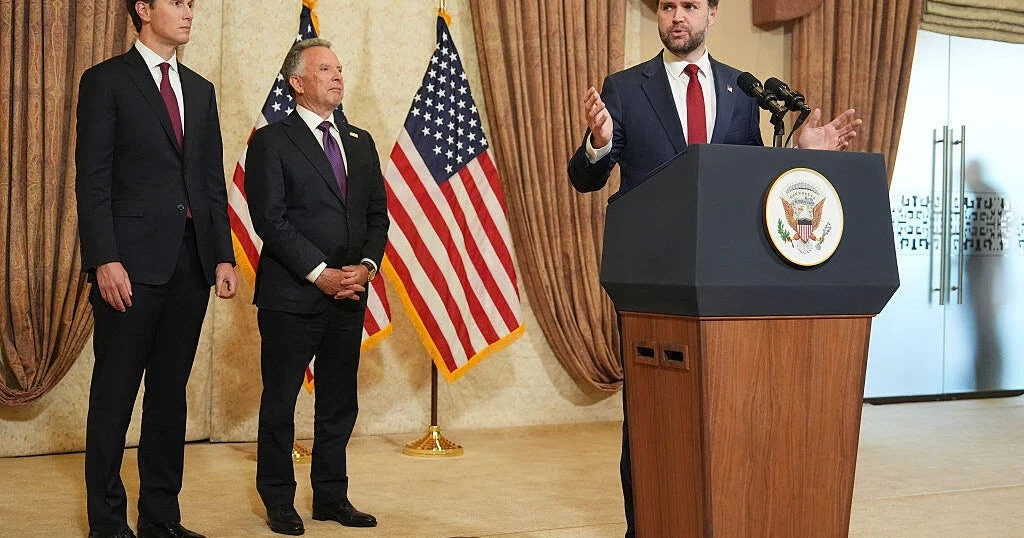
Senior U.S. officials, including Vice President JD Vance and Middle East envoy Steve Witkoff, are expected to return to Pakistan within days to resume talks with Iranian representatives, sources told CBS News on April 17, 2026. The diplomatic effort aims to revive negotiations for a longer-term peace agreement with Tehran amid heightened tensions and a U.S.-enforced naval blockade in the Strait of Hormuz.
No fixed date has been confirmed, but talks could restart as soon as April 20. The discussions would follow a recent round in Islamabad, where negotiations led by Vance ended without resolving key issues such as Iran’s nuclear program and terms for ending the war that began in February.
President Donald Trump acknowledged on April 17 that no final decision had been made about who would lead the next in-person talks, indicating a possible delegation that could include Vance, Witkoff, and Jared Kushner, his son-in-law. Trump also claimed that Iran had agreed to halt uranium enrichment, and Axios reported that the president expected a deal within days.
Current regional tension and international response
The potential diplomatic outreach comes as the U.S. maintains a naval blockade around Iran’s ports and coastlines in the Strait of Hormuz, a crucial passageway that handles roughly 20% of global oil shipments. The blockade aims to pressure Iran but has escalated regional tensions.
On April 17, senior Western leaders convened in Paris for urgent talks on safeguarding navigation through the Strait of Hormuz. French President Emmanuel Macron hosted the summit with British Prime Minister Keir Starmer, German Chancellor Friedrich Merz, and Italian Prime Minister Giorgia Meloni, joined virtually by representatives from over 30 countries.
The discussions focused on potential coordinated naval escorts for commercial vessels, expanded demining efforts, and enhanced intelligence sharing. Neither the United States nor Iran attended this meeting directly, with organizers maintaining communication with both sides.
Mine threat in the Strait of Hormuz
Commercial shipping faces increased risk from underwater mines reportedly deployed by Iran in the Strait. U.S. officials confirmed at least a dozen mines remain, posing navigational hazards. The U.S. Navy has issued advisories urging ships to avoid these areas where threats “are not fully understood.”
Iran’s Foreign Minister Abbas Araghchi stated on social media that the Strait remains open for commercial vessels under a ceasefire coordinate route, but this claim contrasts with U.S. warnings. President Trump stated on social media that all mines in the strait would be removed with U.S. cooperation.
Why it matters
The proposed resumption of high-level talks between the U.S. and Iran reflects ongoing efforts to de-escalate a conflict with significant implications for global energy security. The Strait of Hormuz is a strategic chokepoint whose disruption could spike oil prices and impact international trade. Meanwhile, diplomatic channels remaining open signal potential for reducing military confrontations despite a tense standoff.
Background
Since the outbreak of the war in February, U.S.-Iran relations have deteriorated, with a naval blockade restricting Iran’s access to key maritime routes. Past negotiations in Islamabad, featuring unofficial back-channel diplomacy, yielded limited progress. The current diplomatic push is one of several attempts to resolve nuclear and security disputes without further escalation.
Read more Politics stories on Goka World News.