
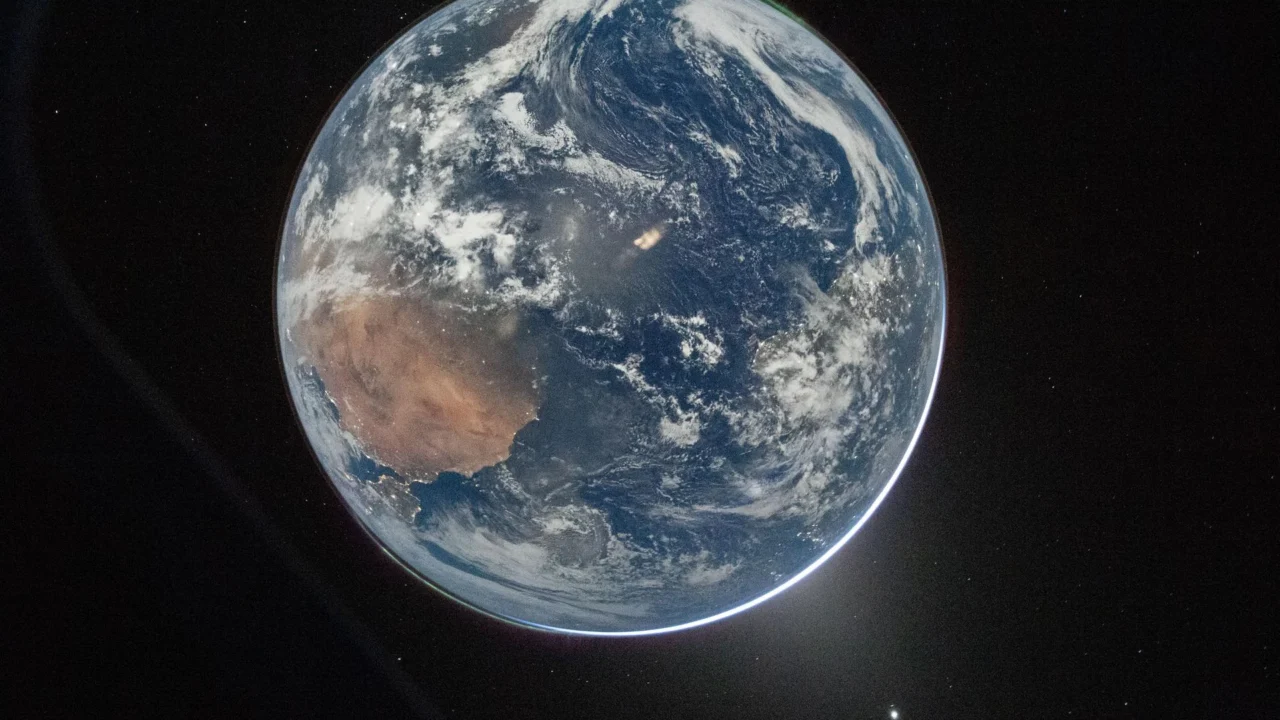
NASA’s Artemis II mission launched on April 1, 2026, marking the first crewed flight of the Orion spacecraft. The four astronauts—Reid Wiseman, Victor Glover, Christina Koch, and Canadian Space Agency astronaut Jeremy Hansen—completed a nearly 10-day voyage orbiting the Moon before safely splashing down in the Pacific Ocean off San Diego on April 10.
Record-Breaking Lunar Journey
At its furthest point from Earth, the Artemis II crew reached 252,756 miles, setting a new record for the farthest distance humans have traveled in space. During the mission, the astronauts closely observed the lunar surface at unprecedented proximity for a crewed flight, completing a total distance of 694,481 miles. This surpasses the Apollo 13 record set in 1970 and provides critical data for deep space operations.
Preparation and Training
Prior to launch, the crew underwent extensive training, including geological fieldwork in Iceland’s volcanic terrain to develop navigation and sample collection skills applicable to lunar exploration. They practiced using tools such as hammers, scoops, and chisels to better understand lunar geology.
The astronauts also trained in NASA’s Orion Crew Survival System (OCSS), their custom-fitted, bright orange spacesuits used during launch and re-entry. The suits are equipped with life support for up to six days, including air, water, food, and waste management systems. Training simulated weightlessness and pressurized environments to ensure suit performance in deep space.
Mission Highlights and Innovations
The launch was captured by NASA’s Flight Imaging Launch Monitoring Real-time System (FILMRS), a set of durable cameras affixed to the Space Launch System (SLS) rocket. During the mission, Artemis II made the first direct “space-to-space” call between a crew in deep space and astronauts aboard the International Space Station, involving participants from NASA, ESA, and the CSA.
The crew also managed critical onboard systems such as the Universal Waste Management System, NASA’s space toilet, addressing operational challenges in microgravity conditions.
Return and Recovery
Following splashdown, NASA and U.S. Navy teams executed spacecraft and crew recovery operations in the Pacific. The astronauts were extracted from the Orion capsule and transported via helicopter to the Navy recovery ship before being flown back to Houston’s Ellington Airport. The crew later held a news conference to discuss their experiences and insights from the mission.
Why it matters
Artemis II demonstrated successful human operations in deep space, tested the Orion spacecraft with astronauts onboard, and advanced NASA’s goal of sustainable lunar exploration. The mission’s success paves the way for future Artemis missions targeting the Moon’s South Pole and the eventual goal of sending humans to Mars. Ongoing work at NASA includes developing next-generation spacesuits, tools, and rovers to meet the challenges of lunar conditions such as harsh lighting, dust, and extreme temperatures.
Read more Space & NASA stories on Goka World News.
Sources
This article is based on reporting and publicly available information from the following source: