
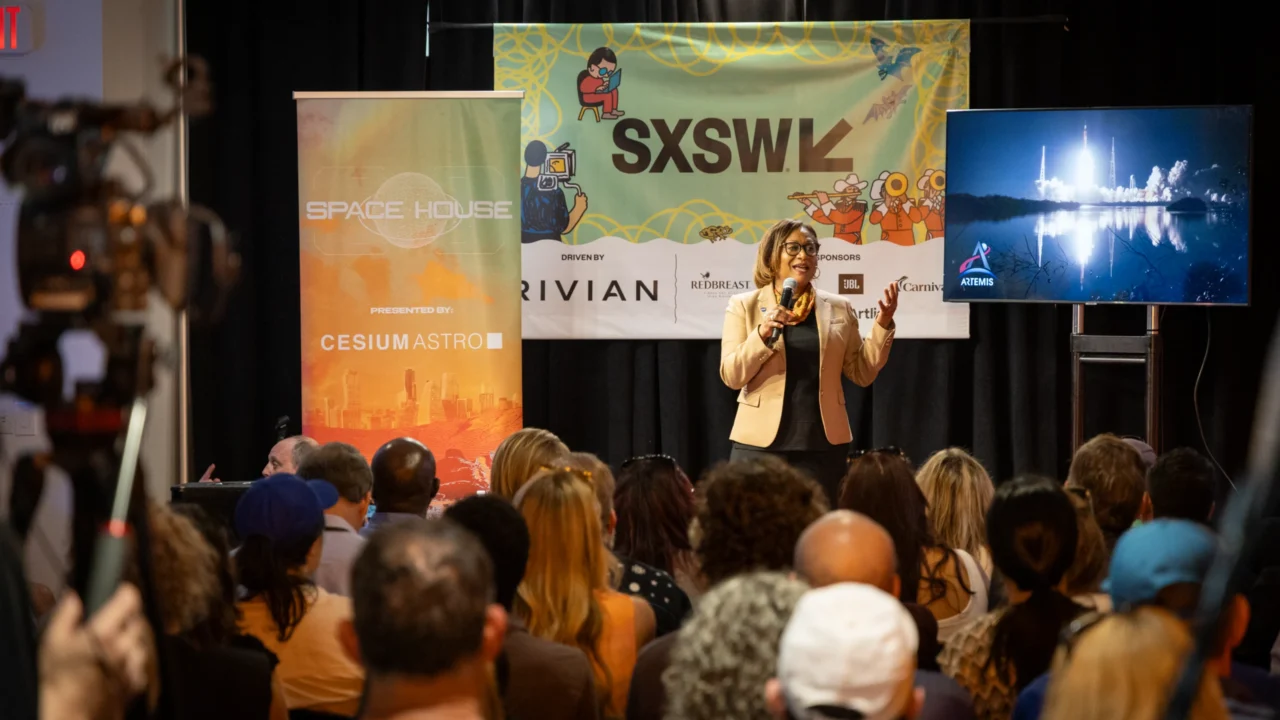
On March 21, 2026, NASA Johnson Space Center Director Vanessa Wyche outlined the agency’s Artemis program goals at the South by Southwest (SXSW) Space House event in Austin, Texas. Wyche emphasized Artemis as a pivotal initiative to return humans to the Moon, build sustainable lunar infrastructure, and develop capabilities for future Mars missions.
Artemis Program Advancing Human Exploration
Wyche described Artemis as a “Moon to Mars strategy,” advancing technologies and systems through international and commercial partnerships. The program aims to increase launch frequency, expand robotic missions, and establish a permanent human presence on the lunar surface, particularly focusing on uncharted regions such as the lunar South Pole.
She highlighted the Moon as a proving ground for critical systems that will support deeper space exploration, including habitats, rovers, and life-support technologies, which are essential for eventual Mars expeditions.
Building on International Space Station Legacy
The International Space Station (ISS) remains foundational to NASA’s approach. For 25 years, the ISS has facilitated continuous human presence in low Earth orbit, enabling vital research and technology testing instrumental to Artemis. Wyche stressed maintaining a strong U.S. presence in low Earth orbit while developing commercial spaceflight capabilities for cargo and crew transportation.
Collaboration with Commercial and Global Partners
NASA’s partnerships with industry and international allies are driving Artemis forward. Over 60 countries have signed the Artemis Accords, pledging peaceful cooperation in space exploration. These partners contribute major mission elements, including rovers, habitats, research, and operational support.
Commercial initiatives such as the Commercial Lunar Payload Services have enabled missions like Blue Ghost Mission 1 and Intuitive Machines’ IM-2 to deliver payloads and land near the lunar South Pole. Companies like Axiom Space are developing advanced spacesuit technologies suited for lunar conditions.
Groundwork in Texas and Workforce Development
Wyche highlighted ongoing analog missions and testing facilities in Texas. The CHAPEA mission simulates deep space conditions inside a 3D-printed habitat, helping researchers study long-duration spaceflight effects. NASA’s Exploration Park and the Texas Space Institute support hardware and robotics testing with contributions from government, industry, and academia.
Both Wyche and Johnson Space Center Public Affairs Chief Nilufar Ramji stressed the importance of commercial partnerships and public engagement, noting programs designed to inspire and train the next generation of space explorers.
Why it matters
Artemis represents NASA’s strategic shift from low Earth orbit activities to sustained extraterrestrial exploration, signaling international collaboration and private sector involvement as essential to future missions. Success in establishing a stable lunar base will be crucial for enabling human missions to Mars and advancing global space leadership.
Read more Space & NASA stories on Goka World News.
Sources
This article is based on reporting and publicly available information from the following source: