
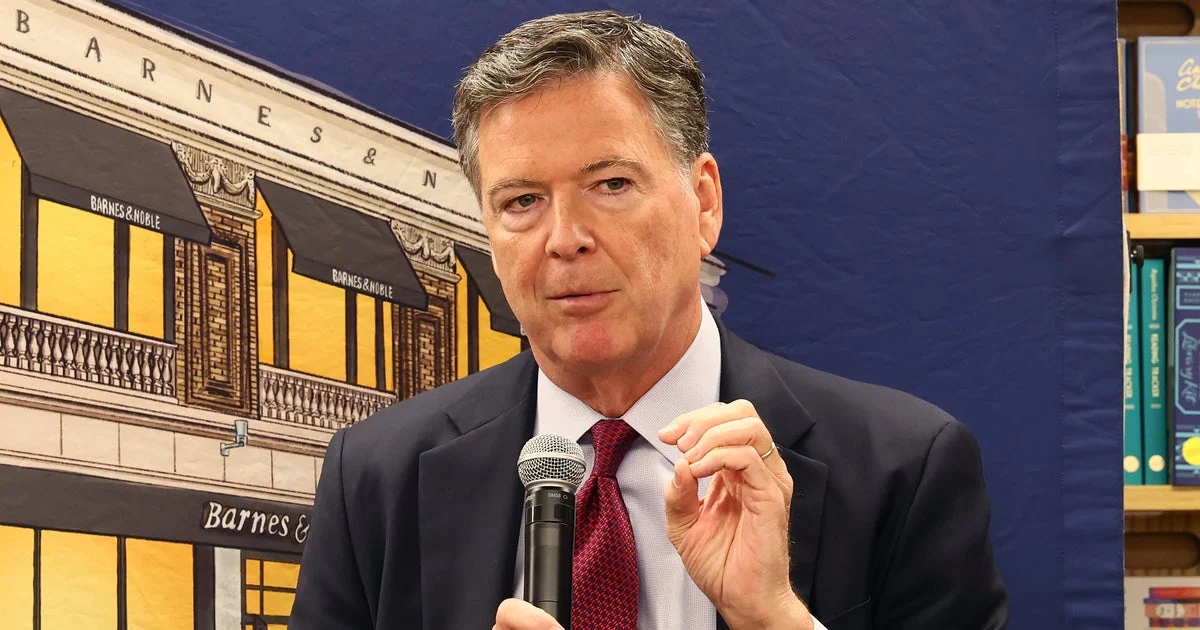
Former FBI Director James Comey made his first court appearance on April 29, 2026, following an indictment accusing him of threatening then-President Donald Trump. Comey did not enter a plea during the brief hearing before Federal Magistrate Judge William E. Fitzpatrick.
Comey is charged with two federal counts: knowingly and willfully making a threat to harm the president, and transmitting that threat across interstate commerce. These charges are linked to an Instagram photo Comey shared last year that showed seashells arranged to form the numbers “86 47.” According to the indictment, a reasonable person familiar with the context would interpret this image as a serious expression of intent to harm President Trump, the 47th U.S. president.
In response to the public backlash, Comey removed the post and explained he intended the “86 47” shell arrangement as a political message, not a threat. He stated, “I didn’t realize some folks associate those numbers with violence” and emphasized his opposition to any form of violence.
During the court hearing, Judge Fitzpatrick denied the Justice Department’s request to impose conditions of release on Comey, noting such measures were not deemed necessary during Comey’s prior legal proceedings.
Comey’s attorneys, including Patrick Fitzgerald, signaled plans to file motions to dismiss the charges on grounds of selective and vindictive prosecution. They also requested a preservation order for government records, referencing recent Justice Department opinions regarding the applicability of the Presidential Records Act to the Trump administration.
This is Comey’s second federal indictment; the first, lodged in September 2025, accused him of lying to Congress and obstructing a congressional proceeding. That case was dismissed due to the illegal appointment of the U.S. attorney who brought the charges, though the Justice Department is appealing.
Legal experts note the unusual nature of these new charges, tied to a symbolic social media post involving seashells. CBS News legal contributor Jessica Levinson highlighted the constitutional questions involved, emphasizing the potential First Amendment defense Comey could raise. Prosecutors must demonstrate that Comey intentionally threatened the president’s life or knowingly transmitted such a threat.
The Supreme Court’s 2023 ruling requires the government to prove that a “true threat” involves conscious disregard of a significant risk of harm through speech. Comey maintains his innocence, stating in a video after the indictment, “I’m still innocent, I’m still not afraid, and I still believe in the independent federal judiciary.”
President Trump responded to the indictment via social media post, interpreting “86 47” as a coded call to kill him and accusing Comey of deceit regarding the case.
Why it matters
This case raises critical questions about the limits of free speech and political expression under the First Amendment, especially when symbolic or ambiguous messages are interpreted as threats. It tests the threshold for prosecuting alleged threats against a sitting or former president and could influence future handling of social media communications involving political figures.
Background
James Comey served as FBI Director from 2013 to 2017 and has been a vocal critic of former President Trump. He was first indicted in 2025 on unrelated charges of lying to Congress and obstructing a congressional investigation, but that case was dismissed on procedural grounds. The current charges relate to a 2025 social media post that sparked controversy among Trump supporters, leading to the new federal indictment.
Read more Politics stories on Goka World News.
Sources
This article is based on reporting and publicly available information from the following source: