
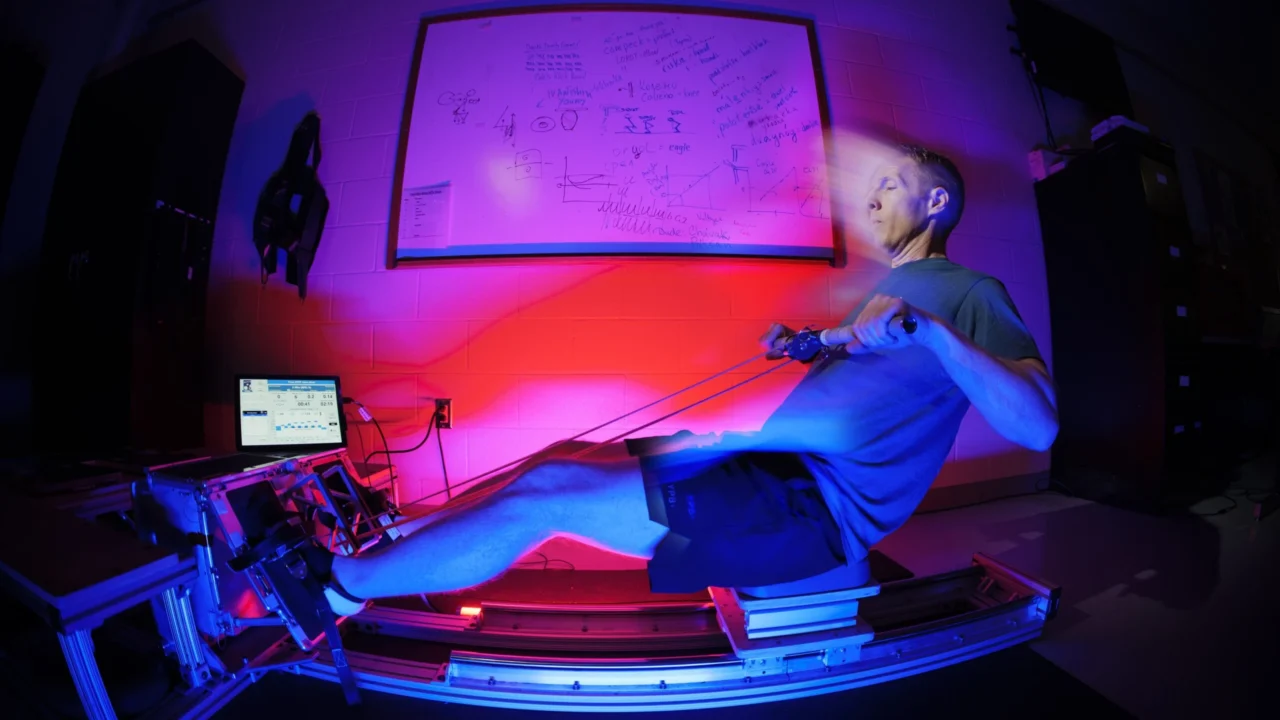
The Artemis II mission, NASA’s first crewed lunar flight test, included a compact exercise device called the flywheel, developed under the guidance of project manager Ryan Schulte. The flywheel enabled the four astronauts to perform daily workouts during their 694,481-mile journey around the Moon and back, supporting their physical and mental health in deep space.
At NASA’s Johnson Space Center in Houston, Schulte leads the team responsible for designing, building, testing, and operating the flywheel device used on Artemis II. The project focuses on creating exercise equipment that does not rely on electrical power from the spacecraft, an important feature for efficiency and safety during long missions.
The flywheel is roughly the size of a large shoebox and offers a variety of aerobic and resistive exercises. It operates much like an “inertial yo-yo,” with selectable gear ratios that provide different resistance levels, up to 500 pounds. This allows astronauts to perform exercises including squats, deadlifts, bent rows, high-pulls, curls, heel raises, and aerobic rowing—all with a single, multi-functional device.
Designing the flywheel posed challenges such as limited space inside the Orion capsule and ensuring crew mobility while minimizing noise to allow communication during workouts. The device was carefully engineered to fit compactly while providing enough room for astronauts to fully extend and move at high speeds through numerous repetitions.
During the approximately 10-day Artemis II mission, astronauts used the flywheel for about 30 minutes daily. These exercise sessions helped mitigate the muscle, bone, and stamina loss caused by microgravity, which presents a significant risk during extended spaceflight. Exercise is critical for maintaining crew health and preparedness for future missions involving long lunar surface excursions or emergency procedures.
In addition to physical benefits, the flywheel exercises support mental health by reducing stress and improving mental clarity. Movement in zero gravity helps alleviate fluid stagnation in the head and provides an important psychological boost for astronauts living in confined spaces.
Ryan Schulte began his NASA career in 2007 and transitioned from technical engineering roles to human health and performance research, focusing on integrating human physiology with engineering solutions. His work on the Artemis II flywheel is part of ongoing efforts to develop more reusable and efficient exercise devices for upcoming Artemis missions and long-duration space exploration.
Why it matters
Maintaining astronaut health in deep space is essential for mission success and crew safety. The development of compact, power-free exercise devices like the flywheel addresses critical challenges of space travel, enabling astronauts to retain physical fitness and mental resilience during increasingly long missions to the Moon and beyond.
Background
Prolonged exposure to microgravity leads to muscle atrophy, bone density loss, and cardiovascular decline. Exercise countermeasures are a longstanding aspect of crewed spaceflight, but constraints on space, power, and noise aboard spacecraft require innovative solutions. The Artemis program’s goal of sustainable lunar exploration further drives the need for effective, space-efficient exercise equipment.
Read more Space & NASA stories on Goka World News.
Sources
This article is based on reporting and publicly available information from the following source: