
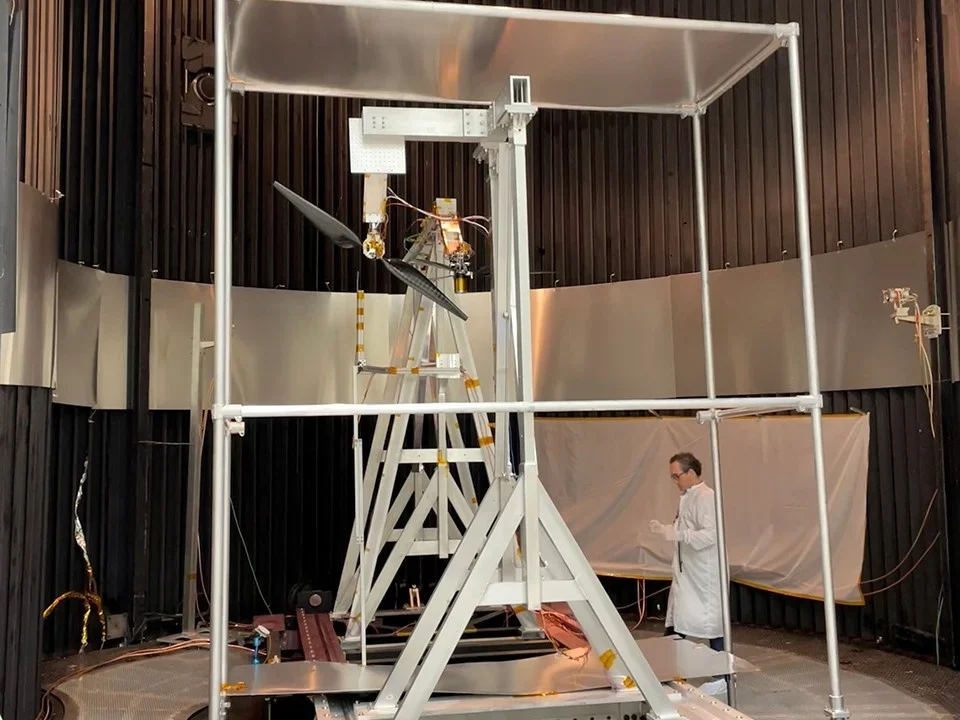
NASA engineers have conducted tests that demonstrate Mars helicopter rotor blades can exceed the speed of sound without structural failure. The experiments were performed inside the 25-Foot Space Simulator at NASA’s Jet Propulsion Laboratory (JPL) in Southern California in November 2025.
The tests focused on next-generation rotor blades designed for future aerial vehicles operating on Mars. Data collected during the campaign showed that these blades could surpass Mach 1—breaking the sound barrier—while maintaining integrity and performance. This represents a significant development for expanding the capabilities of aircraft exploring the Red Planet.
The testing is part of a broader initiative funded by NASA’s Mars Exploration Program, which aims to maximize the flight performance of future rotorcraft deployed in the Martian atmosphere. JPL, a division of Caltech based in Pasadena, manages this program on behalf of NASA’s Science Mission Directorate in Washington.
Why it matters
Current Mars helicopters, such as Ingenuity, operate at lower rotor speeds due to the thin Martian atmosphere. Pushing rotor blades beyond Mach 1 could enable future vehicles to fly faster, carry heavier payloads, and cover larger areas, expanding their utility for scientific missions. Demonstrating blade durability at supersonic speeds is crucial for safe, reliable aerial exploration on Mars.
Background
Mars helicopter flights have been limited by challenges posed by the planet’s thin atmosphere and lower gravity. Ingenuity’s success since 2021 has paved the way for more advanced rotorcraft, but future missions require rotors capable of higher speeds and loads. Testing blade performance under simulated Martian conditions at supersonic speeds addresses key engineering challenges for these next-generation vehicles.
Sources
This article is based on reporting and publicly available information from the following source:
Read more Space & NASA stories on Goka World News.