
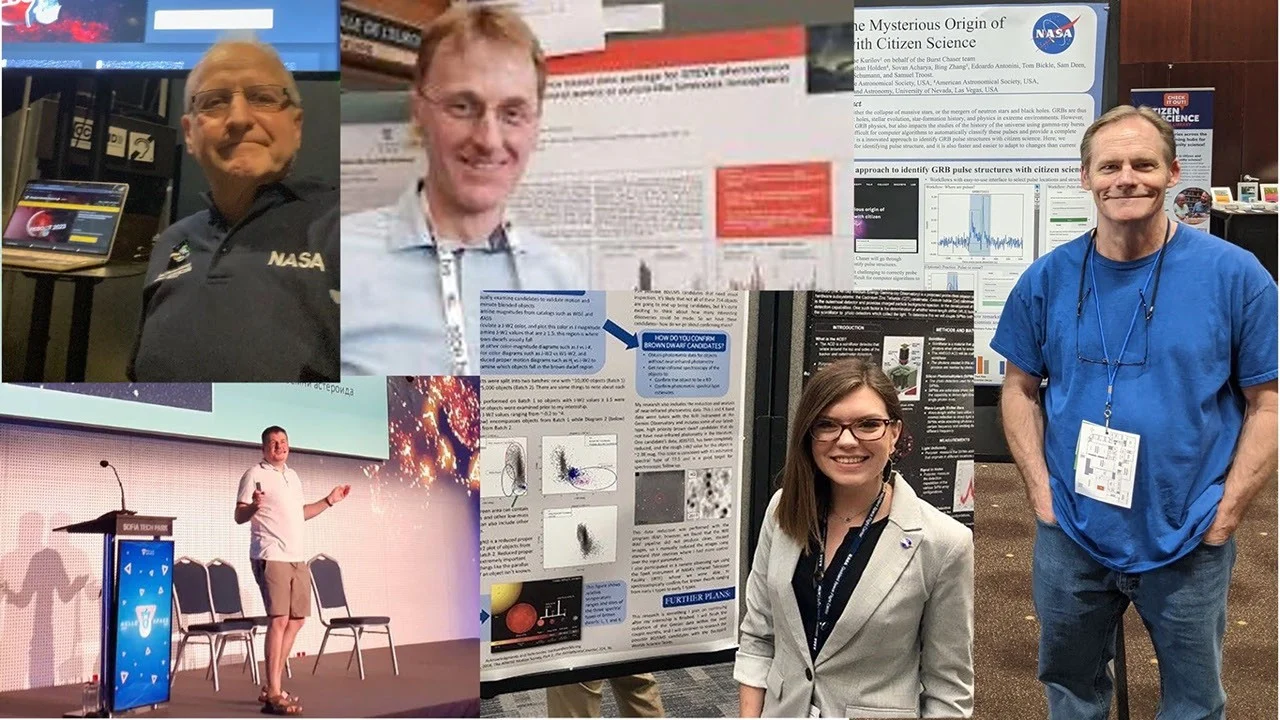
NASA has announced that over 650 volunteers participating in its citizen science projects have co-authored peer-reviewed scientific papers alongside professional researchers. These volunteers have made significant contributions by identifying celestial phenomena, observing atmospheric events, and collecting environmental data.
Volunteer Contributions to Scientific Discovery
Citizen scientists involved with NASA assist in a variety of research efforts, including spotting comets, gamma-ray bursts, and brown dwarfs using data from space telescopes. They also observe auroras, sprites, and noctilucent clouds from Earth, and gather data on exoplanets using backyard telescopes. Other volunteers report mosquito breeding habitats via smartphones or study Earth’s ionosphere using ham radios.
Their dedication has led to direct involvement in research that has been documented in peer-reviewed journals, an important milestone in the scientific process. Peer review ensures that findings are validated, novel, and meaningful before being published, making the contributions of citizen scientists lasting parts of the scientific literature.
How to Get Involved and Become a Co-Author
Volunteers interested in becoming co-authors on scientific papers should select NASA citizen science projects that appeal to them and engage regularly to build familiarity. According to NASA, sustained participation helps volunteers recognize unusual data patterns that can lead to breakthroughs.
Effective communication with project scientists is encouraged to gain mentorship through the research and writing process. Many NASA projects offer regular meetings, email updates, and discussion forums to facilitate interaction. Resources such as virtual events hosted by NASA’s partner SciStarter provide additional opportunities for volunteers to connect with researchers.
Volunteers are advised to thoroughly study project materials and ask questions, which can uncover novel scientific questions worthy of further investigation. This proactive approach increases chances of contributing to publications.
Opportunities for Students and Early-Career Scientists
Students at various educational levels have successfully co-authored papers through NASA citizen science initiatives. Participating in these projects offers hands-on experience in scientific research and can enhance resumes for academic and internship applications.
NASA emphasizes persistence, noting that scientific research can be unpredictable and often takes years to yield publishable results. There are currently 42 NASA citizen science projects available to join, providing many avenues for volunteers to contribute to ongoing research.
Why it matters
NASA citizen science projects enable the public to directly engage in cutting-edge research, expanding the scientific workforce and accelerating discoveries in space and Earth sciences. Publishing in peer-reviewed journals validates volunteer contributions, underscoring the value of community involvement in scientific advancement.
Background
Citizen science involves non-professionals participating in research to help collect and analyze data. NASA’s citizen science program spans disciplines from astronomy to environmental monitoring, leveraging public contributions to handle the vast quantity of data generated by modern space missions and Earth observations. This collaborative model enhances scientific research capacity and educational outreach.
Sources
This article is based on reporting and publicly available information from the following source:
Read more Space & NASA stories on Goka World News.