
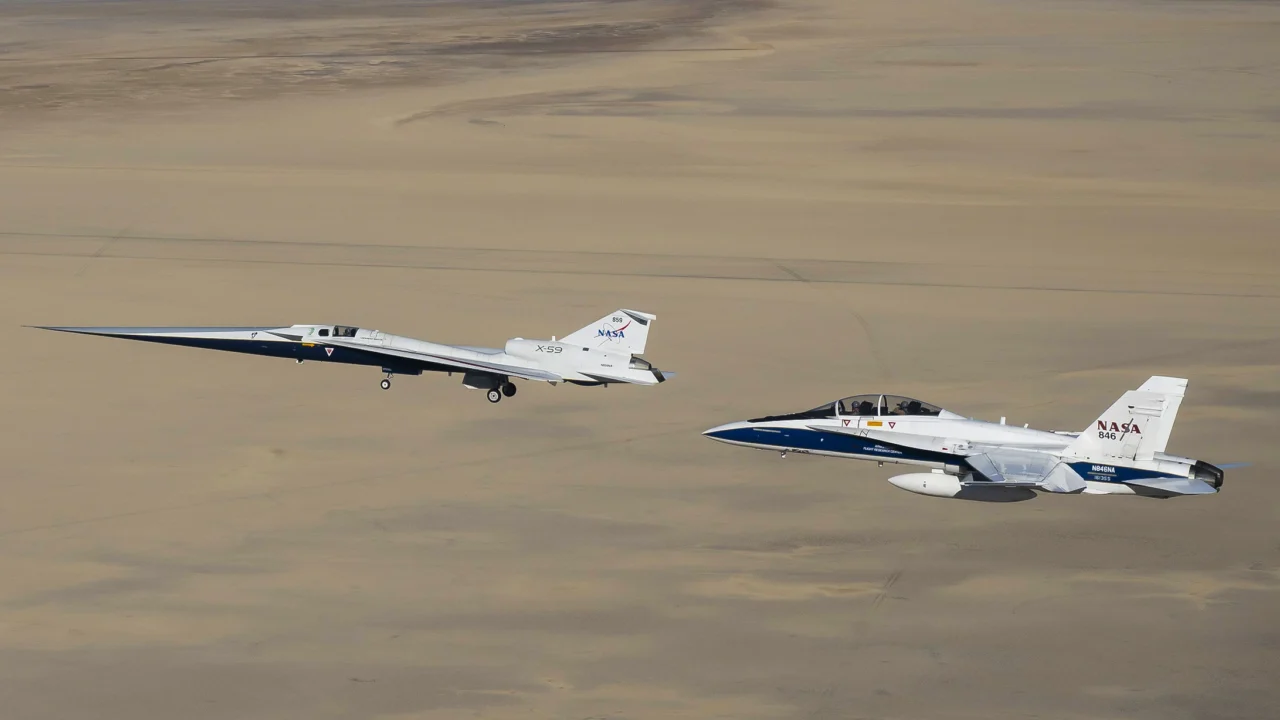
NASA’s Armstrong Flight Research Center in Edwards, California, has expanded its fleet this year with the addition of two supersonic F-15 jets, a Pilatus PC-12 utility aircraft, and a T-34 turboprop trainer to enhance its aerospace research capabilities. These new aircraft will support NASA’s ongoing mission of experimental flight and aeronautics testing, maintaining the center’s long history of innovation dating back to its beginnings with the Bell X-1 supersonic aircraft.
Since its establishment in 1947 as NACA’s Muroc Flight Test Unit, the center—renamed NASA Armstrong in 2014—has served as a key site for flight research, testing everything from the rocket-powered X-15 to repurposed high-speed fighters like the F-18. Today, Armstrong continues this tradition by operating a diverse fleet that includes aircraft capable of flying from low altitudes to over 70,000 feet, such as the ER-2 high-altitude research plane.
Armstrong’s multidisciplinary team of pilots, engineers, and maintenance specialists manage the complex upkeep and modification of these unique aircraft to transform them into airborne science laboratories. This expertise allows the center to carry out critical research missions in collaboration with NASA scientists, other government agencies, industry, and academia.
For example, Armstrong supports airborne science projects measuring air pollution, monitoring glacier melt, and mapping wildfires. Scientists can perform real-time experiments aboard Armstrong’s aircraft, assisted by the center’s knowledgeable flight and science teams. The center’s agility in integrating scientific equipment and flying to precise data collection sites is central to its role in global research efforts.
Located on the 44-square-mile Rogers Dry Lake bed, Armstrong operates from facilities that have seen landmark events such as space shuttle landings and emergency flight recoveries. The lakebed itself remains a vital component of the center’s test operations.
Darren Cole, capabilities manager for Armstrong’s Flight Demonstrations and Capabilities project, highlights the center’s unique fleet diversity and the skill involved in maintaining and operating such a range of aircraft. This diversity enables the center to support a broad spectrum of aeronautical and scientific research projects, continuing the legacy of pioneers like Neil Armstrong.
Why it matters
NASA Armstrong plays an essential role in advancing aerospace technologies and Earth science research through its unique aircraft fleet and expertise. The center’s ability to adapt a variety of specialized planes for cutting-edge scientific and test missions supports NASA’s goals in climate study, environmental monitoring, and aeronautics innovation. Its continued operation and fleet expansion underscore the ongoing importance of flight research in addressing current scientific and technological challenges.
Background
Originally established as a National Advisory Committee for Aeronautics (NACA) facility in the mid-1940s to support the historic Bell X-1 supersonic flight, the center has evolved over nearly eight decades into a leading flight research institution. It has hosted projects involving a wide range of aircraft including the iconic Space Shuttle Carrier Aircraft and the X-15 rocket plane. Renamed for astronaut and test pilot Neil Armstrong in 2014, the center maintains a vital connection to the history of flight exploration while advancing future aerospace developments.
Sources
This article is based on reporting and publicly available information from the following source:
Read more Space & NASA stories on Goka World News.