
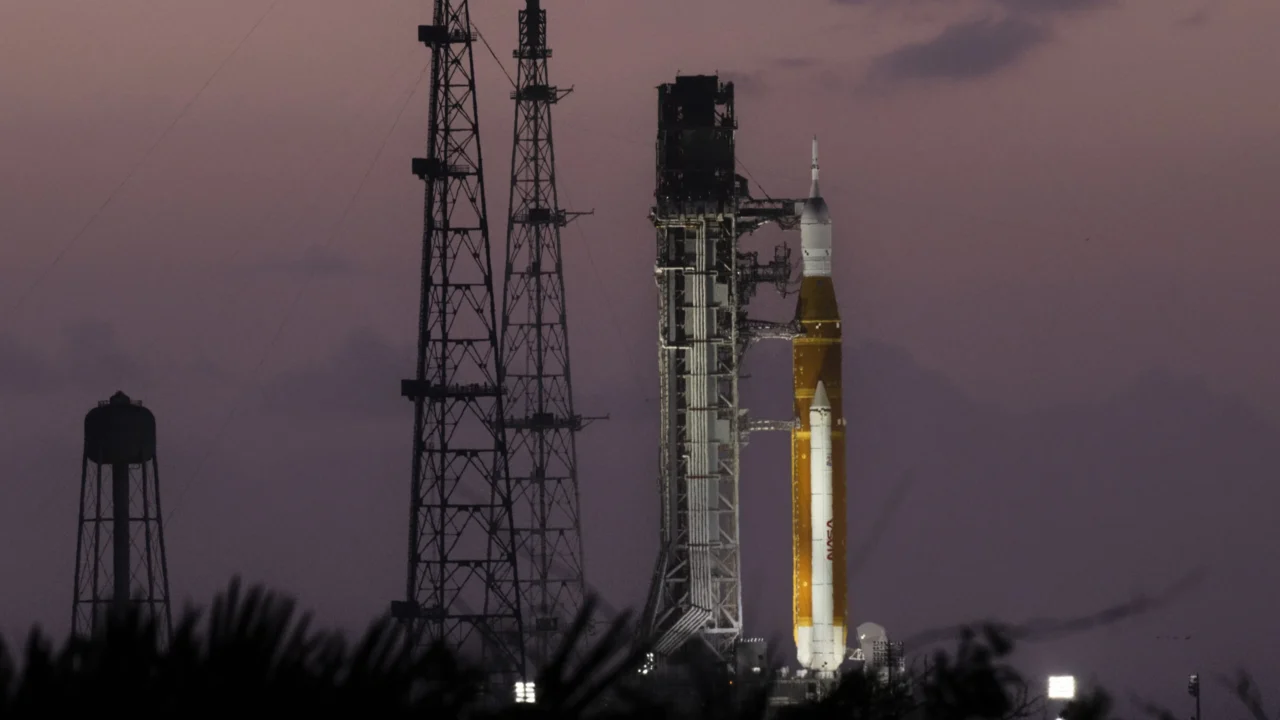
NASA is preparing for its Artemis III mission slated for next year, which will send astronauts into Earth orbit to test critical docking operations between the agency’s Orion spacecraft and commercial lunar landers from Blue Origin and SpaceX. This mission marks an important step toward landing astronauts on the Moon during Artemis IV.
Mission Objectives and Design
Artemis III will launch from Kennedy Space Center, Florida, atop the Space Launch System (SLS) rocket, carrying four crew members aboard Orion. Unlike prior missions, the SLS upper stage will be replaced by a non-propulsive “spacer” that replicates the mass and size of the original upper stage but lacks propulsion. This spacer is currently under design and fabrication at NASA’s Marshall Space Flight Center in Huntsville, Alabama.
Once in orbit, Orion’s European-built service module will provide propulsion to circularize the spacecraft’s low Earth orbit. This orbit facilitates a more flexible launch schedule, allowing the coordinated operations of multiple spacecraft: the Orion spacecraft, SpaceX’s Starship human landing system pathfinder, and Blue Origin’s Blue Moon Mark 2 lander pathfinder.
Testing Docking and Life Support Systems
The Artemis III crew will primarily remain aboard Orion but may enter one or more commercial lander prototypes to test spacecraft interfaces and docking system performance for the first time during this mission. The mission will extend the duration of crewed operations compared to Artemis II, providing further evaluation of life support systems and habitation concepts necessary for future lunar surface expeditions.
NASA also plans to test an upgraded heat shield on Orion’s return, aiming to enhance reentry flexibility and robustness for upcoming missions.
Ongoing Preparations and Partnerships
NASA continues refining the mission timeline, including crew selections and training. The agency is also exploring the integration of Axiom Space’s AxEMU spacesuit interfaces with landers, evaluating communication solutions since the Deep Space Network will not support this flight, and considering CubeSat deployments to maximize scientific and operational opportunities during the mission.
Why it matters
As NASA’s most complex mission to date involving multiple commercial partners and new operational components, Artemis III is crucial for reducing risks ahead of America’s next crewed lunar landing. By testing docking, habitation, and spacecraft interactions in Earth orbit, NASA aims to ensure readiness for Artemis IV’s goal of returning humans to the Moon’s surface to establish a sustainable presence and lay groundwork for eventual Mars missions.
Sources
This article is based on reporting and publicly available information from the following source:
Read more Space & NASA stories on Goka World News.