
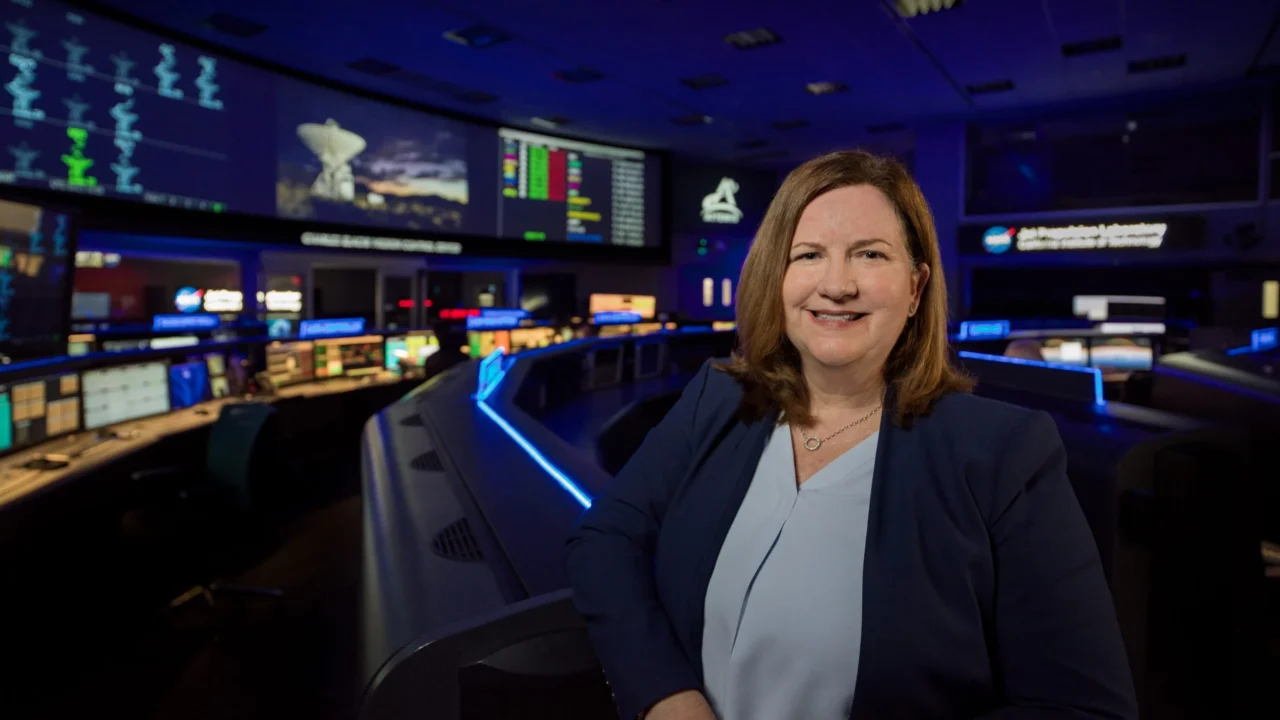
Kathleen Harmon serves as the Artemis II mission interface manager for NASA’s Deep Space Network (DSN), a global system of radio antennas that provides vital communication links with spacecraft across the solar system. Harmon’s role includes preparing the DSN to support Artemis II, NASA’s upcoming crewed mission to the Moon, ensuring continuous contact before and during the mission.
The Deep Space Network, managed by NASA’s Jet Propulsion Laboratory (JPL) in Southern California, is the largest scientific telecommunications system in the world. It supports more than 40 active missions, including Mars rovers, orbiters, and space telescopes, by sending commands to spacecraft and receiving scientific data, images, and videos.
“Without the network, you could not get any information back,” Harmon said. She compared the DSN to a GPS or cellphone that provides location and communication capabilities vital for space exploration. The network’s three antenna complexes are strategically positioned around the world to ensure that at least one antenna is always in view of spacecraft, a method called “follow the Sun.” This arrangement allows uninterrupted communication as Earth rotates.
For Artemis II, the DSN provided 24/7 coverage with two antennas—one primary and one backup—to maintain constant contact with the crewed spacecraft. Harmon emphasized that while supporting Artemis II, the network also simultaneously communicates with robotic missions throughout the solar system.
Harmon’s extensive NASA experience includes work on missions like Juno and Voyager. Her involvement with Artemis holds special significance due to her childhood memories of the Apollo missions. “Apollo was my earliest memory,” she said, adding that being part of the Artemis generation represents a continuation of human exploration. “This is a Golden Age of exploration.”
Why it matters
The Deep Space Network is a critical infrastructure for NASA’s lunar and deep space missions. Its ability to maintain continuous communication enables mission control to send commands, receive data, and track spacecraft location in real time. As Artemis missions aim to establish sustainable human presence on the Moon and prepare for future Mars exploration, reliable communications through the DSN are essential for mission success and crew safety.
Background
The Deep Space Network consists of three facilities located in California, Spain, and Australia. These complexes house giant radio antennas designed to communicate with spacecraft millions of miles away. Managed by JPL, the DSN supports both robotic and crewed missions, including past Apollo lunar missions and modern interplanetary explorers. Harmon’s role highlights the human expertise required to coordinate this complex, international network supporting NASA’s ambitious exploration goals.
Sources
This article is based on reporting and publicly available information from the following source:
Read more Space & NASA stories on Goka World News.