
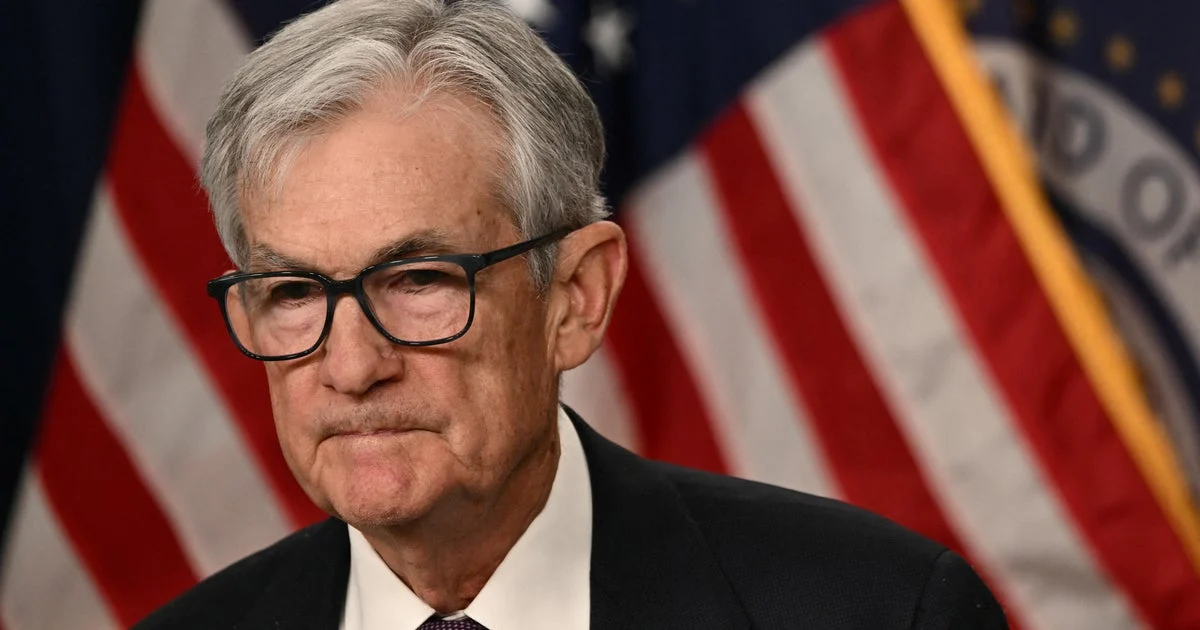
Jerome Powell steps down as Federal Reserve chair after eight years marked by managing major economic crises and defending the Fed’s independence. His tenure included navigating the COVID-19 pandemic’s economic fallout, the highest inflation in four decades, and political pressure from the Trump administration.
Leadership Through Crisis
Powell’s time as Fed chair began in 2018, nominated by then-President Donald Trump. Initially praised for his leadership and economic stewardship, Powell soon faced sharp criticism from Trump after the Fed began raising interest rates to prevent overheating the economy. Despite attacks, Powell’s steady management ensured the Fed acted decisively during the 2020 pandemic recession. The Federal Open Market Committee cut interest rates to near zero, stabilizing the labor market amid historic unemployment surges.
Economists credit Powell for maintaining economic resilience during the pandemic, alongside timely fiscal stimulus efforts. Moody’s Analytics chief economist Mark Zandi described Powell’s management as “admirable,” especially his efforts to uphold the Fed’s autonomy during politically turbulent times.
Inflation Challenges and Delayed Response
Powell’s most significant challenge arose with the sharp inflation surge starting in 2021, reaching levels unseen since the early 1980s. Early in this period, Powell described inflation as “transitory,” attributing it mainly to temporary supply chain disruptions. This assessment delayed the Fed’s decision to raise interest rates significantly until March 2022, when inflation was already at 8.5% annually.
Experts view this delay as a costly misstep, though they note external factors—pandemic policy, geopolitical conflicts, and tariffs—also fueled inflation. The Fed struggled to balance its dual mandate of price stability and maximum employment, with inflation remaining elevated while joblessness stayed historically low for much of Powell’s term.
Soft Landing and Fed Independence
Despite fears of recession caused by aggressive interest rate hikes, Powell and the Fed achieved an unusually soft landing, curbing inflation growth without drastically increasing unemployment. Inflation has since moderated while the labor market showed strength, a feat economists consider a key accomplishment for Powell’s leadership.
Perhaps Powell’s enduring legacy is his defense of the Federal Reserve’s independence amid unprecedented political and legal pressure, especially from the Trump administration. Trump publicly disparaged Powell, launched legal probes, and urged interest rate cuts, which Powell resisted. Powell will remain on the Federal Reserve Board as a governor after handing the chairmanship to Kevin Warsh, continuing to influence monetary policy amid ongoing economic challenges.
Why it matters
Powell’s handling of multiple economic crises and commitment to maintaining the Fed’s independence underscore the importance of central bank autonomy in managing monetary policy free from political interference. His tenure illustrates the complexities of balancing inflation control with economic growth, shaping future Federal Reserve leadership and policy direction.
Background
The Federal Reserve’s dual mandate to promote stable prices and maximum employment guided Powell’s policies throughout his chairmanship. His appointment by President Trump in 2018 followed Janet Yellen’s term, and he was reappointed by President Biden in 2022. Powell’s leadership coincided with several global shocks, including the COVID-19 pandemic, supply chain disruptions, tariffs, and geopolitical conflicts, which complicated the Fed’s policy environment.
Powell’s defense of the Fed’s independence has been particularly critical given the legal and political challenges faced during his tenure, emphasizing the Fed’s status as a nonpartisan institution.
Sources
This article is based on reporting and publicly available information from the following source:
Read more Business stories on Goka World News.