
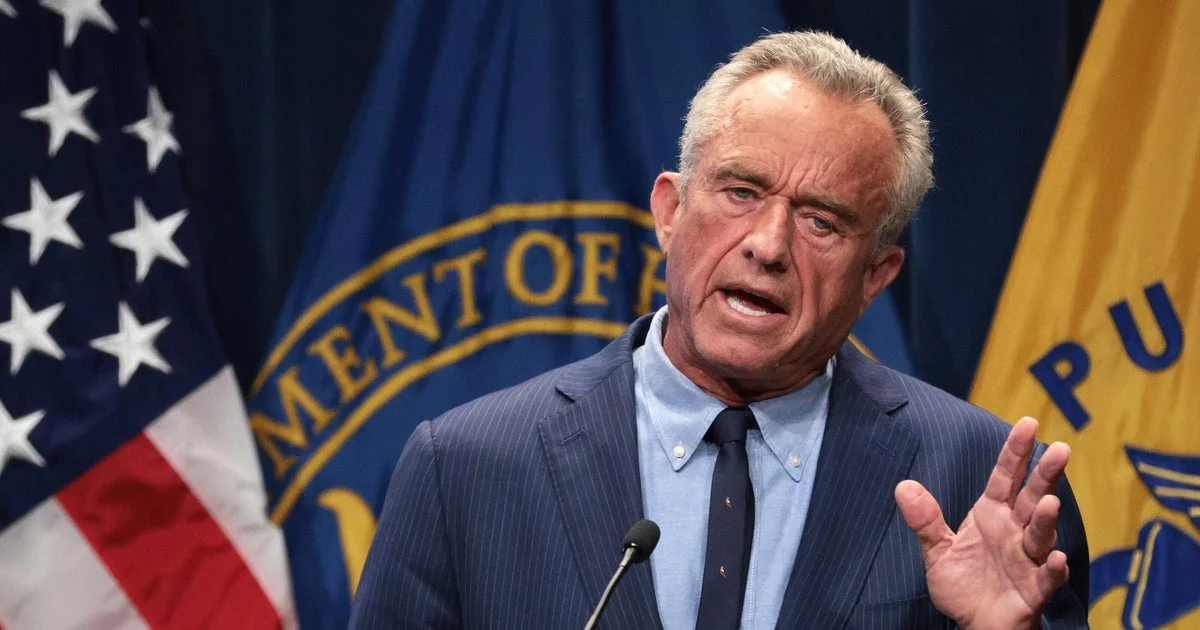
Robert F. Kennedy Jr., the current Health and Human Services (HHS) Secretary, confirmed on May 7 that he will not run for president in 2028. His statement comes as he navigates competing pressures from his Make America Healthy Again (MAHA) supporters, who want more aggressive anti-vaccine and environmental policies, and the White House, which is distancing itself from some of his controversial positions.
Kennedy’s Position and Political Challenges
During a recent speech at the Cleveland City Club, Kennedy advocated for parents’ “choice” regarding child vaccinations, a position that remains divisive both within political circles and among the public. Half of the audience applauded, while others expressed disapproval.
Despite his public role promoting MAHA’s priorities, Kennedy is increasingly caught between grassroots supporters who feel betrayed by the Trump administration’s reluctance to limit access to COVID vaccines or address pesticide regulations, and White House efforts to maintain broader political appeal ahead of the 2026 midterm elections.
Kennedy plans to campaign for Republican candidates in key states, but his refusal to pursue a 2028 presidential run distances him from factions within MAHA hoping for his leadership. Analysts suggest that a Kennedy candidacy could conflict with President Trump’s influence within the party and the broader GOP base.
Administration Moves and MAHA Supporter Reactions
The Trump administration’s recent nominations have stirred discontent among MAHA adherents. Notably, the nomination of Dr. Erica Schwartz, a vaccine advocate, to lead the Centers for Disease Control and Prevention (CDC) contrasts with Kennedy’s previous efforts to challenge vaccine policies. Kennedy supported Schwartz publicly but did not discuss her nomination directly with Trump.
Trump also withdrew the nomination of MAHA ally Casey Means for surgeon general, replacing her with Nicole Saphier, a radiologist seen as representing conventional medical perspectives. These appointments have been criticized by MAHA supporters as signaling a retreat from the movement’s goals.
Some GOP lawmakers competing in swing districts are distancing themselves from MAHA’s vaccine skepticism and “medical freedom” messaging, fearing it could alienate moderate voters.
Kennedy’s Policy Focus and Public Appeal
In recent congressional hearings, Kennedy has moderated his rhetoric, focusing on issues like healthcare affordability and nutrition rather than vaccine controversy or autism research. His podcast has shifted toward topics such as food safety and nutrition, rather than vaccines.
Despite his visibility among MAHA activists, Kennedy currently lacks broad support among conservative voters outside this group. A recent straw poll at the Conservative Political Action Conference showed minimal backing for his presidential candidacy.
Why it matters
Kennedy’s decision not to run in 2028 limits the potential for a high-profile third-party or Republican primary challenge rooted in vaccine skepticism. This reduces immediate tensions within the GOP as it strategizes for upcoming elections. Meanwhile, the administration’s more traditional public health appointments signal a possible shift away from MAHA’s controversial platform, affecting voter alignment and campaign messaging ahead of the 2026 midterms.
Background
Robert F. Kennedy Jr. previously ran for president in 2024 as a Democrat and then as an independent before ending his campaign in August 2024 to endorse Donald Trump. His MAHA movement has attracted about one-third of U.S. voters, largely among Republicans aligned with Trump’s Make America Great Again coalition. Vaccine policy remains a highly divisive issue, with polls indicating it influences voter behavior in upcoming elections.
Sources
This article is based on reporting and publicly available information from the following source:
Read more Politics stories on Goka World News.