
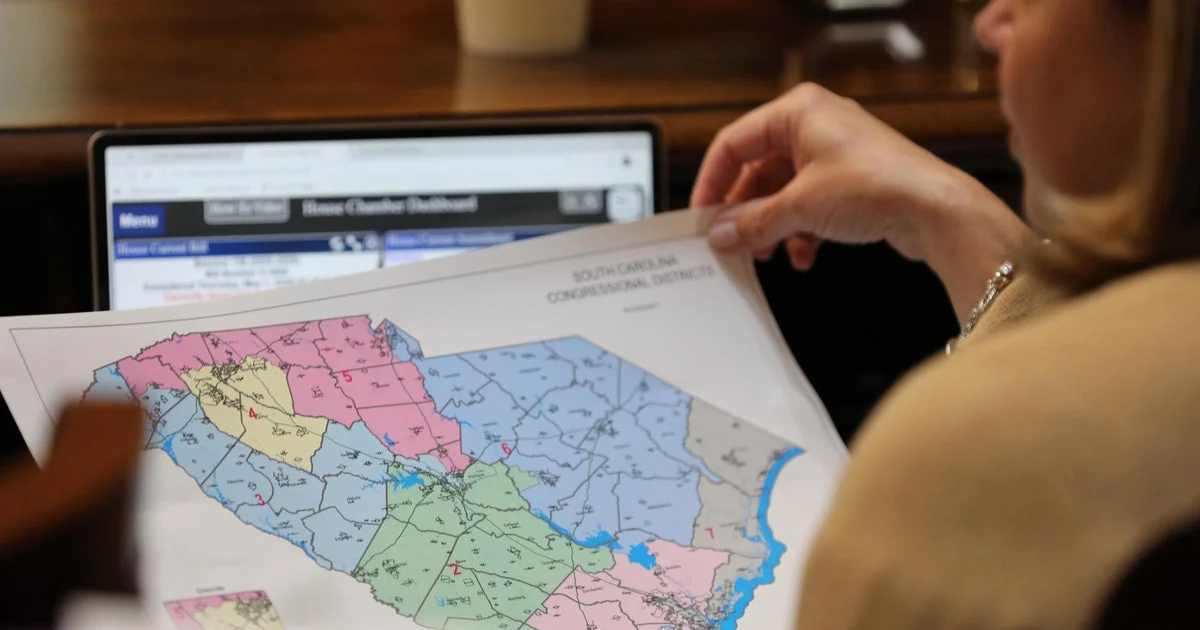
South Carolina Republican Governor Henry McMaster announced a special session of the state legislature to redraw the state’s congressional map, scheduling it to begin Friday morning. The special session was called after the legislature adjourned Thursday without concluding debate on redistricting, according to an executive order signed by McMaster.
The move comes amid escalating efforts by political leaders nationwide to reshape congressional districts following an April Supreme Court decision that narrowed the scope of the Voting Rights Act. In South Carolina, Republicans aim to alter the state’s only Democratic-leaning district to favor GOP candidates across all seven districts.
Previously, some Republican senators in South Carolina had blocked procedural votes to advance redistricting plans. However, the special session requires only a simple majority to pass a redistricting bill, potentially expediting the process. Republican state Senator Tom Davis, who opposed the earlier procedural effort, stated that the current maps are legally sound and described the proposed changes as constitutionally indefensible.
South Carolina’s primaries are scheduled for June 9, though legislation is pending to move the date to August. Governor McMaster emphasized the importance of completing the redistricting process in accordance with constitutional principles and public interest.
Why it matters
The redistricting efforts in South Carolina reflect broader partisan strategies following the Supreme Court’s ruling in a Louisiana case, which rejected a congressional map that relied heavily on race-based considerations under Section 2 of the Voting Rights Act. The decision has prompted several Southern states, including Louisiana, Alabama, and Tennessee, to adjust their congressional boundaries in ways that may strengthen Republican representation.
These changes could influence the balance of power in the U.S. House of Representatives ahead of upcoming elections, as states revise districts that have historically favored Democratic candidates.
Background
The Supreme Court ruling came just days before early voting began in Louisiana’s primaries, where significant numbers of ballots had been cast. In response, Louisiana’s Republican governor suspended the House primaries and called a special session to redraw districts, aiming to increase Republican representation.
Similarly, Alabama’s governor rescheduled primaries after the ruling affected mandated majority-Black districts, and Tennessee lawmakers approved a GOP-favoring map that divides Memphis and Shelby County, known for their Black-majority populations.
South Carolina’s efforts fit within this regional trend of Republican-led redistricting initiatives following judicial shifts impacting the enforcement of the Voting Rights Act.
Sources
This article is based on reporting and publicly available information from the following source:
Read more Politics stories on Goka World News.