
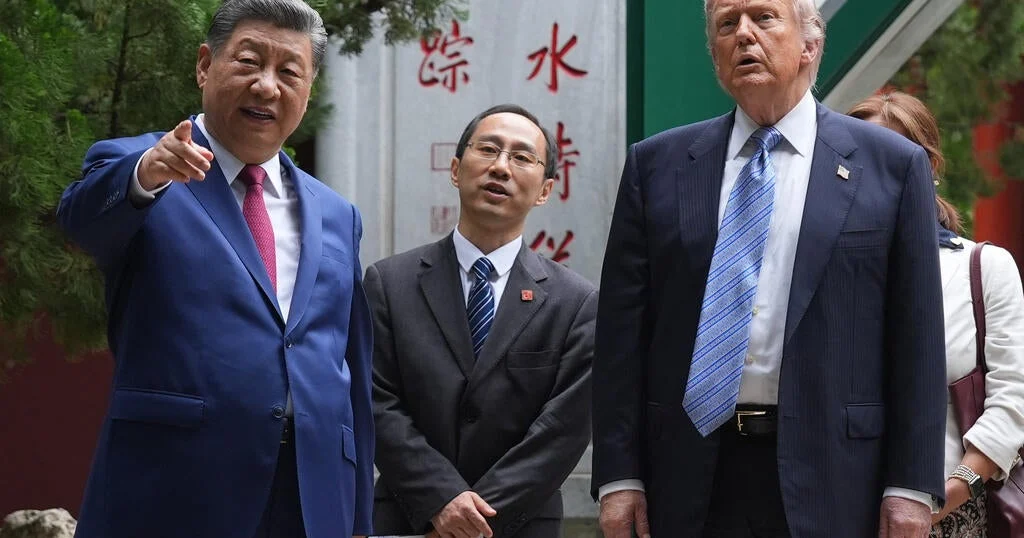
President Donald Trump and Chinese President Xi Jinping concluded a summit in Beijing by announcing a series of “fantastic trade deals” and expressing a mutual interest in resolving the ongoing conflict in Iran. The bilateral talks, held at China’s Zhongnanhai leadership compound, aimed to stabilize U.S.-China relations after a trade war last year.
During a brief public appearance on May 15, 2026, Trump described the visit as “incredible” and emphasized that “a lot of good has come of it,” though he did not provide detailed terms of the agreements. The president noted that China had agreed to purchase American planes and agricultural products, including Boeing jets and soybeans, reflecting a shift toward increased trade cooperation.
Details on Trade and Security
The summit covered a broad agenda including trade, Iran, and Taiwan, with a closed-door meeting lasting over two hours. Trump confirmed China’s commitment to avoid supplying military equipment to Iran, labeling this a “big statement.” Both leaders voiced a desire to reopen the Strait of Hormuz, a critical oil shipping corridor currently closed amid Iran-related tensions, underscoring their shared interest in regional stability.
The two countries also discussed economic issues following the imposition of tariffs exceeding 100% during last year’s trade war. The Trump administration stressed the importance of maintaining U.S. access to Chinese rare earth minerals as part of ongoing negotiations.
Relations and Taiwan Issue
The summit featured a highly choreographed state visit, including a banquet where Trump invited Xi and his wife to visit the White House in September. Despite a stern warning from Xi about “clashes and even conflicts” over Taiwan, the issue was largely sidestepped in official U.S. statements. Both sides acknowledged their longstanding positions: China asserts sovereignty over Taiwan and does not rule out military action, while the U.S. opposes unilateral changes to Taiwan’s status and has provided significant military support to the island without clearly committing to direct defense.
Trump and Xi’s engagement aimed to maintain a stable and cooperative relationship between the two global powers, even as sensitive geopolitical issues remain unresolved.
Why it matters
These developments reflect efforts by both the U.S. and China to reduce tensions after a disruptive trade war and signal cooperation on international security concerns, particularly the Iran conflict and the reopening of the Strait of Hormuz. Stabilizing the bilateral relationship has significant implications for global trade, energy markets, and regional security dynamics in East Asia.
Sources
This article is based on reporting and publicly available information from the following source:
Read more Politics stories on Goka World News.