
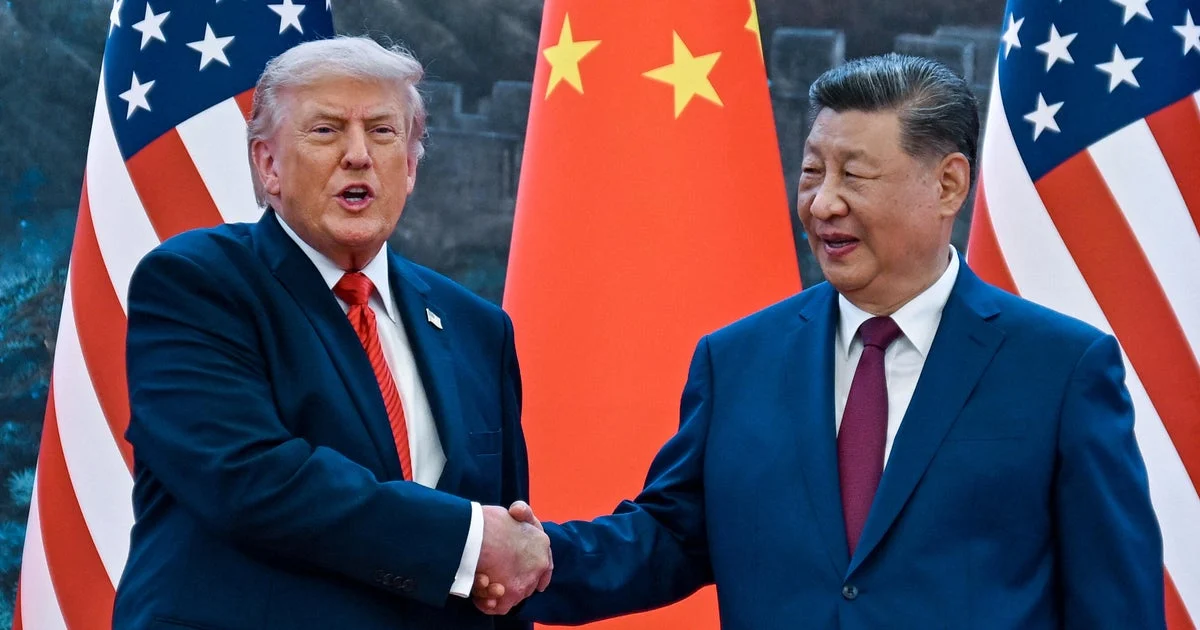
President Donald Trump and Chinese President Xi Jinping concluded their summit in Beijing with announcements of new trade agreements, yet experts caution these deals offer limited immediate benefits for the United States.
Trump declared the visit an “incredible” success, citing “fantastic trade deals” including China’s agreement to purchase at least 200 Boeing aircraft and increased acquisitions of U.S. agricultural products, notably billions of dollars’ worth of soybeans. A White House official affirmed the agreements would expand exports for American farmers and support manufacturing jobs through aircraft sales.
Negotiations yield tentative commitments, not firm deals
Despite these announcements, analysts emphasize that definitive details and binding contracts remain elusive. Wendy Cutler, a former U.S. trade negotiator, noted that anticipated large-scale purchases of U.S. agriculture, energy, and airplanes had yet to materialize in confirmed terms. Energy policy expert Erica Downs highlighted the lack of concrete commitments on energy purchases, describing the claims as “non-binding” and lacking specificity.
Some optimism surrounds Boeing, which welcomed the reopening of the Chinese market and its initial 200-plane order—though the deal fell short of expectations, contributing to a 3.8% drop in Boeing shares. Experts attribute this to investor skepticism given prior instances when verbal agreements failed to translate into real contracts amid rising U.S.-China tensions.
New trade boards aim to stabilize economic relations
Both sides announced the creation of a “Board of Trade” and “Board of Investment” designed to oversee the economic relationship and manage trade disputes. Observers view this as part of a framework to stabilize historically strained ties following U.S. tariffs imposed last year and subsequent Chinese retaliatory measures.
Although the announcement suggested a possible tariff reduction on about $30 billion in goods, analysts point out that figure represents less than 10% of bilateral trade. Tariffs on Chinese goods remain high, averaging around 32%, compared to roughly 10% on U.S. exports to China. Experts suggest these developments reflect preliminary steps rather than a comprehensive resolution.
Why it matters
The summit marks a significant diplomatic effort to ease economic tensions and resume constructive dialogue between the world’s two largest economies. While the trade deals announced are modest and lack firm commitments, establishing mechanisms like the trade boards could prevent further deterioration in U.S.-China relations and provide a platform for future negotiations.
Given the intricacies of trade negotiations and recent history of stalled agreements, these talks may set the stage for incremental progress rather than immediate transformative trade breakthroughs.
Background
U.S.-China trade relations have been strained by tariffs and counter-tariffs imposed since 2025, disrupting global markets and complicating bilateral trade. Previous visits and agreements, such as a 2017 deal for Chinese investment in U.S. energy projects, failed to survive escalating tensions. The current summit sought to address this climate by reopening dialogue and signaling potential economic cooperation.
Sources
This article is based on reporting and publicly available information from the following source:
Read more Politics stories on Goka World News.