
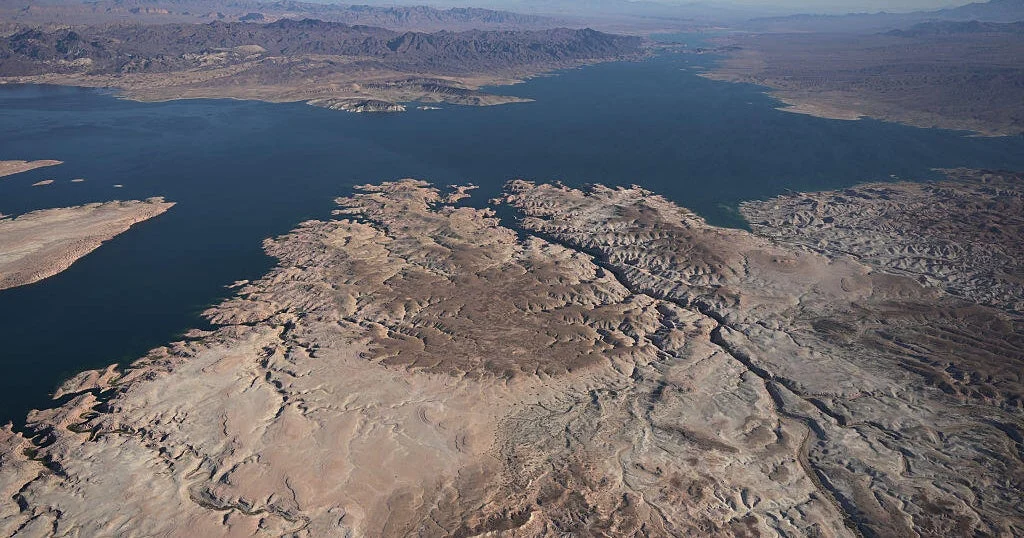
The Colorado River faces a severe water crisis as its flow diminishes due to a combination of record-low snowpack and increasing demand from a growing population in the Western United States. This shrinking supply threatens the daily water needs of approximately 40 million people who depend on the river.
Major reservoirs fed by the river, including Lake Mead and Lake Powell, are nearing critically low levels. Lake Powell, situated on the Utah-Arizona border, has recently received billions of gallons of emergency water releases from federal officials to sustain hydropower production there.
Arizona, California, and Nevada have introduced an emergency plan to incentivize reduced water consumption among some users, aiming to curb usage amid the shortage. However, water allocation remains contentious as all seven states sharing the river vie for their portions, complicating cooperative solutions.
Sarah Porter, director of the Kyl Center for Water Policy at Arizona State University, noted that the decline in reservoir levels stems from multiple causes, including this year’s insufficient snowfall across the Colorado River Basin. Although an unusual early-May storm brought several feet of snow to the Rockies, experts caution this will not resolve the underlying water deficit.
The U.S. Bureau of Reclamation, responsible for managing dams, power plants, and canals in 17 Western states, will decide this summer on revised rules for water cuts among the states. The current framework is set to expire, and without a new agreement, mandatory reductions could intensify.
Why it matters
The Colorado River’s decline risks disrupting critical water supplies for urban areas from Phoenix to Los Angeles and threatens the agricultural sector that relies heavily on this resource. Lower reservoir levels also jeopardize hydropower generation, an important energy source for the region. The outcome of federal decisions on water allocations this year will significantly impact how these competing demands are balanced amid ongoing drought conditions.
Background
The Colorado River supplies water to seven states in the Western U.S. and Mexico. Its flow depends largely on snowmelt from the Rocky Mountains, which has declined over recent years due to warmer temperatures and reduced precipitation. Reservoirs like Lake Mead and Lake Powell store and distribute this water but have steadily lost volume since 2000. Growing populations and agricultural needs have placed increasing pressure on this finite resource, prompting emergency conservation plans and federal interventions in recent years.
Sources
This article is based on reporting and publicly available information from the following source:
Read more Climate & Environment stories on Goka World News.