
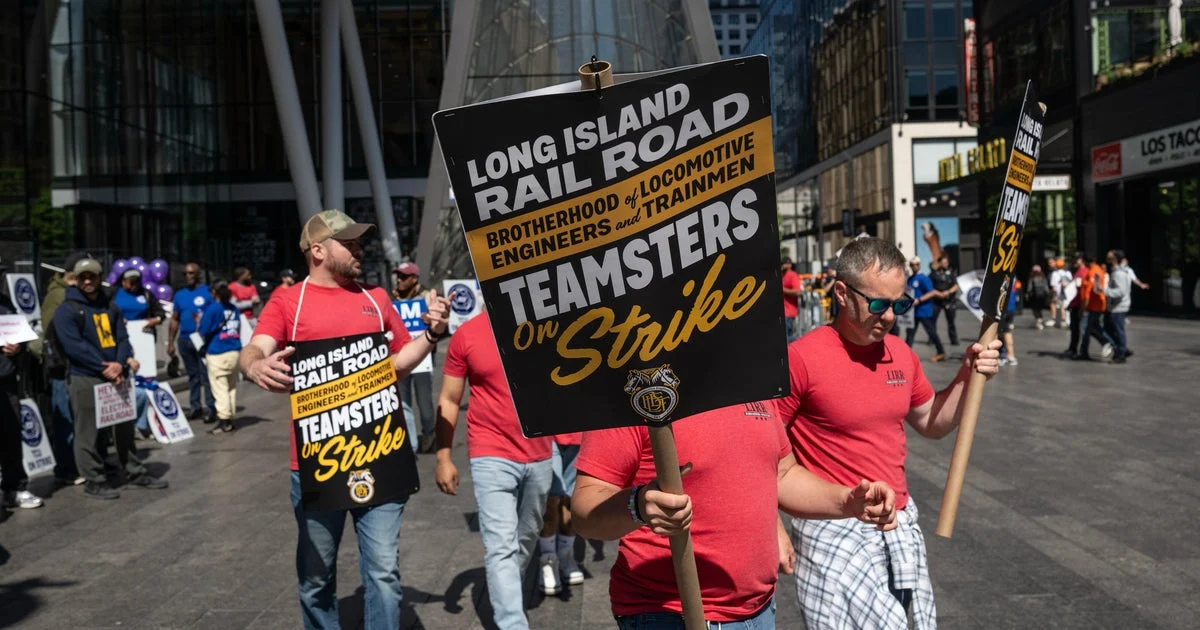
The Long Island Rail Road (LIRR) strike entered its third day Monday with no clear resolution as contract negotiations between the Metropolitan Transportation Authority (MTA) and union workers remained stalled. Thousands of union members continued to picket at LIRR stations, pressing for wage increases aligned with inflation, while commuters struggled with limited alternatives to the suspended train service.
The strike, which began on Saturday, represents a dispute over the final year of a four-year contract. Despite the MTA’s offer of a 9.5% wage increase over the contract term and a near agreement on the fourth year’s raise, union members rejected a sudden MTA request to increase healthcare contributions for new hires from 2% to 10%, according to union sources.
The MTA deployed approximately 250 shuttle buses with 13,000 seats to accommodate some of the usual 250,000 daily LIRR riders. However, the morning rush saw just 2,159 commuters using the shuttles. Many others either worked remotely or drove into New York City amid the disruption.
Union spokespeople described negotiation progress as inconsistent, expressing frustration with repeated counteroffers and a lack of substantive advancement. “Every time we think we’re close to a deal, it’s always a counter,” said union representative Kevin Sexton.
MTA negotiator Gary Dellaverson expressed diminished optimism about a quick resolution, noting that unions showed “no sense of urgency” to settle the strike. Negotiations continued intermittently Monday but ended each round without an agreement.
Commuter Impact and Reactions
Commuters faced extended travel times and crowded buses and subways. Reporters on the ground observed large crowds at key stations, including Howard Beach-JFK Airport and Ronkonkoma, with some passengers requiring early morning departures to make their destinations on time.
Several workers participating in the strike emphasized their commitment to serving the region but insisted the dispute was necessary due to unpaid wage increases over four years. Ticket agents and engineers highlighted the disparity between their wages and those of non-union managers, who have received raises averaging 13%.
Others voiced frustration with the strike’s effects on daily commuters. A Long Island teacher described waking at 2 a.m. to catch a 4:30 a.m. bus, underscoring the inconvenience created by the transit shutdown.
Potential Timeline to Resume Service
Sources indicated that even if a deal is reached promptly, full LIRR service would require at least one additional day to inspect tracks, equipment, and signals, and to prepare crews before trains could safely return to regular operation.
Transportation experts warned that the strike’s ripple effects would increase congestion on subways, roadways, and bus lines across Long Island and into New York City, potentially causing widespread disruption beyond the LIRR commuter base.
Why it matters
The LIRR is North America’s busiest commuter rail system, serving approximately 250,000 riders daily before the strike. The ongoing work stoppage highlights labor tensions within critical regional transit infrastructure, with negotiations implicating broader concerns over inflation, living costs, and public transportation affordability. Commuters and regional traffic face prolonged disruption until a contract resolution is reached and normal service restoration occurs.
Sources
This article is based on reporting and publicly available information from the following source:
Read more US News stories on Goka World News.