
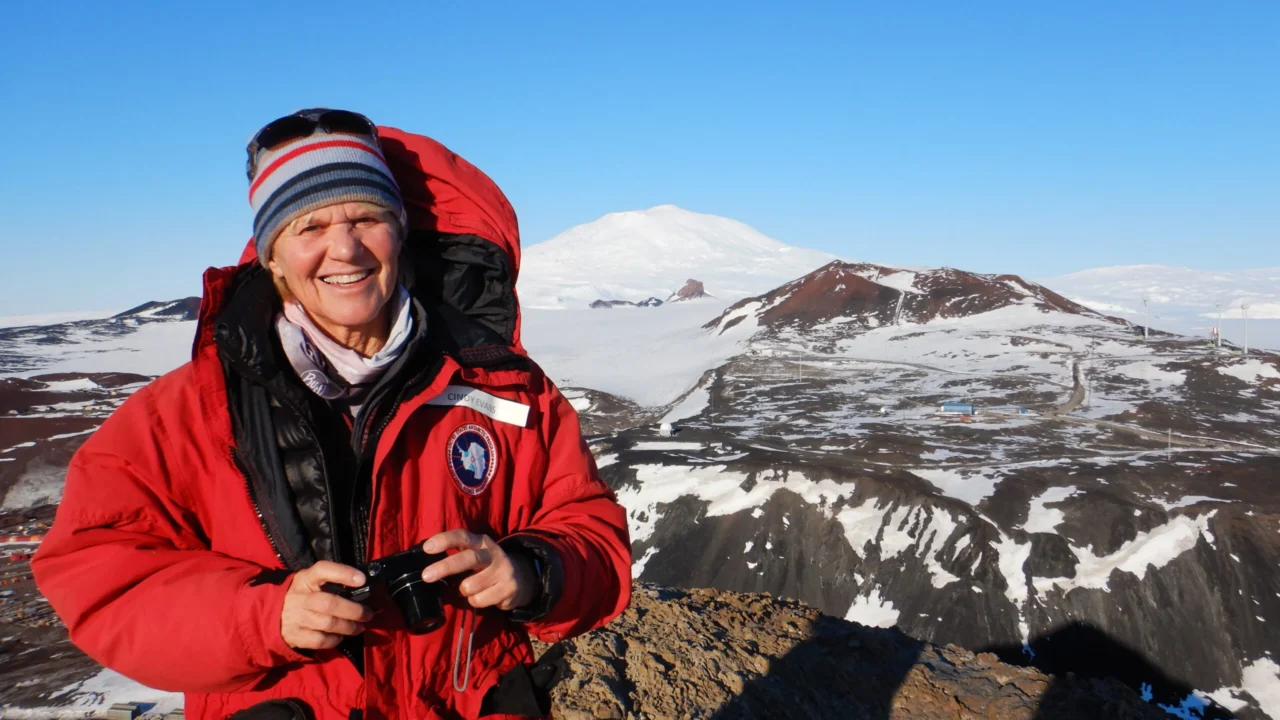
Cindy Evans, a geology training lead at NASA’s Johnson Space Center, has played a key role in preparing Artemis astronauts for lunar science tasks during their missions. As part of the Artemis Internal Science Team, Evans oversees geology instruction designed to equip crews with the skills needed for detailed geologic observations and sampling during lunar orbit and surface operations.
Evans’ training program comprises classroom lessons on geology, lunar, and planetary science alongside field exercises that build practical geology skills. This preparation helps Artemis crews identify and describe subtle features such as impact craters and ancient lava flows, which are crucial to understanding the Moon’s geologic history and advancing planetary science knowledge.
During Artemis II, the first crewed mission to fly by the Moon’s far side, astronauts utilized the geology techniques taught by Evans to analyze and photograph the lunar surface. Their scientific observations contribute valuable data for planning future Artemis missions that will include surface exploration.
Evans brings 37 years of NASA experience to her role, having contributed to programs such as the Space Shuttle, Shuttle-Mir, and the International Space Station before transitioning to Artemis. Notably, she helped establish the Crew Earth Observations program and supported the space shuttle’s Return to Flight imagery inspection after the Columbia accident. Her diverse background also includes field geology work in Antarctica, where she conducted deep-field training exercises.
Trained as an oceanographer, Evans appreciates interdisciplinary collaboration among scientists, engineers, and mission managers to ensure mission success. She emphasizes the importance of flexibility and seizing varied career opportunities within spaceflight programs.
Why it matters
The geology training led by Evans is essential for Artemis astronauts to fulfill scientific objectives that will deepen understanding of the Moon’s formation and evolution. Well-prepared crews can deliver high-quality data and make informed decisions during exploration, supporting NASA’s long-term goals for sustainable lunar presence and research.
Background
The Artemis program aims to return humans to the Moon and establish a foundation for eventual crewed missions to Mars. Scientific reconnaissance from lunar orbit and surface activities are critical components of Artemis missions, requiring astronauts to function as field geologists. Evans and her team’s training initiatives provide the expertise necessary to meet these complex mission demands.
Sources
This article is based on reporting and publicly available information from the following source:
Read more Space & NASA stories on Goka World News.